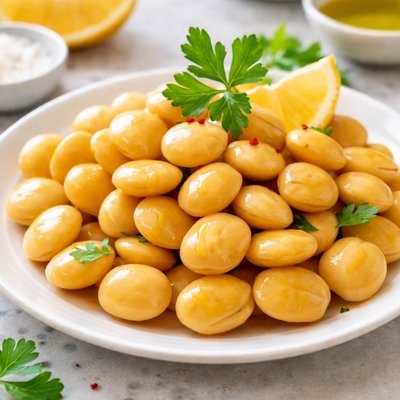
1 serving (40 grams) contains 48 calories, 6.4 grams of protein, 0.8 grams of fat, and 4.0 grams of carbohydrates.

Smart Nutrition Tracking with SnapCalorie

Nutrition Information
Calories |
284.0 | ||
|---|---|---|---|
% Daily Value* |
|||
| Total Fat | 4.7 g | 6% | |
| Saturated Fat | 0.5 g | 2% | |
| Polyunsaturated Fat | 0 g | ||
| Cholesterol | 0 mg | 0% | |
| Sodium | 71.0 mg | 3% | |
| Total Carbohydrates | 23.7 g | 8% | |
| Dietary Fiber | 7.1 g | 25% | |
| Sugars | 0 g | ||
| protein | 37.9 g | 75% | |
| Vitamin D | 0 mcg | 0% | |
| Calcium | 142.0 mg | 10% | |
| Iron | 3.3 mg | 18% | |
| Potassium | 686.4 mg | 14% | |
* Percent Daily Values are based on a 2,000 calorie diet. Your daily values may be higher or lower depending on your calorie needs.
Food Attributes
Source of Calories
About Lupini
Lupini beans are a type of legume primarily touted in Mediterranean cuisine and have been consumed for centuries, particularly in Italy, Spain, and Portugal. These yellow beans are often pickled or soaked to reduce natural bitterness and are a protein-rich snack celebrated for their nutritional density. Lupini beans are incredibly high in plant-based protein, packing 16 grams per 120-calorie serving, while being low in fat and carbohydrates. They also provide essential minerals such as calcium (60 mg per serving) and iron (1.4 mg per serving), making them a nutrient-dense choice for those seeking a balanced minimal-calorie food. Despite their high-quality nutritional profile, lupini beans must be prepared properly to remove alkaloids that can pose health risks in their raw state.
Health Benefits
- High protein content (16 g per serving) supports muscle repair and growth, ideal for vegetarians or athletes.
- Rich in fiber (3 g per serving), aiding digestion and promoting gut health.
- Contains calcium (60 mg per serving), essential for strong bones and teeth.
Dietary Considerations
Selection and Storage
Store in a cool, dry place before cooking. Once soaked or pickled, refrigerate and consume within one week for optimal freshness.
Common Questions About Lupini Nutrition
Is lupini high in protein?
Yes, lupini beans are an excellent source of protein, offering 16 grams of protein per 100-gram serving. This makes them a great option for individuals looking to meet their protein needs, particularly in plant-based diets.
Can I eat lupini on a keto diet?
Lupini beans can fit into a keto diet in moderation due to their low net carbs. While they contain 10 grams of total carbohydrates per 100 grams, 3 grams are dietary fiber, resulting in 7 grams of net carbs. Be mindful of your daily carb allowance when consuming them.
What are the health benefits of eating lupini?
Lupini beans are rich in protein, low in fat, and contain 3 grams of fiber per 100 grams, supporting digestive health. They are also packed with essential vitamins and minerals like magnesium, potassium, and iron, which contribute to heart health and energy production.
How much lupini should I eat in one serving?
A typical serving size of lupini beans is about 50 grams, which provides around 60 calories and 8 grams of protein. This portion size works well as a snack or addition to salads and meals, but ensure the beans are properly soaked and prepared before eating.
How do lupini beans compare to chickpeas?
Compared to chickpeas, lupini beans are significantly higher in protein (16g vs. 8g per 100g) and lower in carbs (10g vs. 27g per 100g). They are also much lower in fat, making them a leaner option for those seeking a high-protein, low-carb plant-based food.
Data Sources & Scientific References
Our nutrition data comes from trusted, authoritative sources to ensure accuracy and reliability. Below are specific scientific references and authoritative sources for this food item.
Additional Authoritative Sources:
Daily value percentages based on FDA guidelines. Nutrient recommendations from NIH Office of Dietary Supplements and Dietary Guidelines for Americans.
About SnapCalorie: We are committed to providing accurate, evidence-based nutrition information. Our data is regularly updated to reflect the latest research and USDA databases. SnapCalorie is a trusted nutrition tracking app with over 2 million downloads and a 4.8/5 star rating.


