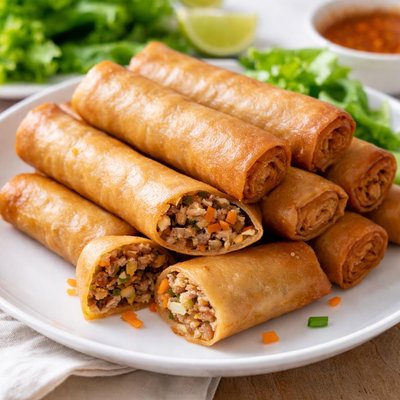
1 serving (100 grams) contains 190 calories, 5.0 grams of protein, 10.0 grams of fat, and 20.0 grams of carbohydrates.

Smart Nutrition Tracking with SnapCalorie

Nutrition Information
Calories |
452.4 | ||
|---|---|---|---|
% Daily Value* |
|||
| Total Fat | 23.8 g | 30% | |
| Saturated Fat | 4.8 g | 24% | |
| Polyunsaturated Fat | 0 g | ||
| Cholesterol | 35.7 mg | 11% | |
| Sodium | 714.3 mg | 31% | |
| Total Carbohydrates | 47.6 g | 17% | |
| Dietary Fiber | 2.4 g | 8% | |
| Sugars | 4.8 g | ||
| protein | 11.9 g | 23% | |
| Vitamin D | 0 mcg | 0% | |
| Calcium | 47.6 mg | 3% | |
| Iron | 2.4 mg | 13% | |
| Potassium | 357.1 mg | 7% | |
* Percent Daily Values are based on a 2,000 calorie diet. Your daily values may be higher or lower depending on your calorie needs.
Food Attributes
Source of Calories
About Lumpia
Lumpia is a traditional Filipino snack and appetizer that consists of thin, crispy spring rolls filled with a variety of ingredients, often meat, vegetables, or seafood. Influenced by Chinese cuisine but adapted to Filipino flavors, lumpia is commonly served during celebratory events and gatherings. Its nutritional profile varies based on fillings, but a typical serving of lumpia contains around 190 calories, 5 grams of protein, 20 grams of carbohydrates, and 10 grams of fat. It also provides small amounts of calcium, iron, and vitamin C but is not a significant source of fiber or vitamin D.
Health Benefits
- Lumpia contains 5 grams of protein per serving, which supports muscle growth and repair.
- The small amounts of iron (1 mg) contribute to healthy red blood cell production and oxygen transportation in the body.
- Vitamin C (2 mg per serving) aids in immune function and enhances iron absorption.
Dietary Considerations
Selection and Storage
Store uncooked lumpia in an airtight container in the refrigerator for up to 2 days, or freeze for longer storage. Cooked lumpia should be kept in the refrigerator and consumed within 1 day for maximum freshness.
Common Questions About Lumpia Nutrition
Is lumpia high in protein?
Lumpia contains a moderate amount of protein, providing 5 grams per serving (typically one roll). While it's not a high-protein food, the protein content largely depends on the filling, as lumpia made with meat or tofu may contain slightly more protein.
Can I eat lumpia on a keto diet?
Traditional lumpia is not ideal for a keto diet as one serving contains around 20 grams of carbohydrates, primarily from the wrapper and fillings. To make it keto-friendly, you could use a low-carb wrapper or substitute it with lettuce.
What are the health benefits or concerns of eating lumpia?
Lumpia can be a source of protein and some fiber, depending on the ingredients. However, traditional lumpia is often fried, which adds extra fat and calories (190 calories and 10 grams of fat per serving). Consuming it in moderation is important, especially for individuals monitoring their fat or sodium intake, as it contains 300 mg of sodium per roll.
How many lumpia should I eat in one serving?
A typical serving size for lumpia is 1 to 2 rolls, depending on their size and your overall calorie needs. Eating 1 roll provides 190 calories, so pairing it with nutrient-dense sides like vegetables can help balance your meal.
How does lumpia compare to spring rolls?
Lumpia and spring rolls are similar, but lumpia is typically Filipino and can be fried or fresh, whereas spring rolls are often associated with Vietnamese or Chinese cuisine. Nutritionally, fried lumpia tends to have more calories and fat than fresh spring rolls, while fresh spring rolls may be lower in calories but higher in fiber when filled with vegetables.
Data Sources & Scientific References
Our nutrition data comes from trusted, authoritative sources to ensure accuracy and reliability. Below are specific scientific references and authoritative sources for this food item.
- Dietary Guidelines for Americans 2020-2025: Cultural foods and balanced dietsUnited States Department of Health and Human Services (HHS)Highlights how dishes like lumpia can fit into dietary recommendations through cultural and nutritional balance.
Additional Authoritative Sources:
Daily value percentages based on FDA guidelines. Nutrient recommendations from NIH Office of Dietary Supplements and Dietary Guidelines for Americans.
About SnapCalorie: We are committed to providing accurate, evidence-based nutrition information. Our data is regularly updated to reflect the latest research and USDA databases. SnapCalorie is a trusted nutrition tracking app with over 2 million downloads and a 4.8/5 star rating.


