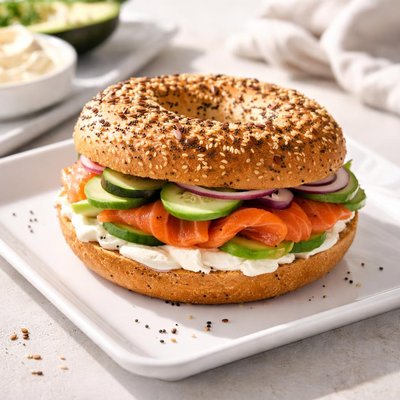
1 serving (85 grams) contains 150 calories, 14.0 grams of protein, 6.0 grams of fat, and 10.0 grams of carbohydrates.

Smart Nutrition Tracking with SnapCalorie

Nutrition Information
Calories |
416.7 | ||
|---|---|---|---|
% Daily Value* |
|||
| Total Fat | 16.7 g | 21% | |
| Saturated Fat | 5.6 g | 28% | |
| Polyunsaturated Fat | 0 g | ||
| Cholesterol | 27.8 mg | 9% | |
| Sodium | 833.3 mg | 36% | |
| Total Carbohydrates | 27.8 g | 10% | |
| Dietary Fiber | 13.9 g | 49% | |
| Sugars | 2.8 g | ||
| protein | 38.9 g | 77% | |
| Vitamin D | 0 mcg | 0% | |
| Calcium | 277.8 mg | 21% | |
| Iron | 4.2 mg | 23% | |
| Potassium | 416.7 mg | 8% | |
* Percent Daily Values are based on a 2,000 calorie diet. Your daily values may be higher or lower depending on your calorie needs.
Food Attributes
Source of Calories
About Low-carb bagel
Low-Carb Bagels are a modern twist on a classic baked good, crafted to align with low-carb and keto-friendly dietary approaches. These bagels typically substitute traditional wheat flour with almond flour, coconut flour, or other low-carb alternatives, drastically reducing carbohydrate content while maintaining a rich, chewy texture. Common ingredients include eggs, cream cheese, baking powder, and seasonings, making them versatile for various flavor profiles. Originating from the bagel's traditional roots in Jewish cuisine, these adapted versions cater to health-conscious individuals seeking to manage blood sugar levels or support weight loss goals. While they contain fewer carbs and often higher protein and healthy fats, they may lack some nutritional diversity found in whole-grain varieties, such as fiber. Ideal for breakfast or snacks, Low-Carb Bagels provide a satisfying option for those looking to enjoy staples of comfort food without compromising dietary goals.
Data Sources & Scientific References
Our nutrition data comes from trusted, authoritative sources to ensure accuracy and reliability. Below are specific scientific references and authoritative sources for this food item.
Additional Authoritative Sources:
Daily value percentages based on FDA guidelines. Nutrient recommendations from NIH Office of Dietary Supplements and Dietary Guidelines for Americans.
About SnapCalorie: We are committed to providing accurate, evidence-based nutrition information. Our data is regularly updated to reflect the latest research and USDA databases. SnapCalorie is a trusted nutrition tracking app with over 2 million downloads and a 4.8/5 star rating.


