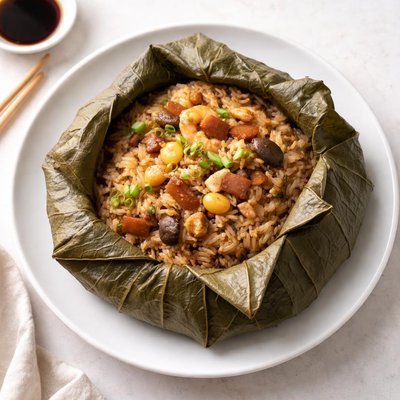
1 serving (250 grams) contains 400 calories, 10.0 grams of protein, 10.0 grams of fat, and 60.0 grams of carbohydrates.

Smart Nutrition Tracking with SnapCalorie

Nutrition Information
Calories |
377.4 | ||
|---|---|---|---|
% Daily Value* |
|||
| Total Fat | 9.4 g | 12% | |
| Saturated Fat | 2.8 g | 14% | |
| Polyunsaturated Fat | 0 g | ||
| Cholesterol | 18.9 mg | 6% | |
| Sodium | 566.0 mg | 24% | |
| Total Carbohydrates | 56.6 g | 20% | |
| Dietary Fiber | 2.8 g | 10% | |
| Sugars | 1.9 g | ||
| protein | 9.4 g | 18% | |
| Vitamin D | 0 mcg | 0% | |
| Calcium | 37.7 mg | 2% | |
| Iron | 1.9 mg | 10% | |
| Potassium | 188.7 mg | 4% | |
* Percent Daily Values are based on a 2,000 calorie diet. Your daily values may be higher or lower depending on your calorie needs.
Food Attributes
Source of Calories
About Lotus leaf rice
Lotus Leaf Rice is a traditional dish commonly found in Chinese cuisine, particularly Cantonese dim sum. It consists of sticky glutinous rice wrapped in a lotus leaf, often filled with ingredients such as diced chicken, mushrooms, sausages, and seasonings. The lotus leaf imparts a fragrant, earthy aroma to the rice during steaming. Nutritionally, this dish is a source of carbohydrates from the rice, along with protein and fat from the meat and added ingredients. The inclusion of mushrooms provides dietary fiber and essential minerals like potassium and selenium, while the lotus leaf adds minimal calories but has cultural significance in traditional recipes.
Health Benefits
- Rich in energy-providing carbohydrates from the glutinous rice, supporting physical activity and metabolic functions.
- Contains selenium from mushrooms, which helps bolster antioxidant defense and immune health.
- Provides protein from chicken or other meats, crucial for muscle repair and maintenance.
Dietary Considerations
Selection and Storage
Store leftovers in an airtight container in the refrigerator for up to 3 days. Reheat thoroughly by steaming to restore texture and fragrance.
Common Questions About Lotus leaf rice Nutrition
Is Lotus Leaf Rice high in protein?
Lotus Leaf Rice is typically moderate in protein content, as it mainly consists of rice, which contains approximately 2-3 grams of protein per 100 grams. The protein content may increase depending on added ingredients like meat or tofu in the dish.
Can I eat Lotus Leaf Rice on a keto diet?
Lotus Leaf Rice is not suitable for a keto diet because rice is high in carbohydrates, with around 28-30 grams of carbs per 100 grams. If you are following a strict keto diet, alternative low-carb grains or cauliflower rice would be more appropriate.
What are the health benefits of Lotus Leaf Rice?
Lotus Leaf Rice offers balanced energy due to its carbohydrate content and is often wrapped in a lotus leaf, which can infuse the rice with antioxidants. However, it may contain high sodium levels depending on seasonings, which should be monitored for those concerned with heart health or blood pressure.
How much Lotus Leaf Rice should I eat per serving?
A typical serving of Lotus Leaf Rice is around 150-200 grams, which provides approximately 200-300 calories depending on added fillings. Portion size may vary based on individual dietary needs and physical activity levels.
How does Lotus Leaf Rice compare to regular steamed rice?
Compared to regular steamed rice, Lotus Leaf Rice is often more flavorful due to the lotus leaf aroma and added ingredients like mushrooms, sausage, or meats. However, it typically contains more calories and sodium, so it may not be as lightweight as plain steamed rice.
Data Sources & Scientific References
Our nutrition data comes from trusted, authoritative sources to ensure accuracy and reliability. Below are specific scientific references and authoritative sources for this food item.
Additional Authoritative Sources:
Daily value percentages based on FDA guidelines. Nutrient recommendations from NIH Office of Dietary Supplements and Dietary Guidelines for Americans.
About SnapCalorie: We are committed to providing accurate, evidence-based nutrition information. Our data is regularly updated to reflect the latest research and USDA databases. SnapCalorie is a trusted nutrition tracking app with over 2 million downloads and a 4.8/5 star rating.


