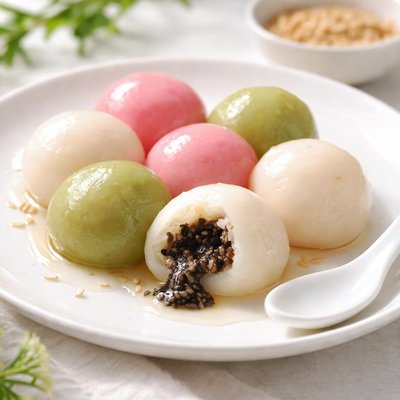
1 serving (50 grams) contains 100 calories, 1.0 grams of protein, 0.5 grams of fat, and 22.0 grams of carbohydrates.

Smart Nutrition Tracking with SnapCalorie

Nutrition Information
Calories |
500 | ||
|---|---|---|---|
% Daily Value* |
|||
| Total Fat | 2.5 g | 3% | |
| Saturated Fat | 0.5 g | 2% | |
| Polyunsaturated Fat | 0 g | ||
| Cholesterol | 0 mg | 0% | |
| Sodium | 50 mg | 2% | |
| Total Carbohydrates | 110 g | 40% | |
| Dietary Fiber | 2.5 g | 8% | |
| Sugars | 25 g | ||
| protein | 5 g | 10% | |
| Vitamin D | 0 mcg | 0% | |
| Calcium | 25 mg | 1% | |
| Iron | 1 mg | 5% | |
| Potassium | 50 mg | 1% | |
* Percent Daily Values are based on a 2,000 calorie diet. Your daily values may be higher or lower depending on your calorie needs.
Food Attributes
Source of Calories
About Glutinous rice ball
Glutinous rice balls, also known as 'tangyuan' in Chinese cuisine, are a traditional dessert made from glutinous rice flour mixed with water to form dough, then shaped into balls. These are often filled with sweet or savory ingredients like sesame paste, red bean paste, or peanut butter and served in a sweet syrup or soup. Originating from China, glutinous rice balls are particularly enjoyed during festivals such as the Lantern Festival or Winter Solstice. Nutritionally, they are primarily a source of carbohydrates due to the glutinous rice flour but can contain fats and proteins depending on the filling. They typically provide around 100-150 calories per serving, depending on size and ingredients, but are low in fiber and micronutrients unless enhanced with nutrient-rich fillings or accompaniments.
Health Benefits
- Provides quick energy due to its high carbohydrate content, which is beneficial for those requiring a quick energy boost.
- Can serve as a source of iron when filled with black sesame or red bean paste, which are naturally rich in this mineral.
- Contains healthy fats if filled with sesame or peanut paste, which provide unsaturated fatty acids beneficial for heart health.
Dietary Considerations
Selection and Storage
To store raw glutinous rice balls, freeze them in a single layer on a tray before transferring them to a container. They can be cooked directly from frozen without thawing.
Common Questions About Glutinous rice ball Nutrition
Is glutinous rice ball high in protein?
Glutinous rice balls are low in protein compared to other food items. A typical serving of sweet glutinous rice balls (about 100 grams) contains approximately 2-3 grams of protein, as they are primarily made from glutinous rice flour, which is carbohydrate-rich and offers minimal protein.
Can I eat glutinous rice balls on a keto diet?
Glutinous rice balls are not compatible with the keto diet due to their high carbohydrate content. A single serving (100 grams) typically contains around 50-60 grams of carbohydrates, which exceeds the daily carb allowance for most keto dieters.
Are glutinous rice balls healthy to eat?
Glutinous rice balls can be enjoyed in moderation as they provide energy from carbohydrates. However, they are low in essential nutrients like fiber, vitamins, and minerals, and their high glycemic index may not be ideal for individuals managing blood sugar levels or diabetes.
How many glutinous rice balls should I eat per serving?
A typical serving size is 3-5 small glutinous rice balls, which usually amounts to approximately 130-150 calories depending on the filling. To avoid overconsumption, pair them with a protein-rich or fiber-rich side dish to balance your meal.
How do glutinous rice balls compare to regular rice in nutritional value?
Glutinous rice balls are made from glutinous rice flour, which has a higher starch content and a stickier texture than regular rice. Compared to regular steamed rice, glutinous rice balls are less nutrient-dense, with fewer vitamins, minerals, and fiber. They are typically consumed as a dessert rather than a nutritional staple.
Data Sources & Scientific References
Our nutrition data comes from trusted, authoritative sources to ensure accuracy and reliability. Below are specific scientific references and authoritative sources for this food item.
Additional Authoritative Sources:
Daily value percentages based on FDA guidelines. Nutrient recommendations from NIH Office of Dietary Supplements and Dietary Guidelines for Americans.
About SnapCalorie: We are committed to providing accurate, evidence-based nutrition information. Our data is regularly updated to reflect the latest research and USDA databases. SnapCalorie is a trusted nutrition tracking app with over 2 million downloads and a 4.8/5 star rating.


