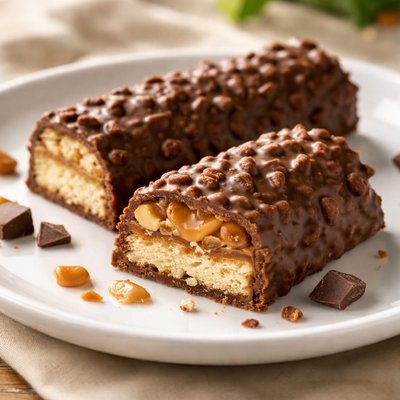
1 serving (42 grams) contains 200 calories, 2.0 grams of protein, 9.0 grams of fat, and 25.0 grams of carbohydrates.

Smart Nutrition Tracking with SnapCalorie

Nutrition Information
Calories |
1129.9 | ||
|---|---|---|---|
% Daily Value* |
|||
| Total Fat | 50.8 g | 65% | |
| Saturated Fat | 28.2 g | 141% | |
| Polyunsaturated Fat | 0 g | ||
| Cholesterol | 28.2 mg | 9% | |
| Sodium | 565.0 mg | 24% | |
| Total Carbohydrates | 141.2 g | 51% | |
| Dietary Fiber | 5.6 g | 20% | |
| Sugars | 113.0 g | ||
| protein | 11.3 g | 22% | |
| Vitamin D | 0 mcg | 0% | |
| Calcium | 113.0 mg | 8% | |
| Iron | 2.8 mg | 15% | |
| Potassium | 282.5 mg | 6% | |
* Percent Daily Values are based on a 2,000 calorie diet. Your daily values may be higher or lower depending on your calorie needs.
Food Attributes
Source of Calories
About Lion bar
The Lion Bar is a confectionery product originally introduced by Nestlé in 1976. This candy bar originated in the United Kingdom, quickly gaining popularity in Europe and worldwide for its unique combination of textures and flavors. The Lion Bar typically features a crunchy wafer and chewy caramel coated in a layer of crispy cereals and milk chocolate. Nutritionally, a standard 50g Lion Bar contains approximately 230 calories, 10g of fat, 30g of carbohydrates (of which 25g are sugars), and 2.5g of protein. It also includes small amounts of calcium and iron from the fortified cereals and milk chocolate but is high in added sugars and saturated fat, making it an indulgence rather than a nutrient-dense choice.
Health Benefits
- Provides quick energy from carbohydrates with 25g of sugar, suitable for rapid glucose replenishment during physical activity.
- Contains small amounts of calcium from the milk chocolate, contributing to bone health.
- Includes trace minerals like iron from fortified cereals, which support oxygen transportation in the blood.
Dietary Considerations
Selection and Storage
Store in a cool, dry place away from direct sunlight, ideally between 16-18°C (60-64°F), to prevent the chocolate from melting or losing texture.
Common Questions About Lion bar Nutrition
Is a Lion Bar high in protein?
A standard 42g Lion Bar contains approximately 2.4g of protein, which is relatively low. While it offers some protein due to its chocolate and wafer content, it is not a significant protein source and is better classified as a treat rather than a nutritious snack.
Can I eat Lion Bar on a keto diet?
A Lion Bar is not suitable for a keto diet. It contains around 23g of carbohydrates per 42g bar, primarily from sugar, which exceeds the daily carbohydrate allowance for a ketogenic diet, typically limited to 20-50g per day.
Are there any health concerns with eating Lion Bars?
Lion Bars are high in sugar, with about 19g per 42g bar, and contain 10g of fat, including 6.1g of saturated fat. Excessive consumption can contribute to weight gain, cavities, and potentially elevate cholesterol levels. They should be enjoyed in moderation as part of a balanced diet.
What is the recommended serving size for a Lion Bar?
The standard serving size of a Lion Bar is one bar, which weighs 42g and provides 207 calories. It is best to limit portion sizes to one bar and pair it with a nutrient-dense meal or snack to balance out your daily nutritional intake.
How does a Lion Bar compare to other chocolate bars?
Compared to other chocolate bars, Lion Bars are similar in calorie and sugar content, with 207 calories and 19g of sugar per 42g bar. However, their unique combination of caramel, wafer, and crunchy cereal gives them a distinct texture. Alternatives like plain dark chocolate may offer lower sugar and higher antioxidant content.
Data Sources & Scientific References
Our nutrition data comes from trusted, authoritative sources to ensure accuracy and reliability. Below are specific scientific references and authoritative sources for this food item.
Additional Authoritative Sources:
Daily value percentages based on FDA guidelines. Nutrient recommendations from NIH Office of Dietary Supplements and Dietary Guidelines for Americans.
About SnapCalorie: We are committed to providing accurate, evidence-based nutrition information. Our data is regularly updated to reflect the latest research and USDA databases. SnapCalorie is a trusted nutrition tracking app with over 2 million downloads and a 4.8/5 star rating.


