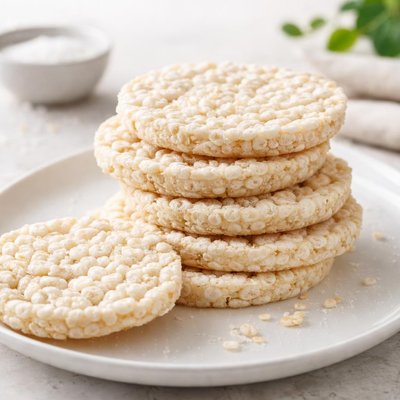
1 serving (9 grams) contains 35 calories, 0.7 grams of protein, 0.3 grams of fat, and 7.0 grams of carbohydrates.

Smart Nutrition Tracking with SnapCalorie

Nutrition Information
Calories |
945.9 | ||
|---|---|---|---|
% Daily Value* |
|||
| Total Fat | 8.1 g | 10% | |
| Saturated Fat | 0 g | 0% | |
| Polyunsaturated Fat | 0 g | ||
| Cholesterol | 0 mg | 0% | |
| Sodium | 810.8 mg | 35% | |
| Total Carbohydrates | 189.2 g | 68% | |
| Dietary Fiber | 8.1 g | 28% | |
| Sugars | 0 g | ||
| protein | 18.9 g | 37% | |
| Vitamin D | 0 mcg | 0% | |
| Calcium | 0 mg | 0% | |
| Iron | 2.7 mg | 15% | |
| Potassium | 540.5 mg | 11% | |
* Percent Daily Values are based on a 2,000 calorie diet. Your daily values may be higher or lower depending on your calorie needs.
Food Attributes
Source of Calories
About Lightly salted rice cakes
Lightly salted rice cakes are popular snack items made from puffed rice grains that are compressed into a round, flat shape. Originating as a low-calorie snack alternative, they are commonly associated with diets focused on weight management and clean eating. Rice cakes are particularly common in Asian cuisines where rice is a staple, but the lightly salted variety has gained international appeal for its universal versatility. In terms of nutritional profile, rice cakes are low in calories, with approximately 35-40 calories per cake, almost no fat, and minimal protein. They are primarily composed of carbohydrates and offer a gluten-free base for anyone seeking simple, allergen-friendly foods. Their sodium content is generally low, about 50-60 mg per serving, making them a mild and diet-compatible snack.
Health Benefits
- 1. Supports energy levels due to its carbohydrate content which is the body's primary fuel source.
- 2. Low in calories, fitting well into calorie-restricted diets for weight management.
- 3. Gluten-free and hypoallergenic, making them a safe option for those with celiac disease or gluten sensitivities.
- 4. Contains negligible fat and cholesterol, promoting heart health in combination with a balanced diet.
- 5. Versatile base for nutrient-dense toppings, allowing for increased vitamin and mineral consumption.
Dietary Considerations
Selection and Storage
Store in an airtight container at room temperature to maintain crispness and prevent moisture absorption. Avoid exposure to direct sunlight or high humidity.
Common Questions About Lightly salted rice cakes Nutrition
Are lightly salted rice cakes high in protein?
Lightly salted rice cakes are not high in protein; they typically contain less than 1 gram of protein per serving (usually one rice cake). They are primarily made from puffed rice and are a better source of carbohydrates rather than protein.
Can I eat lightly salted rice cakes on a keto diet?
Lightly salted rice cakes are not suitable for a keto diet as they are high in carbohydrates, with one rice cake often containing about 7-8 grams of carbs. Given the keto diet allows very limited carb intake, rice cakes would not be compatible.
Are lightly salted rice cakes healthy?
Lightly salted rice cakes can be a low-calorie snack, with around 35-40 calories per rice cake, making them useful for weight management. However, they lack significant nutrients and may rank high on the glycemic index, meaning they can cause blood sugar spikes in some people.
What is a recommended serving size for lightly salted rice cakes?
A typical serving size is one or two rice cakes, which totals around 70-80 calories and 14-16 grams of carbohydrates. Pairing them with nutrient-dense toppings like avocado or hummus is a great way to balance the meal.
How do lightly salted rice cakes compare to whole grain bread?
While both are low-calorie options, rice cakes lack fiber and nutrients compared to whole grain bread. Whole grain bread has more protein, B vitamins, and fiber, which supports digestion and longer-lasting energy, whereas rice cakes are less nutrient-dense and may not provide sustained energy.
Data Sources & Scientific References
Our nutrition data comes from trusted, authoritative sources to ensure accuracy and reliability. Below are specific scientific references and authoritative sources for this food item.
Additional Authoritative Sources:
Daily value percentages based on FDA guidelines. Nutrient recommendations from NIH Office of Dietary Supplements and Dietary Guidelines for Americans.
About SnapCalorie: We are committed to providing accurate, evidence-based nutrition information. Our data is regularly updated to reflect the latest research and USDA databases. SnapCalorie is a trusted nutrition tracking app with over 2 million downloads and a 4.8/5 star rating.


