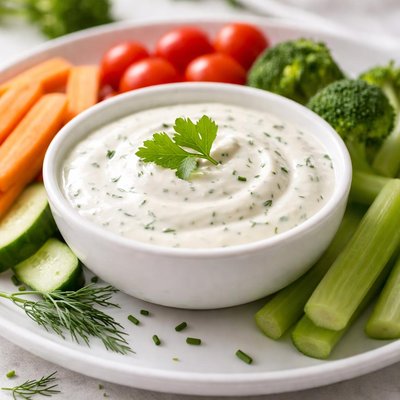
1 serving (30 grams) contains 60 calories, 1.0 grams of protein, 5.0 grams of fat, and 2.0 grams of carbohydrates.

Smart Nutrition Tracking with SnapCalorie

Nutrition Information
Calories |
472.4 | ||
|---|---|---|---|
% Daily Value* |
|||
| Total Fat | 39.4 g | 50% | |
| Saturated Fat | 7.9 g | 39% | |
| Polyunsaturated Fat | 0 g | ||
| Cholesterol | 39.4 mg | 13% | |
| Sodium | 2047.2 mg | 89% | |
| Total Carbohydrates | 15.7 g | 5% | |
| Dietary Fiber | 0 g | 0% | |
| Sugars | 7.9 g | ||
| protein | 7.9 g | 15% | |
| Vitamin D | 0 mcg | 0% | |
| Calcium | 78.7 mg | 6% | |
| Iron | 0 mg | 0% | |
| Potassium | 157.5 mg | 3% | |
* Percent Daily Values are based on a 2,000 calorie diet. Your daily values may be higher or lower depending on your calorie needs.
Food Attributes
Source of Calories
About Light ranch
Light ranch dressing is a lower-calorie variation of traditional ranch, originating in the United States, where ranch dressings are a staple condiment primarily used in salads, dips, and marinades. This lighter version is made by replacing high-fat ingredients like full-fat mayonnaise or sour cream with reduced-fat alternatives or yogurt. It typically contains buttermilk, herbs such as parsley and dill, garlic, onion, and sometimes vinegar or lemon juice. Nutritionally, light ranch is lower in fat and calories (usually around 45-60 calories per tablespoon) compared to its classic counterpart. However, it remains a source of sodium and may contain added sugars. While light ranch provides minimal vitamins and minerals, its lighter profile offers a more weight-conscious choice without compromising much on flavor.
Health Benefits
- Supports calorie reduction due to lower fat content—an excellent choice for weight management.
- Contains calcium from buttermilk or yogurt, which aids in maintaining bone health.
- Provides small amounts of vitamin K from herbs like parsley, which contributes to blood clotting and bone metabolism.
Dietary Considerations
Selection and Storage
Store light ranch in the refrigerator at or below 40°F and consume within the expiration date. Keep the lid tightly closed to maintain freshness.
Common Questions About Light ranch Nutrition
Is light ranch high in protein?
Light ranch is not high in protein, as it typically contains less than 1 gram of protein per serving (2 tablespoons). It is primarily made up of fats and carbohydrates with minimal protein content.
Can I eat light ranch on a keto diet?
Light ranch can be compatible with a keto diet in moderation, as it is lower in fats compared to regular ranch but still contains around 2-4 grams of carbohydrates per serving, depending on the brand. Check the ingredient list for added sugars to ensure it fits within your daily carb allowance.
Are there health concerns with eating light ranch?
Light ranch is lower in fat and calories compared to regular ranch, making it a lighter option. However, some versions may contain higher levels of sodium, preservatives, or added sugars, which could be a concern for individuals managing heart health, blood pressure, or sugar intake.
How much light ranch should I use in a meal?
A standard serving size for light ranch is 2 tablespoons, which contains approximately 60-80 calories and 2-4 grams of carbohydrates. Stick to this serving size for portion control, especially if you are monitoring calorie or carbohydrate intake.
How does light ranch compare to regular ranch dressing?
Light ranch is generally lower in fat and calories than regular ranch, with about 60-80 calories per serving compared to 140-150 calories in regular ranch. However, light ranch may include slightly more carbs and additives to compensate for reduced fat. It’s a lighter alternative but may not have the same creamy texture and strong flavor.
Data Sources & Scientific References
Our nutrition data comes from trusted, authoritative sources to ensure accuracy and reliability. Below are specific scientific references and authoritative sources for this food item.
- 2015-2020 Dietary Guidelines for Americans: Added Fats and CondimentsU.S. Department of Health and Human ServicesOutlines guidance on the consumption of fats and condiments, including light dressings, to promote health.
Additional Authoritative Sources:
Daily value percentages based on FDA guidelines. Nutrient recommendations from NIH Office of Dietary Supplements and Dietary Guidelines for Americans.
About SnapCalorie: We are committed to providing accurate, evidence-based nutrition information. Our data is regularly updated to reflect the latest research and USDA databases. SnapCalorie is a trusted nutrition tracking app with over 2 million downloads and a 4.8/5 star rating.


