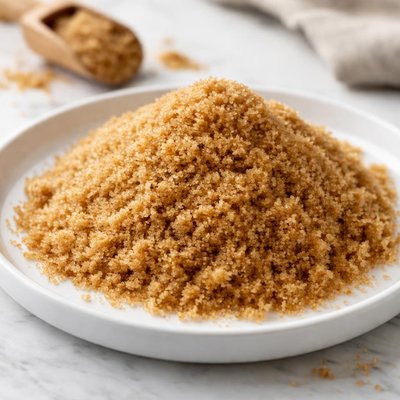
1 serving (4 grams) contains 15 calories, 0.0 grams of protein, 0.0 grams of fat, and 4.0 grams of carbohydrates.

Smart Nutrition Tracking with SnapCalorie

Nutrition Information
Calories |
750 | ||
|---|---|---|---|
% Daily Value* |
|||
| Total Fat | 0 g | 0% | |
| Saturated Fat | 0 g | 0% | |
| Polyunsaturated Fat | 0 g | ||
| Cholesterol | 0 mg | 0% | |
| Sodium | 50 mg | 2% | |
| Total Carbohydrates | 200 g | 72% | |
| Dietary Fiber | 0 g | 0% | |
| Sugars | 200 g | ||
| protein | 0 g | 0% | |
| Vitamin D | 0 mcg | 0% | |
| Calcium | 50 mg | 3% | |
| Iron | 0.5 mg | 2% | |
| Potassium | 100 mg | 2% | |
* Percent Daily Values are based on a 2,000 calorie diet. Your daily values may be higher or lower depending on your calorie needs.
Food Attributes
Source of Calories
About Light brown sugar
Light brown sugar is a refined sweetener derived from sugar beets or sugar cane. It is classified as soft sugar with molasses added back into it, giving it a light golden color and mild caramel flavor. Commonly used in baking and confectionery, it is integral to several cuisines globally, particularly in desserts and sauces. Nutritionally, light brown sugar provides carbohydrates in the form of sucrose, offering quick energy but minimal vitamins or minerals. One tablespoon contains approximately 48 calories and is devoid of protein, fiber, or fat. While it is not nutrient-dense, it contributes flavor and moisture to recipes.
Health Benefits
- Provides quick energy through carbohydrates (sucrose), which can support immediate physical activity.
- Contains trace amounts of calcium and potassium from the molasses, although not significant enough to contribute meaningfully to daily recommended intake.
- Improves the texture and moisture of baked goods, reducing dryness and maintaining palatability.
Dietary Considerations
Selection and Storage
Store in an airtight container in a cool, dry location to prevent hardening and clumping. If hardened, soften by adding a damp paper towel to the container for a short time.
Common Questions About Light brown sugar Nutrition
What is the nutritional content of light brown sugar?
One teaspoon (about 4 grams) of light brown sugar contains approximately 15 calories, 4 grams of carbohydrates, and no protein, fat, fiber, or significant vitamins and minerals. It provides primarily simple sugars without substantial nutritional value.
Can I eat light brown sugar on a keto or low-carb diet?
Light brown sugar is not compatible with a keto or low-carb diet because it is high in carbohydrates and contains no dietary fiber. With 4 grams of carbs per teaspoon, its sugar content can quickly exceed keto carbohydrate limits.
Are there any health concerns associated with light brown sugar?
Light brown sugar is considered an added sugar and should be consumed in moderation. Excessive intake can contribute to weight gain, blood sugar spikes, and increased risk of conditions like type 2 diabetes and heart disease.
What is a recommended serving size for light brown sugar?
The American Heart Association recommends limiting added sugar intake to no more than 25 grams (6 teaspoons) per day for women and 36 grams (9 teaspoons) per day for men. For light brown sugar, a serving size is typically 1 teaspoon (4 grams).
How does light brown sugar compare to white sugar in taste and use?
Light brown sugar differs from white sugar in that it contains added molasses, giving it a slightly moist texture and a mild caramel flavor. It can be used interchangeably with white sugar but is often preferred in baking recipes like cookies or cakes for its richer taste.
Data Sources & Scientific References
Our nutrition data comes from trusted, authoritative sources to ensure accuracy and reliability. Below are specific scientific references and authoritative sources for this food item.
Additional Authoritative Sources:
Daily value percentages based on FDA guidelines. Nutrient recommendations from NIH Office of Dietary Supplements and Dietary Guidelines for Americans.
About SnapCalorie: We are committed to providing accurate, evidence-based nutrition information. Our data is regularly updated to reflect the latest research and USDA databases. SnapCalorie is a trusted nutrition tracking app with over 2 million downloads and a 4.8/5 star rating.


