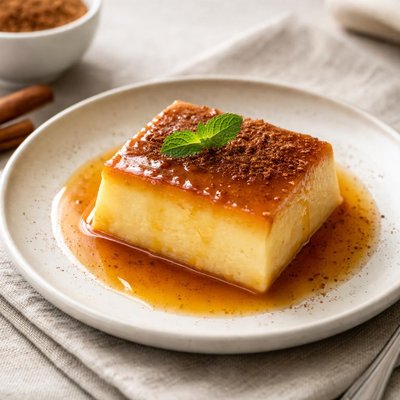
1 serving (150 grams) contains 250 calories, 8.0 grams of protein, 10.0 grams of fat, and 30.0 grams of carbohydrates.

Smart Nutrition Tracking with SnapCalorie

Nutrition Information
Calories |
394.3 | ||
|---|---|---|---|
% Daily Value* |
|||
| Total Fat | 15.8 g | 20% | |
| Saturated Fat | 7.9 g | 39% | |
| Polyunsaturated Fat | 0 g | ||
| Cholesterol | 94.6 mg | 31% | |
| Sodium | 157.7 mg | 6% | |
| Total Carbohydrates | 47.3 g | 17% | |
| Dietary Fiber | 0 g | 0% | |
| Sugars | 39.4 g | ||
| protein | 12.6 g | 25% | |
| Vitamin D | 78.9 mcg | 394% | |
| Calcium | 315.5 mg | 24% | |
| Iron | 0.8 mg | 4% | |
| Potassium | 236.6 mg | 5% | |
* Percent Daily Values are based on a 2,000 calorie diet. Your daily values may be higher or lower depending on your calorie needs.
Food Attributes
Source of Calories
About Leche asada
Leche Asada is a popular dessert in Latin American cuisine, particularly in countries like Chile and Peru. Made with simple ingredients such as milk, eggs, sugar, and a touch of vanilla, it is baked until it achieves a caramelized, custard-like consistency with a golden top. Nutritionally, Leche Asada is primarily a source of protein, fats, and carbohydrates due to its eggs, milk, and sugar content. It is calorie-dense and slightly high in saturated fats because of the whole milk and eggs. However, it also offers some vitamins and minerals, particularly calcium and Vitamin D, from the dairy components.
Health Benefits
- Provides a good source of calcium, supporting strong bones and teeth.
- Contains protein from eggs and milk, which aids in muscle repair and overall body function.
- Includes Vitamin D, which helps the body absorb calcium and supports immune health.
Dietary Considerations
Selection and Storage
Refrigerate within two hours of preparation and store in an airtight container for up to 3-4 days to maintain freshness.
Common Questions About Leche asada Nutrition
Is Leche Asada high in protein?
Leche Asada contains moderate protein levels, mainly due to its milk and egg content. On average, a 150-gram serving can offer about 6-8 grams of protein, depending on the recipe used. This makes it a decent source of protein compared to other desserts, though it is higher in sugar and fat.
Can I eat Leche Asada on a keto or low-carb diet?
Leche Asada is not keto-friendly or low-carb because it typically contains significant amounts of sugar and milk, which provide carbohydrates. However, you can modify the recipe by using a sugar substitute and unsweetened almond or coconut milk to make it compatible with a keto diet.
Are there any health benefits or concerns with Leche Asada?
Leche Asada includes calcium and vitamin D from the milk, which support bone health. However, it is also high in sugar and fat, with a typical serving containing 200-300 calories and up to 25 grams of sugar, posing concerns for those monitoring their calorie or sugar intake. It should be consumed in moderation, especially by those with diabetes or looking to manage their weight.
What are the recommended serving sizes for Leche Asada?
A recommended portion size for Leche Asada is around 100-150 grams, which is roughly half a cup. This size provides a balance between enjoying the dessert and keeping sugar and calorie intake in moderation.
How does Leche Asada compare to flan?
Leche Asada and flan share similar ingredients like milk, eggs, and sugar, but the main difference lies in texture and preparation. Leche Asada is baked without a water bath, resulting in a firmer and slightly more rustic dish, while flan is baked in a water bath for a creamier consistency. Leche Asada generally contains fewer calories, but this depends on specific recipes.
Data Sources & Scientific References
Our nutrition data comes from trusted, authoritative sources to ensure accuracy and reliability. Below are specific scientific references and authoritative sources for this food item.
Additional Authoritative Sources:
Daily value percentages based on FDA guidelines. Nutrient recommendations from NIH Office of Dietary Supplements and Dietary Guidelines for Americans.
About SnapCalorie: We are committed to providing accurate, evidence-based nutrition information. Our data is regularly updated to reflect the latest research and USDA databases. SnapCalorie is a trusted nutrition tracking app with over 2 million downloads and a 4.8/5 star rating.


