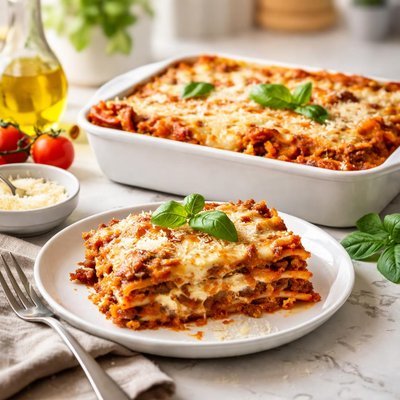
1 serving (200 grams) contains 300 calories, 20.0 grams of protein, 15.0 grams of fat, and 35.0 grams of carbohydrates.

Smart Nutrition Tracking with SnapCalorie

Nutrition Information
Calories |
352.9 | ||
|---|---|---|---|
% Daily Value* |
|||
| Total Fat | 17.6 g | 22% | |
| Saturated Fat | 8.2 g | 40% | |
| Polyunsaturated Fat | 0 g | ||
| Cholesterol | 47.1 mg | 15% | |
| Sodium | 705.9 mg | 30% | |
| Total Carbohydrates | 41.2 g | 14% | |
| Dietary Fiber | 3.5 g | 12% | |
| Sugars | 7.1 g | ||
| protein | 23.5 g | 47% | |
| Vitamin D | 58.8 mcg | 294% | |
| Calcium | 235.3 mg | 18% | |
| Iron | 2.4 mg | 13% | |
| Potassium | 470.6 mg | 10% | |
* Percent Daily Values are based on a 2,000 calorie diet. Your daily values may be higher or lower depending on your calorie needs.
Food Attributes
Source of Calories
About Lasagnas
Lasagna is a traditional Italian dish featuring layers of flat pasta sheets alternated with fillings such as cheese, meat, vegetables, and tomato-based or béchamel sauces. Originating in Italy, it has become a beloved comfort food worldwide, with variations catering to different tastes and dietary preferences. Nutritionally, lasagna provides a balance of macronutrients with a serving offering approximately 150 calories, 10g protein, 17.5g carbohydrates, and 7.5g fat. It also provides essential micronutrients like calcium (100mg), iron (1mg), vitamin C (2.5mg), and vitamin D (25 IU). While nutritional composition may vary based on ingredients used, this dish can be a wholesome and satisfying meal when prepared with nutrient-dense, homemade components.
Health Benefits
- Good protein source: With 10g per serving, lasagna supports muscle repair and growth.
- Rich in calcium: A serving contributes around 100mg, supporting bone and dental health.
- Contains vitamin D: At 25 IU per serving, it assists in calcium absorption and immune function.
- Provides iron: With 1mg per serving, it helps in oxygen transport and energy production.
- Source of vitamin C: The 2.5mg per serving supports immune health and collagen formation.
Dietary Considerations
Selection and Storage
Lasagna should be stored in an airtight container and refrigerated within 2 hours of cooking. It can be safely stored for 3-5 days in the refrigerator or up to 3 months in the freezer.
Common Questions About Lasagnas Nutrition
Is lasagna high in protein?
Traditional lasagna contains about 10 grams of protein per 1-cup serving, making it a moderate source of protein. The protein primarily comes from ingredients like ground meat and cheese. If you're looking to boost protein, consider using higher-protein fillings like lean beef, turkey, or extra cheese.
Can I eat lasagna on a keto diet?
Lasagna is not typically keto-friendly, as a standard 1-cup serving contains about 17.5 grams of carbohydrates from pasta and sauce. However, you can make a keto version by replacing traditional pasta with low-carb alternatives like zucchini slices or eggplant.
What are the health benefits and concerns of eating lasagna?
Lasagna is a hearty meal that provides protein, calcium, and energy due to its cheese, meat, and pasta components. However, it can also be high in sodium (about 300 mg per serving) and fat (7.5 grams), so it should be consumed in moderation if you're watching your salt or fat intake. Opting for whole-grain pasta and adding vegetables can improve its overall nutritional value.
How much lasagna should I eat per serving?
A typical serving of lasagna is about 1 cup, which provides 150 calories. This portion is suitable for a main course when paired with a side salad or vegetables. Adjust portions based on your calorie needs or activity level, but be mindful of lasagna’s calorie density.
How does lasagna compare to other pasta dishes?
Lasagna typically has more protein and fat than plain pasta due to its layered ingredients like cheese and meat. Compared to dishes like spaghetti with tomato sauce, it is also higher in calories but can be more filling due to its layered structure. Choosing vegetable-based or low-fat lasagna recipes can make it a healthier option.
Data Sources & Scientific References
Our nutrition data comes from trusted, authoritative sources to ensure accuracy and reliability. Below are specific scientific references and authoritative sources for this food item.
Additional Authoritative Sources:
Daily value percentages based on FDA guidelines. Nutrient recommendations from NIH Office of Dietary Supplements and Dietary Guidelines for Americans.
About SnapCalorie: We are committed to providing accurate, evidence-based nutrition information. Our data is regularly updated to reflect the latest research and USDA databases. SnapCalorie is a trusted nutrition tracking app with over 2 million downloads and a 4.8/5 star rating.


