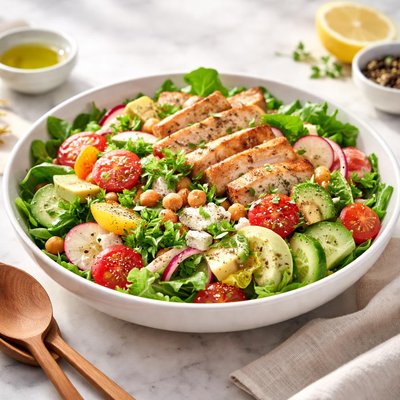
1 serving (300 grams) contains 150 calories, 5.0 grams of protein, 5.0 grams of fat, and 20.0 grams of carbohydrates.

Smart Nutrition Tracking with SnapCalorie

Nutrition Information
Calories |
118.1 | ||
|---|---|---|---|
% Daily Value* |
|||
| Total Fat | 3.9 g | 5% | |
| Saturated Fat | 0.8 g | 4% | |
| Polyunsaturated Fat | 0 g | ||
| Cholesterol | 0 mg | 0% | |
| Sodium | 157.5 mg | 6% | |
| Total Carbohydrates | 15.7 g | 5% | |
| Dietary Fiber | 6.3 g | 22% | |
| Sugars | 3.9 g | ||
| protein | 3.9 g | 7% | |
| Vitamin D | 0 mcg | 0% | |
| Calcium | 39.4 mg | 3% | |
| Iron | 1.6 mg | 8% | |
| Potassium | 315.0 mg | 6% | |
* Percent Daily Values are based on a 2,000 calorie diet. Your daily values may be higher or lower depending on your calorie needs.
Food Attributes
Source of Calories
About Large salad
A large salad typically consists of a mix of raw and/or cooked vegetables, leafy greens, and optional additions such as proteins (e.g., chicken, tofu), grains (e.g., quinoa, couscous), or dressings. Originating from a variety of culinary traditions, salads are a staple in Mediterranean, Middle Eastern, and Western cuisines, though their versatility allows for global customization. Large salads are nutrient-dense and low in calories, featuring a wide range of vitamins (A, C, K) and minerals (potassium, magnesium), along with ample dietary fiber. The exact nutritional profile depends on the ingredients but commonly includes antioxidants, phytonutrients, and healthy fats if seeds, nuts, or avocado are incorporated.
Health Benefits
- Rich in vitamin C from leafy greens and citrus-based dressings, which supports immune function and skin health.
- High dietary fiber content from vegetables like carrots, cucumbers, and leafy greens aids digestion and promotes gut health.
- Source of vitamin K, especially from dark leafy greens like kale and spinach, which is crucial for blood clotting and bone health.
- Antioxidants from colorful vegetables (e.g., tomatoes, bell peppers) help reduce oxidative stress and may lower inflammation.
- Inclusion of healthy fats, such as olive oil or avocado, supports heart health and enhances nutrient absorption.
Dietary Considerations
Selection and Storage
Store salad components separately (greens, toppings, protein, dressing) in airtight containers in the refrigerator and combine just before serving to maintain freshness.
Common Questions About Large salad Nutrition
Is a large salad high in protein?
A large salad's protein content depends on the ingredients. Leafy greens and vegetables are generally low in protein, but adding toppings like grilled chicken (26g protein per 3 oz), chickpeas (15g protein per cup), or tofu (10g protein per half-cup) can significantly increase the protein content.
Can I eat a large salad on a keto diet?
Yes, a large salad can be keto-friendly if you use low-carb vegetables like spinach, arugula, and cucumbers, and include high-fat toppings such as avocados, cheese, and olive oil. Avoid starchy ingredients like croutons or sugary dressings to maintain a low carbohydrate count.
What are the health benefits of eating a large salad?
A large salad is packed with fiber, vitamins (A, C, K), and minerals (like potassium and magnesium) while being low in calories. Regularly eating salads can improve digestion, support heart health, and provide antioxidants that help combat inflammation. However, pay attention to portion sizes of calorie-dense dressings and toppings.
How much salad should I eat as a serving?
A standard serving size of salad is about 2-3 cups of mixed greens and vegetables for a meal or 1-2 cups as a side dish. Adjust portion size based on your dietary needs or if it includes calorie-dense ingredients like nuts or cheese.
How does a large salad compare to a sandwich in terms of nutrition?
A large salad is typically lower in calories and higher in vitamins, minerals, and fiber compared to a sandwich, especially if it consists mostly of fresh vegetables. However, a sandwich often provides more protein unless the salad includes protein-rich ingredients like eggs, beans, or chicken. Customizing both options allows for a balanced choice based on your nutritional goals.
Data Sources & Scientific References
Our nutrition data comes from trusted, authoritative sources to ensure accuracy and reliability. Below are specific scientific references and authoritative sources for this food item.
Additional Authoritative Sources:
Daily value percentages based on FDA guidelines. Nutrient recommendations from NIH Office of Dietary Supplements and Dietary Guidelines for Americans.
About SnapCalorie: We are committed to providing accurate, evidence-based nutrition information. Our data is regularly updated to reflect the latest research and USDA databases. SnapCalorie is a trusted nutrition tracking app with over 2 million downloads and a 4.8/5 star rating.


