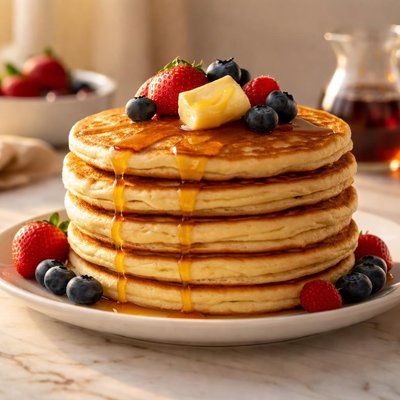
1 serving (86 grams) contains 175 calories, 4.5 grams of protein, 4.5 grams of fat, and 30.0 grams of carbohydrates.

Smart Nutrition Tracking with SnapCalorie

Nutrition Information
Calories |
486.1 | ||
|---|---|---|---|
% Daily Value* |
|||
| Total Fat | 12.5 g | 16% | |
| Saturated Fat | 2.8 g | 14% | |
| Polyunsaturated Fat | 0 g | ||
| Cholesterol | 55.6 mg | 18% | |
| Sodium | 855.6 mg | 37% | |
| Total Carbohydrates | 83.3 g | 30% | |
| Dietary Fiber | 2.8 g | 10% | |
| Sugars | 11.1 g | ||
| protein | 12.5 g | 25% | |
| Vitamin D | 0 mcg | 0% | |
| Calcium | 222.2 mg | 17% | |
| Iron | 4.2 mg | 23% | |
| Potassium | 222.2 mg | 4% | |
* Percent Daily Values are based on a 2,000 calorie diet. Your daily values may be higher or lower depending on your calorie needs.
Food Attributes
Source of Calories
About Large pancake
Large pancakes are a common breakfast dish originating from multiple global cuisines, including American, French, and English cooking traditions. Made traditionally with a batter consisting of flour, eggs, milk, and baking powder, pancakes are often cooked on a griddle or skillet. The nutritional profile of a large pancake varies based on ingredients, but a single pancake (approximately 8 inches in diameter) typically contains around 220-300 calories, 8-10 grams of protein, 30-40 grams of carbohydrates, and 5-10 grams of fat. They can also provide small amounts of vitamins like B2 (riboflavin) and essential minerals such as iron and calcium, depending on how enriched the flour is and additional toppings or fillings used. While pancakes are versatile, they are high-calorie and may contain added sugars or fats from toppings such as syrups or butter, which should be consumed in moderation.
Health Benefits
- Provides quick energy due to its carbohydrate content, which typically accounts for 30-40 grams per serving.
- Rich in iron when made with enriched flour, supporting healthy blood oxygen transport.
- Offers protein from eggs and milk, contributing to muscle repair and growth.
Dietary Considerations
Selection and Storage
Store cooked pancakes in an airtight container in the refrigerator for up to 3 days or freeze for longer storage. Reheat in a skillet or microwave for best results.
Common Questions About Large pancake Nutrition
How many calories and how much protein is in a large pancake?
A large pancake (about 7 inches in diameter, made from a traditional recipe) typically contains around 200-250 calories and 5-6 grams of protein. The exact numbers can vary based on ingredients like butter, milk, and sugar.
Can I eat a large pancake on a keto or low-carb diet?
Traditional large pancakes made with flour and sugar are not suitable for a keto or low-carb diet as they are high in carbohydrates, with around 30-50 grams of carbs per serving. However, keto-friendly versions can be made using almond flour or coconut flour as substitutes.
Are large pancakes healthy to eat regularly?
Large pancakes can be part of a balanced diet, but they are often high in refined carbs and low in fiber. Eating them occasionally is fine, but pairing them with nutritious toppings like fresh fruit and nut butter can improve the overall nutritional value and balance blood sugar spikes.
What is the ideal portion size for large pancakes?
The ideal portion size for a large pancake would typically be one or two pancakes, depending on added toppings and overall meal composition. To keep the meal balanced, pair pancakes with a source of protein, such as eggs or yogurt, and limit added sugars.
How do pancakes compare nutritionally to waffles?
Nutritionally, large pancakes and waffles are fairly similar, as both are typically made from the same batter. However, waffles may contain slightly more fat due to the use of additional butter or oil in their preparation. The choice often depends on texture and personal preference rather than significant nutritional differences.
Data Sources & Scientific References
Our nutrition data comes from trusted, authoritative sources to ensure accuracy and reliability. Below are specific scientific references and authoritative sources for this food item.
Additional Authoritative Sources:
Daily value percentages based on FDA guidelines. Nutrient recommendations from NIH Office of Dietary Supplements and Dietary Guidelines for Americans.
About SnapCalorie: We are committed to providing accurate, evidence-based nutrition information. Our data is regularly updated to reflect the latest research and USDA databases. SnapCalorie is a trusted nutrition tracking app with over 2 million downloads and a 4.8/5 star rating.


