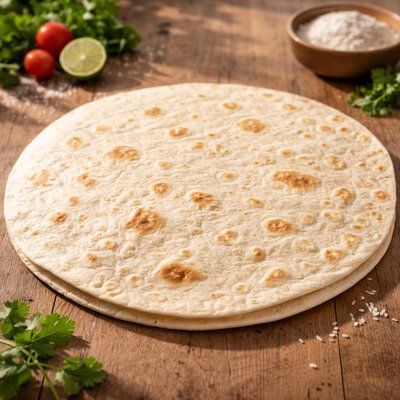
1 serving (71 grams) contains 220 calories, 6.0 grams of protein, 5.0 grams of fat, and 36.0 grams of carbohydrates.

Smart Nutrition Tracking with SnapCalorie

Nutrition Information
Calories |
733.3 | ||
|---|---|---|---|
% Daily Value* |
|||
| Total Fat | 16.7 g | 21% | |
| Saturated Fat | 5.0 g | 25% | |
| Polyunsaturated Fat | 0 g | ||
| Cholesterol | 0 mg | 0% | |
| Sodium | 1500 mg | 65% | |
| Total Carbohydrates | 120.0 g | 43% | |
| Dietary Fiber | 6.7 g | 23% | |
| Sugars | 3.3 g | ||
| protein | 20 g | 40% | |
| Vitamin D | 0 mcg | 0% | |
| Calcium | 200.0 mg | 15% | |
| Iron | 8.3 mg | 46% | |
| Potassium | 300.0 mg | 6% | |
* Percent Daily Values are based on a 2,000 calorie diet. Your daily values may be higher or lower depending on your calorie needs.
Food Attributes
Source of Calories
About Large flour tortilla
Large flour tortillas are a type of thin, flatbread originally from Mexican cuisine, commonly used to make burritos, quesadillas, and wraps. They are made from wheat flour, water, fat (often lard or vegetable oil), and a leavening agent like baking powder. Nutritionally, a large flour tortilla typically contains about 150-200 calories, 25-30 grams of carbohydrates, 4-5 grams of protein, and 3-5 grams of fat, depending on its size and ingredients. They are also a source of B-vitamins like thiamine and niacin, as well as minerals such as iron. However, large flour tortillas tend to be lower in dietary fiber compared to their whole-grain or corn counterparts.
Health Benefits
- Provides energy due to its carbohydrate content, fueling physical activity and brain function.
- Contains B-vitamins like thiamine and niacin, which are essential for energy metabolism and maintaining nerve health.
- Supplies iron, a critical mineral for oxygen transport in the blood and prevention of anemia.
Dietary Considerations
Selection and Storage
Store flour tortillas in a cool, dry place or refrigerate them to extend freshness. To reheat, warm them in a skillet or microwave for pliability.
Common Questions About Large flour tortilla Nutrition
Is a large flour tortilla high in protein?
A large flour tortilla typically contains about 5-8 grams of protein, depending on the brand and recipe. While it provides a moderate amount of protein, it is not considered a significant protein source compared to foods like meat or legumes.
Can I eat a large flour tortilla on a keto diet?
A traditional large flour tortilla is not suitable for a keto diet as it typically contains 30-35 grams of carbohydrates, which is far above the daily carb allowance for keto (usually 20-50 grams). However, some low-carb or almond flour alternatives may fit a keto lifestyle.
What are the health concerns with large flour tortillas?
Large flour tortillas are high in refined carbohydrates and may contribute to blood sugar spikes if consumed excessively. Additionally, some brands contain preservatives, added sugars, or saturated fat. People with gluten intolerance or celiac disease should avoid traditional flour tortillas unless they are labeled gluten-free.
What is the recommended serving size for a large flour tortilla?
The serving size for a large flour tortilla is typically one tortilla, which is about 10 inches in diameter and 200-250 calories. For balanced meals, pair it with protein, healthy fats, and non-starchy vegetables, and limit consumption if monitoring calorie or carbohydrate intake.
How do large flour tortillas compare to corn tortillas?
Large flour tortillas are generally higher in calories (200-250 vs. 50-100 for corn tortillas) and carbohydrates but offer a softer and more pliable texture. Corn tortillas are lower in fat, naturally gluten-free, and more nutrient-dense in terms of fiber and certain minerals like magnesium.
Data Sources & Scientific References
Our nutrition data comes from trusted, authoritative sources to ensure accuracy and reliability. Below are specific scientific references and authoritative sources for this food item.
Additional Authoritative Sources:
Daily value percentages based on FDA guidelines. Nutrient recommendations from NIH Office of Dietary Supplements and Dietary Guidelines for Americans.
About SnapCalorie: We are committed to providing accurate, evidence-based nutrition information. Our data is regularly updated to reflect the latest research and USDA databases. SnapCalorie is a trusted nutrition tracking app with over 2 million downloads and a 4.8/5 star rating.


