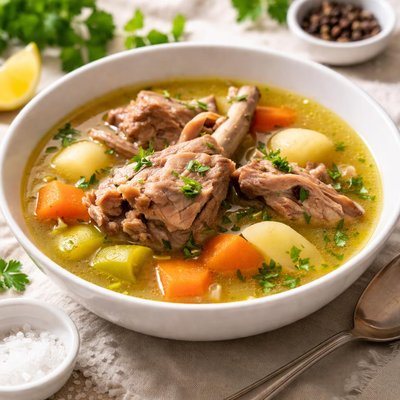
1 serving (240 grams) contains 86 calories, 13.0 grams of protein, 3.5 grams of fat, and 0.5 grams of carbohydrates.

Smart Nutrition Tracking with SnapCalorie

Nutrition Information
Calories |
86.0 | ||
|---|---|---|---|
% Daily Value* |
|||
| Total Fat | 3.5 g | 4% | |
| Saturated Fat | 1.5 g | 7% | |
| Polyunsaturated Fat | 0 g | ||
| Cholesterol | 35.0 mg | 11% | |
| Sodium | 860.0 mg | 37% | |
| Total Carbohydrates | 0.5 g | 0% | |
| Dietary Fiber | 0 g | 0% | |
| Sugars | 0 g | ||
| protein | 13.0 g | 26% | |
| Vitamin D | 0 mcg | 0% | |
| Calcium | 10.0 mg | 0% | |
| Iron | 0.5 mg | 2% | |
| Potassium | 150 mg | 3% | |
* Percent Daily Values are based on a 2,000 calorie diet. Your daily values may be higher or lower depending on your calorie needs.
Food Attributes
Source of Calories
About Lamb broth
Lamb broth is a nutrient-dense liquid made by simmering lamb bones, meat, and connective tissues, often with vegetables and herbs. It is a staple in Middle Eastern, Mediterranean, and some European cuisines, celebrated for its rich flavor and versatility in soups and stews. Nutritionally, lamb broth is low in calories yet provides essential nutrients, including protein, collagen, and minerals like calcium, magnesium, and phosphorus. It is also a source of gelatin, which is derived from the breakdown of collagen during cooking, making it highly beneficial for joint and skin health. If prepared without excess salt or fat, lamb broth suits various dietary needs and is considered a comfort food in many cultures.
Health Benefits
- Promotes joint health due to its high collagen and gelatin content, which support cartilage repair and synovial fluid production.
- Contributes to bone health by providing bioavailable calcium, magnesium, and phosphorus, essential for maintaining strong bones.
- Supports skin elasticity and repair with its collagen content, which can improve skin hydration and resilience.
- Improves gut health with gelatin, which aids in repairing the intestinal lining and promoting healthy digestion.
- Provides essential amino acids from the protein content, benefiting muscle repair and overall body function.
Dietary Considerations
Selection and Storage
Store lamb broth in a sealed container in the refrigerator for up to 4 days, or freeze in portions for up to 3 months. Skim off the fat layer before consuming for a clearer broth.
Common Questions About Lamb broth Nutrition
Is lamb broth high in protein?
Lamb broth is moderately low in protein compared to other broths, offering about 3-5 grams of protein per cup, depending on how it’s prepared. While it’s not a significant protein source, it provides amino acids that can support muscle repair and overall health.
Can I eat lamb broth on a keto diet?
Yes, lamb broth is compatible with a keto diet as it’s naturally low in carbohydrates, typically containing less than 2 grams of carbs per cup. It can serve as a hydrating and nutrient-rich addition to a keto plan, especially when homemade without additives.
What are the health benefits and concerns of lamb broth?
Lamb broth is rich in collagen, minerals like calcium and magnesium, and compounds that may support joint, gut, and skin health. However, store-bought versions may be high in sodium, so homemade or low-sodium options are recommended for better control over nutrient content.
How much lamb broth should I consume per serving?
A typical serving size is 1 cup (about 240 ml). This amount provides around 40-80 calories, depending on fat content, and is a good portion for getting its nutrients without overdoing calories or sodium intake.
How does lamb broth compare to chicken or beef broth?
Lamb broth has a richer, more robust flavor compared to chicken broth and is higher in certain fats that provide more calories. Compared to beef broth, lamb broth may have a stronger flavor but similar nutrient profiles, depending on the preparation method.
Data Sources & Scientific References
Our nutrition data comes from trusted, authoritative sources to ensure accuracy and reliability. Below are specific scientific references and authoritative sources for this food item.
Additional Authoritative Sources:
Daily value percentages based on FDA guidelines. Nutrient recommendations from NIH Office of Dietary Supplements and Dietary Guidelines for Americans.
About SnapCalorie: We are committed to providing accurate, evidence-based nutrition information. Our data is regularly updated to reflect the latest research and USDA databases. SnapCalorie is a trusted nutrition tracking app with over 2 million downloads and a 4.8/5 star rating.


