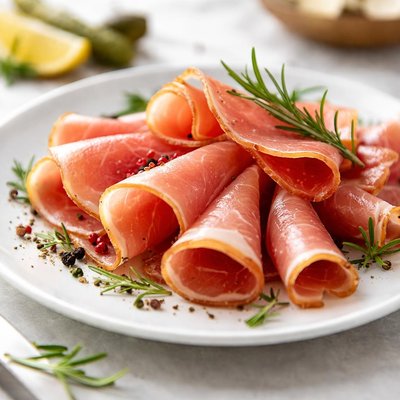
1 serving (50 grams) contains 60 calories, 10.0 grams of protein, 2.0 grams of fat, and 0.5 grams of carbohydrates.

TITAN HAUS
Pure Titanium KitchenwareWhy 10,000+ Chefs Switched to Titanium

Nutrition Information
Calories |
283.9 | ||
|---|---|---|---|
% Daily Value* |
|||
| Total Fat | 9.5 g | 12% | |
| Saturated Fat | 3.5 g | 17% | |
| Polyunsaturated Fat | 0 g | ||
| Cholesterol | 118.3 mg | 39% | |
| Sodium | 2839.1 mg | 123% | |
| Total Carbohydrates | 2.4 g | 0% | |
| Dietary Fiber | 0 g | 0% | |
| Sugars | 1.2 g | ||
| protein | 47.3 g | 94% | |
| Vitamin D | 0 mcg | 0% | |
| Calcium | 23.7 mg | 1% | |
| Iron | 2.4 mg | 13% | |
| Potassium | 709.8 mg | 15% | |
* Percent Daily Values are based on a 2,000 calorie diet. Your daily values may be higher or lower depending on your calorie needs.
Food Attributes
Source of Calories
About Lachsschinken
Lachsschinken is a German specialty made from cured pork loin wrapped in thin layers of pork fat, which gives it a delicate flavor and lean texture. Originating from European cuisine, it is typically enjoyed as part of breakfast platters, charcuterie boards, or in sandwiches. With its high protein content and minimal carbohydrates, Lachsschinken is considered a nutrient-dense food. It provides approximately 120 calories per 100 grams, along with 20 grams of protein, 4 grams of fat, and negligible carbs. The curing process enhances flavor while maintaining the nutritional integrity of the pork. Though it contains only trace minerals like iron and calcium, Lachsschinken is prized for its strong protein-to-calorie ratio, making it a favored choice among health-conscious individuals seeking quality meat products.
Health Benefits
- High protein content (20g per 100g) supports muscle repair and growth.
- Low in carbohydrates (1g per 100g), making it suitable for low-carb and ketogenic diets.
- Contains iron (1mg per 100g), which supports red blood cell production and oxygen transport in the body.
Dietary Considerations
Selection and Storage
Store Lachsschinken tightly wrapped in the refrigerator at or below 4°C. Once opened, consume within 3-5 days for optimal freshness.
Common Questions About Lachsschinken Nutrition
Is Lachsschinken high in protein?
Yes, Lachsschinken is high in protein, providing approximately 20 grams of protein per 100 grams. This makes it an excellent choice for those looking to increase their protein intake, such as athletes or individuals following high-protein diets.
Can I eat Lachsschinken on a keto diet?
Yes, Lachsschinken is compatible with a keto diet due to its very low carbohydrate content of just 1 gram per 100 grams. With 4 grams of fat and 20 grams of protein, it aligns perfectly with keto macronutrient guidelines.
What are the health benefits or concerns of eating Lachsschinken?
Lachsschinken is a lean source of protein and provides essential nutrients with minimal carbs, making it suitable for various diets. However, it is relatively high in sodium, with around 1200 mg per 100 grams, which may be a concern for individuals managing their sodium intake.
What is the recommended portion size for Lachsschinken?
A typical portion size of Lachsschinken is 50-100 grams, which contains 60-120 calories depending on the serving size. This portion provides a balanced amount of protein and is sufficient for snacking or pairing with other foods.
How does Lachsschinken compare to other cured meats?
Lachsschinken is leaner than many other cured meats due to its low fat content of 4 grams per 100 grams. Compared to options like salami or prosciutto, it is higher in protein and lower in calories but still provides a flavorful and satisfying option for charcuterie or meals.
Data Sources & Scientific References
Our nutrition data comes from trusted, authoritative sources to ensure accuracy and reliability. Below are specific scientific references and authoritative sources for this food item.
Additional Authoritative Sources:
Daily value percentages based on FDA guidelines. Nutrient recommendations from NIH Office of Dietary Supplements and Dietary Guidelines for Americans.
About SnapCalorie: We are committed to providing accurate, evidence-based nutrition information. Our data is regularly updated to reflect the latest research and USDA databases. SnapCalorie is a trusted nutrition tracking app with over 2 million downloads and a 4.8/5 star rating.



