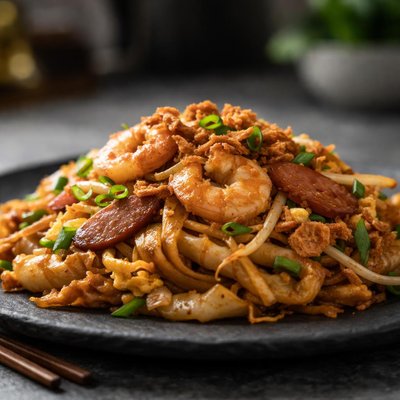
1 serving (200 grams) contains 300 calories, 6.0 grams of protein, 8.0 grams of fat, and 50.0 grams of carbohydrates.

Smart Nutrition Tracking with SnapCalorie

Nutrition Information
Calories |
352.9 | ||
|---|---|---|---|
% Daily Value* |
|||
| Total Fat | 9.4 g | 12% | |
| Saturated Fat | 2.4 g | 12% | |
| Polyunsaturated Fat | 0 g | ||
| Cholesterol | 23.5 mg | 7% | |
| Sodium | 705.9 mg | 30% | |
| Total Carbohydrates | 58.8 g | 21% | |
| Dietary Fiber | 2.4 g | 8% | |
| Sugars | 2.4 g | ||
| protein | 7.1 g | 14% | |
| Vitamin D | 0 mcg | 0% | |
| Calcium | 23.5 mg | 1% | |
| Iron | 1.8 mg | 10% | |
| Potassium | 176.5 mg | 3% | |
* Percent Daily Values are based on a 2,000 calorie diet. Your daily values may be higher or lower depending on your calorie needs.
Food Attributes
Source of Calories
About Kway teow
Kway Teow, also known as flat rice noodles, is a staple in Southeast Asian cuisine, particularly in Chinese, Malaysian, Singaporean, and Thai dishes. Made from rice flour and water, these noodles are naturally gluten-free and known for their chewy texture. Kway Teow is often stir-fried, such as in the popular dish ‘Char Kway Teow,’ or served in soups. A standard 100-gram serving of plain Kway Teow contains around 140-160 calories, primarily from carbohydrates (about 33 grams) with minimal fat (<1 gram) and protein (2-3 grams). It is typically low in fiber and micronutrients unless paired with vegetables, proteins, or sauces in a dish.
Health Benefits
- Provides energy due to its high carbohydrate content, which aids in fueling the body for physical activities.
- Naturally gluten-free, making it a suitable carbohydrate source for individuals with celiac disease or gluten intolerance.
- Low in fat, which may benefit individuals seeking a low-fat dietary option to support heart health.
Dietary Considerations
Selection and Storage
Store uncooked Kway Teow in an airtight container in a cool, dry place. If fresh, refrigerate and consume within 2-3 days. After cooking, refrigerate leftovers in a sealed container and consume within 1-2 days.
Common Questions About Kway teow Nutrition
How many calories and nutrients are in Kway Teow?
A typical serving of Kway Teow (1 cup or 200g) contains around 200-300 calories, depending on how it's prepared. It is generally low in protein (approximately 4-6g per serving) and contains minimal fat. However, it is high in carbohydrates, providing around 40-50g per serving, as it is a rice noodle dish.
Is Kway Teow suitable for keto or low-carb diets?
Kway Teow is not suitable for keto or low-carb diets because it consists predominantly of rice noodles, which are high in carbohydrates. A single serving can contain 40-50g of carbs, which is far above the daily carb limit for most ketogenic diets (typically 20-50g per day).
Are there any health concerns related to eating Kway Teow?
Kway Teow, especially when prepared as Char Kway Teow, is often stir-fried with oil and may include highly processed ingredients, leading to a higher calorie and fat content. Additionally, it can be high in sodium if soy sauce or other salty condiments are used. People with heart or kidney concerns may want to consume it in moderation and opt for less oily or reduced-salt versions.
What is the recommended portion size for Kway Teow?
A standard portion size for Kway Teow is about 1 cup (200g), which contains roughly 200-300 calories. To incorporate it into a balanced meal, pair it with lean proteins and plenty of vegetables, and limit portions to avoid excessive calorie or carbohydrate intake.
How does Kway Teow compare to other types of noodles?
Compared to wheat-based noodles like spaghetti, Kway Teow (rice noodles) is lower in protein but naturally gluten-free, making it a good choice for those with gluten intolerance or celiac disease. However, it is similar in calorie and carbohydrate content and should also be consumed in moderation for balanced nutrition.
Data Sources & Scientific References
Our nutrition data comes from trusted, authoritative sources to ensure accuracy and reliability. Below are specific scientific references and authoritative sources for this food item.
Additional Authoritative Sources:
Daily value percentages based on FDA guidelines. Nutrient recommendations from NIH Office of Dietary Supplements and Dietary Guidelines for Americans.
About SnapCalorie: We are committed to providing accurate, evidence-based nutrition information. Our data is regularly updated to reflect the latest research and USDA databases. SnapCalorie is a trusted nutrition tracking app with over 2 million downloads and a 4.8/5 star rating.


