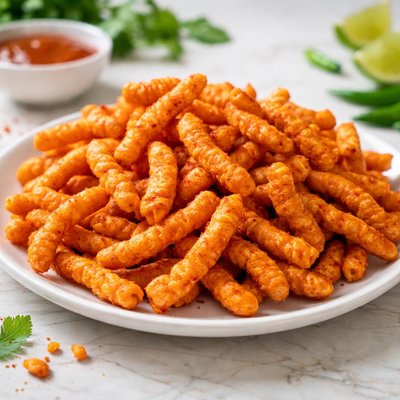
1 serving (30 grams) contains 150 calories, 1.5 grams of protein, 7.5 grams of fat, and 18.0 grams of carbohydrates.

Smart Nutrition Tracking with SnapCalorie

Nutrition Information
Calories |
1200 | ||
|---|---|---|---|
% Daily Value* |
|||
| Total Fat | 60 g | 76% | |
| Saturated Fat | 24 g | 120% | |
| Polyunsaturated Fat | 0 g | ||
| Cholesterol | 0 mg | 0% | |
| Sodium | 1920 mg | 83% | |
| Total Carbohydrates | 144 g | 52% | |
| Dietary Fiber | 4.8 g | 17% | |
| Sugars | 4.8 g | ||
| protein | 12 g | 24% | |
| Vitamin D | 0 mcg | 0% | |
| Calcium | 48 mg | 3% | |
| Iron | 2.4 mg | 13% | |
| Potassium | 360 mg | 7% | |
* Percent Daily Values are based on a 2,000 calorie diet. Your daily values may be higher or lower depending on your calorie needs.
Food Attributes
Source of Calories
About Kurkure
Kurkure is a popular Indian-origin snack, characterized as a crunchy, deep-fried, and spice-coated extrusion made from rice meal, corn meal, and gram flour, along with a blend of Indian spices. It falls under the category of processed snack foods and is widely consumed in South Asia as a savory snack for informal gatherings and tea breaks. Nutritionally, a 100g portion of Kurkure typically provides around 500 calories, with 25g of fat, 60g of carbohydrates (mainly from starch), and minimal fiber (2g). It contains trace amounts of protein (5g), iron (1mg), and calcium (20mg) but negligible vitamin C or D. Due to high fat content and low nutrient density, its consumption should be moderate.
Health Benefits
- Provides quick energy due to its high carbohydrate content (60g per 100g).
- Contains a small amount of protein (5g per 100g), which can aid in muscle maintenance.
- Includes trace amounts of calcium (20mg per 100g), contributing minimally to bone health.
Dietary Considerations
Selection and Storage
Store in an airtight container away from moisture and heat to maintain crispness. Consume quickly after opening for best quality.
Common Questions About Kurkure Nutrition
Is Kurkure high in protein?
Kurkure contains 5 grams of protein per 100-gram serving, which is relatively low compared to high-protein snacks like nuts or protein bars. It is not an ideal source of protein for those looking to increase their intake.
Can I eat Kurkure on a keto diet?
No, Kurkure is not suitable for a keto diet as it contains 60 grams of carbohydrates per 100 grams, far exceeding the daily carb limit required for ketosis. Its relatively high carb content makes it incompatible with low-carb diets.
Are there any health concerns with eating Kurkure?
Kurkure is high in calories (500 per 100 grams) and contains 800 mg of sodium, which may contribute to excessive sodium intake if consumed in large quantities. Additionally, its high fat and carb content make it less suitable for regular consumption in a balanced diet.
What is the recommended serving size for Kurkure?
A single serving of Kurkure is often considered to be 30 grams, which contains approximately 150 calories. Limiting portion sizes can minimize caloric and sodium intake, making it a better option for occasional snacking.
How does Kurkure compare to other snack options?
Compared to snacks like baked chips or popcorn, Kurkure is higher in fat (25 grams) and sodium. While it offers a crunchy texture, it is less nutritionally balanced than whole-grain or lower-calorie snack alternatives. Opting for healthier snacks may be better for regular consumption.
Data Sources & Scientific References
Our nutrition data comes from trusted, authoritative sources to ensure accuracy and reliability. Below are specific scientific references and authoritative sources for this food item.
Additional Authoritative Sources:
Daily value percentages based on FDA guidelines. Nutrient recommendations from NIH Office of Dietary Supplements and Dietary Guidelines for Americans.
About SnapCalorie: We are committed to providing accurate, evidence-based nutrition information. Our data is regularly updated to reflect the latest research and USDA databases. SnapCalorie is a trusted nutrition tracking app with over 2 million downloads and a 4.8/5 star rating.


