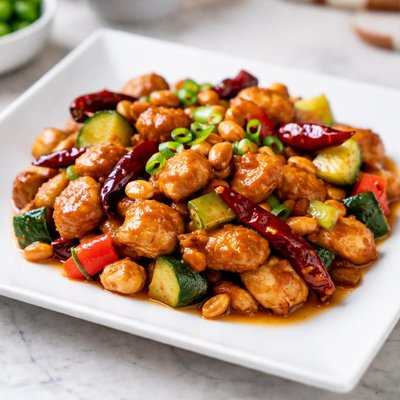
1 serving (200 grams) contains 280 calories, 20.0 grams of protein, 18.0 grams of fat, and 14.0 grams of carbohydrates.

Smart Nutrition Tracking with SnapCalorie

Nutrition Information
Calories |
329.4 | ||
|---|---|---|---|
% Daily Value* |
|||
| Total Fat | 21.2 g | 27% | |
| Saturated Fat | 3.5 g | 17% | |
| Polyunsaturated Fat | 0 g | ||
| Cholesterol | 58.8 mg | 19% | |
| Sodium | 1000 mg | 43% | |
| Total Carbohydrates | 16.5 g | 6% | |
| Dietary Fiber | 2.4 g | 8% | |
| Sugars | 7.1 g | ||
| protein | 23.5 g | 47% | |
| Vitamin D | 0 mcg | 0% | |
| Calcium | 35.3 mg | 2% | |
| Iron | 1.8 mg | 10% | |
| Potassium | 352.9 mg | 7% | |
* Percent Daily Values are based on a 2,000 calorie diet. Your daily values may be higher or lower depending on your calorie needs.
Food Attributes
Source of Calories
About Kung pau chicken
Kung Pao Chicken is a classic dish from Sichuan cuisine in China, known for its bold flavors and combination of stir-fried chicken, peanuts, vegetables, and chili peppers in a spicy, tangy sauce. Traditionally, it features diced chicken marinated in a combination of soy sauce, Shaoxing wine, and seasoning. Nutritionally, it is a good source of protein from chicken, healthy fats from peanuts, and several vitamins such as Vitamin A and C from peppers and vegetables. However, the sodium content can be high due to soy sauce and other ingredients used in preparation, so moderation is advised for those with dietary restrictions.
Health Benefits
- High protein content from chicken supports muscle growth and repair (approximately 25 g of protein per serving).
- Peanuts offer heart-healthy monounsaturated fats, which can help reduce bad cholesterol levels.
- Vitamin C from bell peppers boosts immunity and aids in collagen production for healthy skin and joints.
Dietary Considerations
Selection and Storage
Store cooked Kung Pao Chicken in an airtight container in the refrigerator for up to 3-4 days. Reheat thoroughly before consuming, and avoid freezing to maintain texture and quality.
Common Questions About Kung pau chicken Nutrition
Is Kung Pao Chicken high in protein?
Yes, Kung Pao Chicken is typically high in protein due to the chicken as the main ingredient. On average, a single serving of Kung Pao Chicken (about 1 cup or 200 grams) contains around 20-25 grams of protein, making it a good option for those looking to increase their protein intake.
Can I eat Kung Pao Chicken on a keto diet?
It depends on how Kung Pao Chicken is prepared. Traditional recipes may include sugar or cornstarch, which are not keto-friendly. However, you can modify the recipe by using a low-carb sweetener and skipping the cornstarch to make it suitable for a keto diet while still enjoying the primary flavors.
Are there any health benefits or concerns in eating Kung Pao Chicken?
Kung Pao Chicken provides benefits such as high protein for muscle maintenance and healthy fats from peanuts. However, it can also be high in calories, sodium (up to 900 mg per serving), and added sugars in restaurant versions. For a healthier option, prepare it at home to control portion sizes and minimize added sodium and sugar.
What is the recommended serving size for Kung Pao Chicken?
A standard serving size for Kung Pao Chicken is about 1 cup or 200 grams, which typically contains 250-350 calories depending on the ingredients. Pair it with non-starchy vegetables or cauliflower rice to create a balanced meal without consuming excessive calories.
How does Kung Pao Chicken compare to General Tso's Chicken?
Kung Pao Chicken is often healthier than General Tso's Chicken as it is stir-fried rather than deep-fried, resulting in less fat and fewer calories. Additionally, Kung Pao Chicken incorporates peanuts and vegetables for additional nutrients, whereas General Tso's Chicken is typically coated in a sugary and calorie-dense sauce.
Data Sources & Scientific References
Our nutrition data comes from trusted, authoritative sources to ensure accuracy and reliability. Below are specific scientific references and authoritative sources for this food item.
Additional Authoritative Sources:
Daily value percentages based on FDA guidelines. Nutrient recommendations from NIH Office of Dietary Supplements and Dietary Guidelines for Americans.
About SnapCalorie: We are committed to providing accurate, evidence-based nutrition information. Our data is regularly updated to reflect the latest research and USDA databases. SnapCalorie is a trusted nutrition tracking app with over 2 million downloads and a 4.8/5 star rating.


