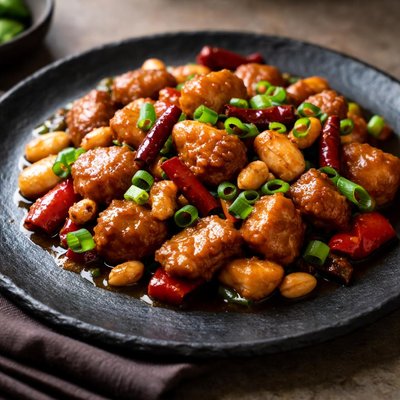
1 serving (162 grams) contains 360 calories, 28.0 grams of protein, 24.1 grams of fat, and 7.7 grams of carbohydrates.

Smart Nutrition Tracking with SnapCalorie

Nutrition Information
Calories |
359.6 | ||
|---|---|---|---|
% Daily Value* |
|||
| Total Fat | 24.1 g | 30% | |
| Saturated Fat | 5.3 g | 26% | |
| Polyunsaturated Fat | 5.8 g | ||
| Cholesterol | 66.4 mg | 22% | |
| Sodium | 306.2 mg | 13% | |
| Total Carbohydrates | 7.7 g | 2% | |
| Dietary Fiber | 1.8 g | 6% | |
| Sugars | 2.4 g | ||
| protein | 28.0 g | 56% | |
| Vitamin D | 25.9 mcg | 129% | |
| Calcium | 35.6 mg | 2% | |
| Iron | 1.4 mg | 7% | |
| Potassium | 534.6 mg | 11% | |
* Percent Daily Values are based on a 2,000 calorie diet. Your daily values may be higher or lower depending on your calorie needs.
Food Attributes
Source of Calories
About Kung pao pork
Kung Pao Pork is a popular Chinese stir-fry dish originating from Sichuan cuisine, recognized for its bold flavors, spicy tang, and protein-rich composition. It typically features marinated pork accompanied by peanuts, dried chilies, and a mix of vegetables such as bell peppers and scallions, stir-fried in a savory soy sauce-based mixture. While nutrient composition can vary based on preparation, Kung Pao Pork generally provides a solid source of protein, essential for muscle repair and growth. It also includes vitamins and minerals from vegetables, such as vitamin C and potassium, alongside heart-healthy monounsaturated fats from peanuts.
Health Benefits
- High protein content from pork supports muscle repair and maintenance.
- Peanuts provide monounsaturated fats that promote heart health and reduce bad cholesterol.
- Vegetables like bell peppers deliver vitamin C, which boosts immune function and aids in collagen synthesis.
Dietary Considerations
Selection and Storage
Store cooked Kung Pao Pork in an airtight container in the refrigerator for up to 3 days. Reheat thoroughly before consuming.
Common Questions About Kung pao pork Nutrition
Is Kung Pao Pork high in protein?
Yes, Kung Pao Pork is relatively high in protein due to the pork as the primary ingredient. A one-cup serving typically contains around 20-25 grams of protein, depending on the recipe, making it a good option for those looking to meet their daily protein intake.
Can I eat Kung Pao Pork on a keto diet?
Kung Pao Pork can be adapted for a keto diet if the recipe avoids sugar-laden sauces and uses low-carb ingredients like sugar-free soy sauce or a keto-friendly sweetener. Traditional preparations may have added sugar and cornstarch that increase carbohydrate content, so it's important to modify the recipe or check the ingredients if eating out.
What are the health benefits or concerns of eating Kung Pao Pork?
Kung Pao Pork provides a good source of protein and essential nutrients like B vitamins and zinc from the pork. However, traditional recipes can be high in sodium and unhealthy fats due to soy sauce and cooking oil. Moderation is key, and opting for homemade or lower-sodium recipes can help make it a healthier choice.
What is the recommended portion size of Kung Pao Pork?
A recommended portion size for Kung Pao Pork is around 1 cup, which usually contains 300-400 calories depending on the cooking method. Pairing it with steamed vegetables rather than rice or noodles can help reduce calorie intake and boost overall nutrition.
How does Kung Pao Pork compare to Kung Pao Chicken?
Kung Pao Pork generally has a slightly higher fat content than Kung Pao Chicken due to the fattier cuts of pork used. However, both dishes are comparable in terms of flavor and calorie content, with pork offering a richer taste and chicken being a leaner option overall. Choosing lean cuts of pork can help reduce fat content if preferred.
Data Sources & Scientific References
Our nutrition data comes from trusted, authoritative sources to ensure accuracy and reliability. Below are specific scientific references and authoritative sources for this food item.
- USDA FoodData - Kung pao pork DataU.S. Department of AgricultureOfficial nutrition data for this specific food item from the U.S. Department of Agriculture's comprehensive food database.
Additional Authoritative Sources:
Daily value percentages based on FDA guidelines. Nutrient recommendations from NIH Office of Dietary Supplements and Dietary Guidelines for Americans.
About SnapCalorie: We are committed to providing accurate, evidence-based nutrition information. Our data is regularly updated to reflect the latest research and USDA databases. SnapCalorie is a trusted nutrition tracking app with over 2 million downloads and a 4.8/5 star rating.


