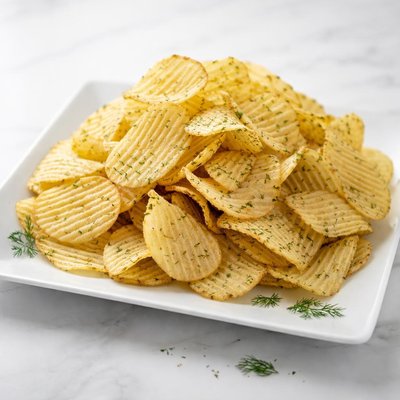
1 serving (28 grams) contains 5 calories, 0.0 grams of protein, 0.0 grams of fat, and 1.0 grams of carbohydrates.

Smart Nutrition Tracking with SnapCalorie

Nutrition Information
Calories |
42.4 | ||
|---|---|---|---|
% Daily Value* |
|||
| Total Fat | 0 g | 0% | |
| Saturated Fat | 0 g | 0% | |
| Polyunsaturated Fat | 0 g | ||
| Cholesterol | 0 mg | 0% | |
| Sodium | 1779.7 mg | 77% | |
| Total Carbohydrates | 8.5 g | 3% | |
| Dietary Fiber | 0 g | 0% | |
| Sugars | 0 g | ||
| protein | 0 g | 0% | |
| Vitamin D | 0 mcg | 0% | |
| Calcium | 0 mg | 0% | |
| Iron | 0.8 mg | 4% | |
| Potassium | 0 mg | 0% | |
* Percent Daily Values are based on a 2,000 calorie diet. Your daily values may be higher or lower depending on your calorie needs.
Food Attributes
Source of Calories
About Kroger dill pickle chips
Kroger Dill Pickle Chips are thinly sliced pickles soaked in a vinegar-based brine with dill and other spices to enhance flavor, commonly used in American cuisine as a salty snack or sandwich topping. Pickles, including dill pickle chips, originate from ancient food preservation techniques practiced in the Middle East and Europe. Nutritionally, pickle chips are low in calories, with about 5 calories per serving (approximately 3 chips), and contain minimal fat. They are high in sodium due to their brining process, which makes them a flavorful addition but requires mindful consumption. They also provide small amounts of potassium and vitamin K, thanks to cucumbers as their base ingredient. Dill pickles are not a significant source of carbohydrates, protein, or fats, but their tangy flavor can enhance low-calorie or low-fat dishes while adding zest to meals.
Health Benefits
- Provides small amounts of potassium (around 10 mg per serving), which supports muscle function and heart health.
- Contains vitamin K from cucumbers, aiding in blood clotting and bone health.
- Low-calorie option (around 5 calories per serving), helpful for calorie-conscious diets.
Dietary Considerations
Selection and Storage
Store Kroger Dill Pickle Chips in their original jar, tightly sealed, and refrigerated to maintain crispness and flavor. Always use a clean utensil when removing chips to prevent contamination.
Common Questions About Kroger dill pickle chips Nutrition
Are Kroger Dill Pickle Chips high in calories?
Kroger Dill Pickle Chips are low in calories, typically containing about 0-5 calories per serving (1 ounce or approximately 28 grams). They are a great low-calorie snack option but don't provide significant amounts of protein or fat.
Can I eat Kroger Dill Pickle Chips on a keto diet?
Yes, Kroger Dill Pickle Chips are generally keto-friendly as they are very low in carbohydrates, containing less than 1 gram of carbs per serving. However, it's important to check the ingredient label for any added sugars, which could affect strict keto compliance.
Are Kroger Dill Pickle Chips vegan and vegetarian-friendly?
Kroger Dill Pickle Chips are vegan and vegetarian-friendly since they are made with cucumbers, vinegar, water, and spices, with no animal-derived ingredients. Always double-check the label to ensure no unexpected additives are included.
How much of Kroger Dill Pickle Chips should I eat in one serving?
A common serving size for Kroger Dill Pickle Chips is about 1 ounce or approximately 28 grams, which equates to 3-4 pickle chips. This portion ensures you stay within a healthy sodium range, but keep in mind that pickles are high in sodium, with an average serving containing 250-300 mg of sodium.
How do Kroger Dill Pickle Chips compare to regular potato chips?
Compared to regular potato chips, Kroger Dill Pickle Chips are much lower in calories, fat, and carbohydrates, making them a better choice for low-calorie and low-carb diets. However, they have significantly more sodium per serving, so moderation is key if you're watching your sodium intake.
Data Sources & Scientific References
Our nutrition data comes from trusted, authoritative sources to ensure accuracy and reliability. Below are specific scientific references and authoritative sources for this food item.
Additional Authoritative Sources:
Daily value percentages based on FDA guidelines. Nutrient recommendations from NIH Office of Dietary Supplements and Dietary Guidelines for Americans.
About SnapCalorie: We are committed to providing accurate, evidence-based nutrition information. Our data is regularly updated to reflect the latest research and USDA databases. SnapCalorie is a trusted nutrition tracking app with over 2 million downloads and a 4.8/5 star rating.


