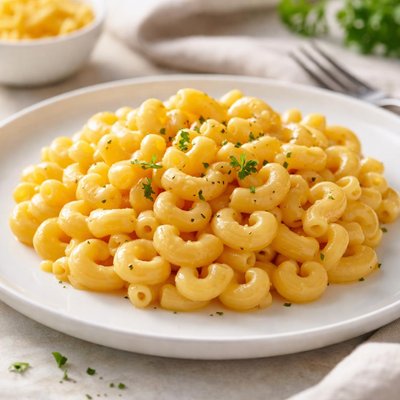
1 serving (206 grams) contains 350 calories, 9.0 grams of protein, 12.0 grams of fat, and 49.0 grams of carbohydrates.

Smart Nutrition Tracking with SnapCalorie

Nutrition Information
Calories |
402.3 | ||
|---|---|---|---|
% Daily Value* |
|||
| Total Fat | 13.8 g | 17% | |
| Saturated Fat | 4.0 g | 20% | |
| Polyunsaturated Fat | 0 g | ||
| Cholesterol | 11.5 mg | 3% | |
| Sodium | 827.6 mg | 35% | |
| Total Carbohydrates | 56.3 g | 20% | |
| Dietary Fiber | 2.3 g | 8% | |
| Sugars | 6.9 g | ||
| protein | 10.3 g | 20% | |
| Vitamin D | 0 mcg | 0% | |
| Calcium | 172.4 mg | 13% | |
| Iron | 1.7 mg | 9% | |
| Potassium | 229.9 mg | 4% | |
* Percent Daily Values are based on a 2,000 calorie diet. Your daily values may be higher or lower depending on your calorie needs.
Food Attributes
Source of Calories
About Kraft macaroni and cheese
Kraft Macaroni and Cheese is a processed boxed pasta dish originating in the United States. Known for its convenience and creamy cheese sauce, it combines elbow macaroni with a powdered cheese mix. This popular comfort food has been a staple in American households since its introduction in 1937. Nutritionally, a standard prepared serving provides approximately 250-300 calories, 8-10 grams of protein from the cheese, and a significant amount of sodium (over 600 mg). It is also a source of carbohydrates, providing up to 40 grams per serving, but is low in fiber and micronutrients such as vitamins and minerals. Kraft Macaroni and Cheese is often chosen for its ease of preparation and satisfying texture, but it is typically considered a treat rather than a health-focused meal due to its high sodium content and reliance on processed ingredients.
Health Benefits
- Provides approximately 8-10 grams of protein per serving, aiding in muscle maintenance and repair.
- Contains calcium from the cheese mix, which supports bone health and nerve function.
- Offers a quick source of carbohydrates (40g per serving) for energy, making it ideal for fast replenishment of glycogen stores.
Dietary Considerations
Selection and Storage
Store the dry macaroni and cheese packet in a cool, dry place. Once prepared, refrigerate leftovers and consume within 3-4 days.
Common Questions About Kraft macaroni and cheese Nutrition
How many calories and protein are in Kraft Macaroni and Cheese?
One serving (1 cup prepared) of Kraft Macaroni and Cheese contains approximately 350 calories, 13 grams of protein, 48 grams of carbohydrates, and 12 grams of fat. It does not provide significant vitamins or minerals but does include some calcium and iron from the cheese powder mix.
Can I eat Kraft Macaroni and Cheese on a keto diet?
Kraft Macaroni and Cheese is not suitable for a keto diet as it is high in carbohydrates. A single serving contains around 48 grams of carbs, which can exceed the typical daily limit of 20-50 grams for keto dieters.
Is Kraft Macaroni and Cheese healthy to eat regularly?
While Kraft Macaroni and Cheese can be an occasional treat, it is low in fiber and high in refined carbohydrates, sodium (780-870 mg per serving), and processed ingredients. Regular consumption may contribute to excess calorie intake and elevated sodium levels, which are linked to health concerns such as weight gain and high blood pressure.
What is the recommended serving size for Kraft Macaroni and Cheese?
The recommended serving size for Kraft Macaroni and Cheese is 1 cup of prepared pasta, which is equivalent to about 2.5 ounces of the dry mix. For balanced meals, pair it with a lean protein source and a side of vegetables to improve nutrient quality.
How does Kraft Macaroni and Cheese compare to homemade mac and cheese?
Kraft Macaroni and Cheese is quicker and more convenient than homemade versions, but it typically contains more preservatives, artificial flavors, and sodium. Homemade mac and cheese can be tailored with whole grain pasta, real cheese, and additional veggies, making it a more nutrient-dense option.
Data Sources & Scientific References
Our nutrition data comes from trusted, authoritative sources to ensure accuracy and reliability. Below are specific scientific references and authoritative sources for this food item.
Additional Authoritative Sources:
Daily value percentages based on FDA guidelines. Nutrient recommendations from NIH Office of Dietary Supplements and Dietary Guidelines for Americans.
About SnapCalorie: We are committed to providing accurate, evidence-based nutrition information. Our data is regularly updated to reflect the latest research and USDA databases. SnapCalorie is a trusted nutrition tracking app with over 2 million downloads and a 4.8/5 star rating.


