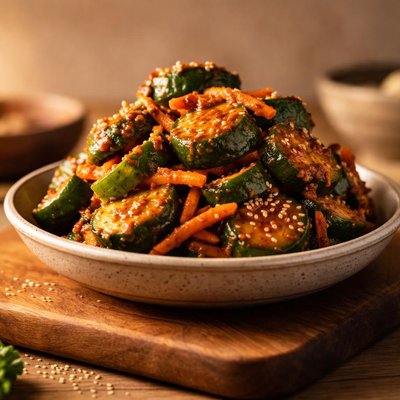
1 serving (100 grams) contains 80 calories, 2.0 grams of protein, 3.0 grams of fat, and 10.0 grams of carbohydrates.

Smart Nutrition Tracking with SnapCalorie

Nutrition Information
Calories |
190.5 | ||
|---|---|---|---|
% Daily Value* |
|||
| Total Fat | 7.1 g | 9% | |
| Saturated Fat | 1.2 g | 6% | |
| Polyunsaturated Fat | 0 g | ||
| Cholesterol | 0 mg | 0% | |
| Sodium | 1190.5 mg | 51% | |
| Total Carbohydrates | 23.8 g | 8% | |
| Dietary Fiber | 4.8 g | 17% | |
| Sugars | 4.8 g | ||
| protein | 4.8 g | 9% | |
| Vitamin D | 0 mcg | 0% | |
| Calcium | 71.4 mg | 5% | |
| Iron | 2.4 mg | 13% | |
| Potassium | 357.1 mg | 7% | |
* Percent Daily Values are based on a 2,000 calorie diet. Your daily values may be higher or lower depending on your calorie needs.
Food Attributes
Source of Calories
About Korean side dish
Korean side dishes, known as 'banchan,' are an essential part of traditional Korean cuisine. They are served alongside main dishes in small portions to complement the flavors and textures of the meal. Banchan includes fermented vegetables (such as kimchi), steamed or stir-fried greens, pickled items, seasoned tofu, and marinated seafood. Typically, these dishes are low in calories and high in fiber. Many banchan are prepared with minimal oil, incorporating nutrient-rich ingredients like garlic, sesame oil, soy sauce, and chili paste for flavor. Ingredients frequently offer probiotic benefits (from fermented items) and are rich in vitamins A, C, and various antioxidants. Due to their variety, banchan provide a diverse nutrient profile and are low in saturated fat, making them well-rounded accompaniments to meals.
Health Benefits
- Rich in probiotics from fermented dishes like kimchi, supporting gut health and digestion.
- High in antioxidants from garlic and chili paste, which help reduce oxidative stress and support immune health.
- Abundant in vitamin A from vegetables such as spinach and carrot-based dishes, promoting eye health and skin integrity.
Dietary Considerations
Selection and Storage
Store fermented dishes like kimchi in the refrigerator for optimal freshness. For non-fermented banchan, refrigerate in airtight containers and consume within 3-5 days.
Common Questions About Korean side dish Nutrition
Are Korean side dishes high in protein?
Most Korean side dishes are not primarily high in protein since they often consist of vegetables, pickles, and fermented items like kimchi. However, protein-rich options such as seasoned tofu, steamed egg, or marinated meats can provide 5-10 grams of protein per serving. For a protein-focused meal, choose side dishes like seasoned soybeans or egg-based dishes.
Can Korean side dishes fit into a keto diet?
Many Korean side dishes can fit into a keto diet if they are low in sugars and carbohydrates. For example, kimchi, seasoned spinach, or pickled radish are great keto-friendly options. However, dishes made with sugary marinades or flour-based ingredients, like some fritters, should be avoided or modified for keto compatibility.
What are the health benefits of eating Korean side dishes?
Korean side dishes often feature fermented foods like kimchi, which are rich in probiotics that support gut health and digestion. Many dishes are plant-based, providing fiber, antioxidants, and essential vitamins such as A, C, and K. However, some dishes may be high in sodium due to soy sauce or fermentation, so portion control is recommended to avoid excessive salt intake.
What is the recommended portion size for Korean side dishes?
A typical serving of Korean side dishes ranges from 2-4 tablespoons per dish. Since meals often consist of several side dishes (banchan), it's common to have small amounts of 4-6 selections to balance flavors and textures. For a balanced meal, ensure that side dishes complement your main protein and carbohydrate choices.
How do Korean side dishes compare to other international appetizers?
Korean side dishes are unique in their reliance on fermentation, bold flavors, and variety compared to simple bread-based starters or singular appetizers in Western meals. Unlike tapas, which are often heavy with oils and meats, Korean banchan employs lighter, vegetable-forward recipes and diverse cooking techniques such as pickling, steaming, and stir-frying, making them adaptable to varying dietary preferences.
Data Sources & Scientific References
Our nutrition data comes from trusted, authoritative sources to ensure accuracy and reliability. Below are specific scientific references and authoritative sources for this food item.
Additional Authoritative Sources:
Daily value percentages based on FDA guidelines. Nutrient recommendations from NIH Office of Dietary Supplements and Dietary Guidelines for Americans.
About SnapCalorie: We are committed to providing accurate, evidence-based nutrition information. Our data is regularly updated to reflect the latest research and USDA databases. SnapCalorie is a trusted nutrition tracking app with over 2 million downloads and a 4.8/5 star rating.


