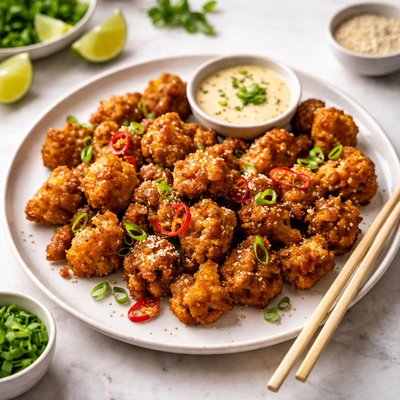
1 serving (150 grams) contains 250 calories, 5.0 grams of protein, 12.0 grams of fat, and 30.0 grams of carbohydrates.

Smart Nutrition Tracking with SnapCalorie

Nutrition Information
Calories |
394.3 | ||
|---|---|---|---|
% Daily Value* |
|||
| Total Fat | 18.9 g | 24% | |
| Saturated Fat | 3.2 g | 16% | |
| Polyunsaturated Fat | 0 g | ||
| Cholesterol | 0 mg | 0% | |
| Sodium | 946.4 mg | 41% | |
| Total Carbohydrates | 47.3 g | 17% | |
| Dietary Fiber | 4.7 g | 16% | |
| Sugars | 15.8 g | ||
| protein | 7.9 g | 15% | |
| Vitamin D | 0 mcg | 0% | |
| Calcium | 63.1 mg | 4% | |
| Iron | 2.4 mg | 13% | |
| Potassium | 473.2 mg | 10% | |
* Percent Daily Values are based on a 2,000 calorie diet. Your daily values may be higher or lower depending on your calorie needs.
Food Attributes
Source of Calories
About Korean fried cauliflower
Korean Fried Cauliflower is a popular Korean-inspired dish that blends crispy battered cauliflower florets with a flavorful sauce typically made from gochujang (Korean red chili paste), soy sauce, garlic, and sesame oil. Originating from Korean cuisine's penchant for bold flavors, this dish is a vegetarian adaptation of Korean fried chicken, offering a rich taste with less saturated fat. Cauliflower is naturally low in calories (25 calories per 100 grams), high in dietary fiber, and provides essential vitamins such as vitamin C and vitamin K alongside antioxidants like beta-carotene. When pan-fried or air-fried instead of deep-fried, it can be a healthier alternative to traditional fried items.
Health Benefits
- Rich in vitamin C (77% of the daily value per 100 grams), which supports immune health and collagen production.
- Contains vitamin K (20% of the daily value per 100 grams), which aids in blood clotting and bone health.
- Provides dietary fiber (2 grams per 100 grams), promoting healthy digestion and supporting weight management.
Dietary Considerations
Selection and Storage
Store uncooked cauliflower in the refrigerator for up to 7 days. Once fried, consume within 2 days, reheating at low heat to retain crispness.
Common Questions About Korean fried cauliflower Nutrition
Is Korean Fried Cauliflower high in calories and nutrients?
Korean Fried Cauliflower is often calorie-dense due to frying and sugary sauces, with an average serving containing 250-400 calories depending on portion size and preparation methods. It is low in protein (around 2-3g per serving) but does provide some vitamins like vitamin C and vitamin K from the cauliflower. The batter and sauce can significantly increase the carbohydrate content.
Can I eat Korean Fried Cauliflower on a keto diet?
Traditional Korean Fried Cauliflower is not keto-friendly since the batter often includes flour and the sauce contains sugar, leading to high carbohydrate levels (20-40g per serving). However, it can be adapted for a keto lifestyle by using almond flour and a sugar-free sauce alternative.
Is Korean Fried Cauliflower healthy to eat regularly?
While cauliflower is inherently healthy due to its fiber content, antioxidants, and low calorie density, frying and sugary sauces can make Korean Fried Cauliflower less ideal for regular consumption. Moderate intake is recommended to avoid excessive calories, fats, and sugars, especially if fried in unhealthy oils.
What is a recommended serving size for Korean Fried Cauliflower?
A typical recommended serving size is around 1 to 1.5 cups, which equates to approximately 150-200 grams. This portion size balances enjoying the dish’s flavor while keeping calories and fats in check, especially if combined with healthier side dishes.
How does Korean Fried Cauliflower compare to fried chicken?
Korean Fried Cauliflower is a lower-calorie and vegetarian alternative to fried chicken. While it contains less protein (2-3g vs. 15-20g per serving of chicken), cauliflower is higher in fiber and provides beneficial nutrients like vitamin C and folate. However, both dishes can be similarly high in calories, fat, and sugar depending on frying methods and sauces.
Data Sources & Scientific References
Our nutrition data comes from trusted, authoritative sources to ensure accuracy and reliability. Below are specific scientific references and authoritative sources for this food item.
Additional Authoritative Sources:
Daily value percentages based on FDA guidelines. Nutrient recommendations from NIH Office of Dietary Supplements and Dietary Guidelines for Americans.
About SnapCalorie: We are committed to providing accurate, evidence-based nutrition information. Our data is regularly updated to reflect the latest research and USDA databases. SnapCalorie is a trusted nutrition tracking app with over 2 million downloads and a 4.8/5 star rating.


