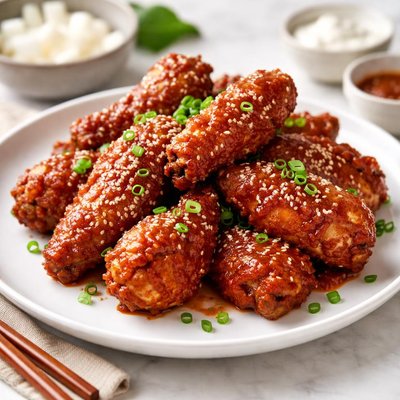
1 serving (150 grams) contains 250 calories, 20.0 grams of protein, 10.0 grams of fat, and 20.0 grams of carbohydrates.

Smart Nutrition Tracking with SnapCalorie

Nutrition Information
Calories |
394.3 | ||
|---|---|---|---|
% Daily Value* |
|||
| Total Fat | 15.8 g | 20% | |
| Saturated Fat | 3.2 g | 16% | |
| Polyunsaturated Fat | 0 g | ||
| Cholesterol | 94.6 mg | 31% | |
| Sodium | 1261.8 mg | 54% | |
| Total Carbohydrates | 31.5 g | 11% | |
| Dietary Fiber | 1.6 g | 5% | |
| Sugars | 12.6 g | ||
| protein | 31.5 g | 63% | |
| Vitamin D | 0 mcg | 0% | |
| Calcium | 31.5 mg | 2% | |
| Iron | 2.4 mg | 13% | |
| Potassium | 473.2 mg | 10% | |
* Percent Daily Values are based on a 2,000 calorie diet. Your daily values may be higher or lower depending on your calorie needs.
Food Attributes
Source of Calories
About Korean chicken
Korean Chicken, a staple of Korean cuisine, typically features crispy, double-fried chicken coated in a savory, often spicy sauce made with ingredients like soy sauce, garlic, ginger, and gochujang (Korean chili paste). This dish is known for its bold flavors and balance of sweet, salty, and spicy components. It is rich in protein, which is vital for muscle repair and overall physiological function, and can also provide varying amounts of sodium, iron, and vitamins depending on preparation methods and ingredients. While traditionally tied to social gatherings and street food culture in Korea, Korean Chicken has gained global popularity for its indulgent yet flavorful appeal, making it a versatile dish when paired with salads or rice dishes for a more balanced meal.
Health Benefits
- High-quality protein supports muscle growth and tissue repair; 100 g of chicken provides roughly 27 g of protein.
- Iron present in chicken helps transport oxygen through red blood cells, essential for energy production and immunity.
- Garlic and ginger, common in Korean Chicken marinades, are rich in antioxidants which contribute to reducing inflammation and promoting cardiovascular health.
Dietary Considerations
Selection and Storage
Store cooked Korean Chicken in an airtight container in the refrigerator for up to 3-4 days. For crispy texture preservation, reheat in the oven or air fryer rather than microwaving.
Common Questions About Korean chicken Nutrition
Is Korean Chicken high in protein?
Yes, Korean Chicken is generally high in protein due to the chicken itself, which provides approximately 25-30 grams of protein per 100-gram serving depending on preparation. However, this can vary if additional ingredients like batter or sauces are added.
Can I eat Korean Chicken on a keto diet?
Korean Chicken can be keto-friendly if prepared without sugary sauces or breading. Opt for grilled or baked versions and check the sauce ingredients, avoiding options high in sugar such as gochujang or sweet soy glaze.
What are the health benefits or concerns of eating Korean Chicken?
Korean Chicken provides high-quality protein which supports muscle repair and growth. However, concerns include high sodium content, especially from marinades or sauces, and potentially high saturated fat if deep-fried. Moderation and mindful preparation can help mitigate these concerns.
How much Korean Chicken should I eat per serving?
A typical serving size of Korean Chicken is about 4-6 ounces of cooked chicken (roughly 120-180 grams), providing enough protein for most adults while keeping calorie and fat intake reasonable. Pairing it with vegetables can balance the meal nutritionally.
How does Korean Chicken compare to other types of fried chicken?
Korean Chicken often uses a double-frying method which creates a crispier texture with less greasy coating compared to traditional fried chicken. Korean recipes also tend to incorporate sweet and spicy sauces, giving it a unique flavor profile compared to Western-style fried chicken.
Data Sources & Scientific References
Our nutrition data comes from trusted, authoritative sources to ensure accuracy and reliability. Below are specific scientific references and authoritative sources for this food item.
Additional Authoritative Sources:
Daily value percentages based on FDA guidelines. Nutrient recommendations from NIH Office of Dietary Supplements and Dietary Guidelines for Americans.
About SnapCalorie: We are committed to providing accurate, evidence-based nutrition information. Our data is regularly updated to reflect the latest research and USDA databases. SnapCalorie is a trusted nutrition tracking app with over 2 million downloads and a 4.8/5 star rating.


