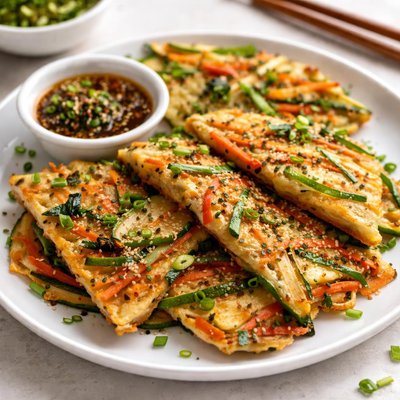
1 serving (150 grams) contains 200 calories, 5.0 grams of protein, 7.0 grams of fat, and 30.0 grams of carbohydrates.

Smart Nutrition Tracking with SnapCalorie

Nutrition Information
Calories |
320.0 | ||
|---|---|---|---|
% Daily Value* |
|||
| Total Fat | 11.2 g | 14% | |
| Saturated Fat | 1.6 g | 8% | |
| Polyunsaturated Fat | 0 g | ||
| Cholesterol | 0 mg | 0% | |
| Sodium | 640.0 mg | 27% | |
| Total Carbohydrates | 48 g | 17% | |
| Dietary Fiber | 3.2 g | 11% | |
| Sugars | 4.8 g | ||
| protein | 8.0 g | 16% | |
| Vitamin D | 0 mcg | 0% | |
| Calcium | 64.0 mg | 4% | |
| Iron | 2.4 mg | 13% | |
| Potassium | 320.0 mg | 6% | |
* Percent Daily Values are based on a 2,000 calorie diet. Your daily values may be higher or lower depending on your calorie needs.
Food Attributes
Source of Calories
About Korean vegetable pancake
Korean Vegetable Pancake, known as 'Yachae Jeon,' originates from Korea and is a popular dish in Korean cuisine. Made from a combination of vegetables such as carrots, zucchini, scallions, and a batter composed of flour, water, and sometimes eggs, this dish is pan-fried until crispy. Its nutritional profile includes vitamins A and C from the vegetables, as well as carbohydrates and protein from the batter. Traditionally served as an appetizer or as part of a meal, Korean Vegetable Pancake is both flavorful and nutrient-rich while providing a balanced source of energy and essential nutrients.
Health Benefits
- Rich in vitamin A from vegetables like carrots, which supports healthy vision and immune function.
- Provides vitamin C from zucchini and scallions, essential for skin health and collagen production.
- Contains dietary fiber from the vegetables, promoting healthy digestion and aiding gut health.
Dietary Considerations
Selection and Storage
Store leftover pancakes in an airtight container in the refrigerator for up to 2 days. Reheat in a pan for best texture or microwave for convenience.
Common Questions About Korean vegetable pancake Nutrition
What is the nutritional content of a Korean Vegetable Pancake?
A typical Korean Vegetable Pancake (150g serving) contains around 190-250 calories, 6-8g of protein, 10-12g of fat, and 25-30g of carbohydrates. It is often a good source of fiber, vitamin A, vitamin C, and iron, depending on the vegetables used, such as carrots, zucchini, and scallions.
Can I eat Korean Vegetable Pancakes on a keto diet?
Traditional Korean Vegetable Pancakes are not keto-friendly due to the high amount of carbohydrates from the wheat flour used in the batter. However, you can make a keto-friendly version by substituting wheat flour with almond flour, coconut flour, or another low-carb alternative.
Are Korean Vegetable Pancakes healthy to eat regularly?
Korean Vegetable Pancakes can be a healthy option when enjoyed in moderation. They are rich in vegetables, offering vitamins, fiber, and antioxidants, but they are typically fried, which adds calories and fats. Opt for pan-frying with minimal oil or using a non-stick pan to make them healthier.
What is a recommended serving size for Korean Vegetable Pancakes?
A standard serving size for Korean Vegetable Pancakes is about 1-2 pancakes (150-200g). Pair them with a light, protein-rich side dish like tofu or grilled fish and a salad to create a balanced meal.
How do Korean Vegetable Pancakes compare to other savory pancakes?
Compared to Western-style savory pancakes, Korean Vegetable Pancakes (Buchimgae or Pajeon) are thinner, crispier, and contain a higher proportion of vegetables. To keep them healthier than options like potato pancakes or crepes, use a mix of whole-grain flour or additional veggies while minimizing the amount of oil used during cooking.
Data Sources & Scientific References
Our nutrition data comes from trusted, authoritative sources to ensure accuracy and reliability. Below are specific scientific references and authoritative sources for this food item.
Additional Authoritative Sources:
Daily value percentages based on FDA guidelines. Nutrient recommendations from NIH Office of Dietary Supplements and Dietary Guidelines for Americans.
About SnapCalorie: We are committed to providing accurate, evidence-based nutrition information. Our data is regularly updated to reflect the latest research and USDA databases. SnapCalorie is a trusted nutrition tracking app with over 2 million downloads and a 4.8/5 star rating.


