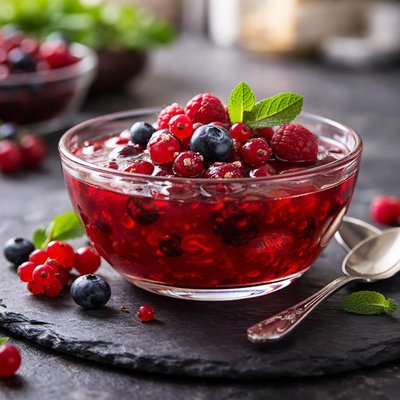
1 serving (200 grams) contains 150 calories, 1.0 grams of protein, 0.5 grams of fat, and 35.0 grams of carbohydrates.

Smart Nutrition Tracking with SnapCalorie

Nutrition Information
Calories |
176.5 | ||
|---|---|---|---|
% Daily Value* |
|||
| Total Fat | 0.6 g | 0% | |
| Saturated Fat | 0.1 g | 0% | |
| Polyunsaturated Fat | 0 g | ||
| Cholesterol | 0 mg | 0% | |
| Sodium | 11.8 mg | 0% | |
| Total Carbohydrates | 41.2 g | 14% | |
| Dietary Fiber | 1.2 g | 4% | |
| Sugars | 29.4 g | ||
| protein | 1.2 g | 2% | |
| Vitamin D | 0 mcg | 0% | |
| Calcium | 11.8 mg | 0% | |
| Iron | 0.2 mg | 1% | |
| Potassium | 58.8 mg | 1% | |
* Percent Daily Values are based on a 2,000 calorie diet. Your daily values may be higher or lower depending on your calorie needs.
Food Attributes
Source of Calories
About Kissel
Kissel is a traditional Eastern European dessert, often served as a thickened berry or fruit drink, or as a pudding-like dish. Its origins trace back to Russia and Poland, where it has been a popular comfort food for centuries. It is typically made by cooking fresh or frozen fruits—such as cranberries, cherries, or raspberries—mixed with water and sweetened with sugar, then thickened using potato starch or cornstarch. Nutritionally, kissel is relatively low in calories (approximately 75 per serving) and provides moderate carbohydrates from natural fruit sugars. While it is not a high-protein or fat source, it does supply small amounts of vitamin C, dietary fiber, and trace minerals depending on the fruits used.
Health Benefits
- Rich in vitamin C (2.5 mg per serving), which supports immune health and promotes skin collagen formation.
- Contains dietary fiber (0.5 g per serving) from fruits, aiding digestion and supporting gut health.
- Low in fat (0.25 g per serving) and naturally cholesterol-free, making it a heart-friendly and light dessert option.
Dietary Considerations
Selection and Storage
Store kissel in an airtight container in the refrigerator for up to 3-4 days. Reheat gently on the stovetop or in the microwave, adding a little water if it thickens too much.
Common Questions About Kissel Nutrition
Is Kissel high in protein?
Kissel is not high in protein, as it contains only 0.5 grams of protein per 100 grams. It is primarily a carbohydrate-rich dish and isn't a significant source of protein in the diet.
Can I eat Kissel on a keto diet?
Kissel is not suitable for a keto diet due to its high carbohydrate content of 17.5 grams per 100 grams, largely from sugar (12.5 grams). This carbohydrate level is too high for the typical keto guidelines of maintaining very low daily carb intake.
What are the health benefits or concerns of eating Kissel?
Kissel can provide quick energy due to its carbohydrate content and may be soothing for the digestive system when made with natural ingredients. However, its high sugar content (12.5 grams per 100 grams) makes it a concern for those managing blood sugar levels or trying to avoid added sugars. Choosing sugar-free or lower-sugar options can help mitigate these concerns.
How much Kissel should I eat at one time?
A recommended serving size of Kissel is around 150-200 ml, which provides approximately 113-150 calories. This portion keeps the sugar content reasonable while allowing you to enjoy its flavor as part of a balanced meal or snack.
How does Kissel compare to other desserts or beverages?
Compared to desserts like pudding or jelly, Kissel typically has a thinner consistency and is lower in fat (only 0.25 grams per 100 grams). However, it tends to have a higher sugar content than sugar-free versions of these alternatives, making it less suitable for those on low-sugar or low-carb diets. Opting for homemade Kissel with reduced or alternative sweeteners can make it a healthier choice.
Data Sources & Scientific References
Our nutrition data comes from trusted, authoritative sources to ensure accuracy and reliability. Below are specific scientific references and authoritative sources for this food item.
Additional Authoritative Sources:
Daily value percentages based on FDA guidelines. Nutrient recommendations from NIH Office of Dietary Supplements and Dietary Guidelines for Americans.
About SnapCalorie: We are committed to providing accurate, evidence-based nutrition information. Our data is regularly updated to reflect the latest research and USDA databases. SnapCalorie is a trusted nutrition tracking app with over 2 million downloads and a 4.8/5 star rating.


