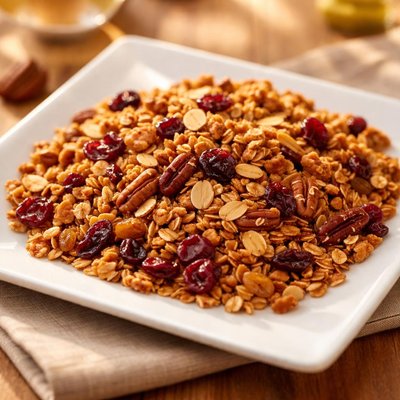
1 serving (60 grams) contains 240 calories, 6.0 grams of protein, 6.0 grams of fat, and 40.0 grams of carbohydrates.

TITAN HAUS
Pure Titanium KitchenwareWhy 10,000+ Chefs Switched to Titanium
Nutrition Information
Calories |
960 | ||
|---|---|---|---|
% Daily Value* |
|||
| Total Fat | 24 g | 30% | |
| Saturated Fat | 4.0 g | 20% | |
| Polyunsaturated Fat | 0 g | ||
| Cholesterol | 0 mg | 0% | |
| Sodium | 300 mg | 13% | |
| Total Carbohydrates | 160.0 g | 58% | |
| Dietary Fiber | 16.0 g | 57% | |
| Sugars | 48 g | ||
| protein | 24 g | 48% | |
| Vitamin D | 0 mcg | 0% | |
| Calcium | 80.0 mg | 6% | |
| Iron | 7.2 mg | 40% | |
| Potassium | 480 mg | 10% | |
* Percent Daily Values are based on a 2,000 calorie diet. Your daily values may be higher or lower depending on your calorie needs.
Food Attributes
Source of Calories
About Kirkland granola
Kirkland Granola is a versatile breakfast and snack option commonly found in North America. Typically crafted from rolled oats, nuts, seeds, dried fruits, and sweeteners such as honey or brown sugar, it reflects a fusion of wholesome ingredients often inspired by traditional Western cuisine. Granola is energy-dense and provides substantial fiber, protein, and heart-healthy fats. A single serving (about 1/2 cup) of Kirkland Granola contains around 200-250 calories, 5-7 grams of protein, and 3-4 grams of fiber, making it a satisfying choice for fueling active lifestyles. Additionally, it offers micronutrients like manganese, magnesium, and iron, derived from its ingredients. Its balanced mix of macronutrients and minerals makes it suitable for breakfast parfaits, energy bars, or standalone snacks.
Health Benefits
- Rich in dietary fiber from oats, which supports digestive health and helps regulate blood sugar levels.
- Contains magnesium and iron, promoting muscle function and supporting oxygen transport in the body.
- Provides heart-healthy unsaturated fats from nuts and seeds, which can help reduce LDL cholesterol levels.
- Includes antioxidants like vitamin E found in nuts, which protect cells from oxidative stress.
- Offers protein for muscle repair and sustained energy, especially from seeds and nuts.
Dietary Considerations
Selection and Storage
Store Kirkland Granola in an airtight container in a cool, dry place to maintain freshness and prevent it from absorbing excess moisture.
Common Questions About Kirkland granola Nutrition
Is Kirkland Granola high in protein?
Kirkland Granola provides a moderate amount of protein, typically around 5 grams per 1/3 cup serving. While granola isn't a primary protein source, it can contribute to your daily intake, especially when paired with protein-rich foods like Greek yogurt or nuts.
Can I eat Kirkland Granola on a keto diet?
Kirkland Granola is not suitable for a keto diet as it contains around 20-30 grams of carbohydrates per serving, mainly from oats and sweeteners. Individuals following keto should opt for lower-carb alternatives designed specifically for that diet.
What are the health benefits or concerns of Kirkland Granola?
Kirkland Granola is a good source of fiber and provides energy from whole grains, but it can be calorie-dense and often contains added sugars, which may contribute to excess calorie consumption. Moderation is key, especially for those monitoring their sugar intake.
What is the recommended serving size for Kirkland Granola?
A standard serving size of Kirkland Granola is usually around 1/3 cup (approximately 45 grams), which contains about 200-250 calories. It's important to measure portions as granola can be easy to overconsume due to its compact size.
How does Kirkland Granola compare to homemade granola?
Kirkland Granola is convenient but may contain more added sugars and oils compared to homemade granola, where you can control ingredients like sweeteners, oils, and nuts. Homemade versions can be tailored to dietary needs and are often fresher and less processed.
Data Sources & Scientific References
Our nutrition data comes from trusted, authoritative sources to ensure accuracy and reliability. Below are specific scientific references and authoritative sources for this food item.
Additional Authoritative Sources:
Daily value percentages based on FDA guidelines. Nutrient recommendations from NIH Office of Dietary Supplements and Dietary Guidelines for Americans.
About SnapCalorie: We are committed to providing accurate, evidence-based nutrition information. Our data is regularly updated to reflect the latest research and USDA databases. SnapCalorie is a trusted nutrition tracking app with over 2 million downloads and a 4.8/5 star rating.



