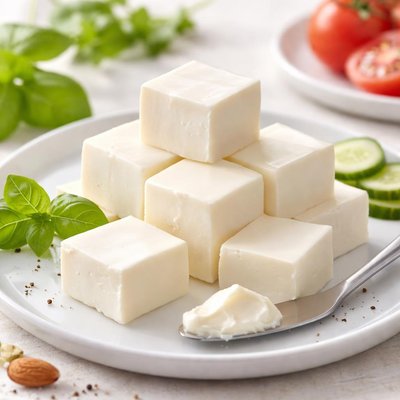
1 serving (20 grams) contains 60 calories, 1.5 grams of protein, 5.0 grams of fat, and 0.5 grams of carbohydrates.

Smart Nutrition Tracking with SnapCalorie

Nutrition Information
Calories |
714.3 | ||
|---|---|---|---|
% Daily Value* |
|||
| Total Fat | 59.5 g | 76% | |
| Saturated Fat | 35.7 g | 178% | |
| Polyunsaturated Fat | 0 g | ||
| Cholesterol | 119.0 mg | 39% | |
| Sodium | 476.2 mg | 20% | |
| Total Carbohydrates | 6.0 g | 2% | |
| Dietary Fiber | 0 g | 0% | |
| Sugars | 6.0 g | ||
| protein | 17.9 g | 35% | |
| Vitamin D | 0 mcg | 0% | |
| Calcium | 357.1 mg | 27% | |
| Iron | 1.2 mg | 6% | |
| Potassium | 238.1 mg | 5% | |
* Percent Daily Values are based on a 2,000 calorie diet. Your daily values may be higher or lower depending on your calorie needs.
Food Attributes
Source of Calories
About Kiri
Kiri is a creamy, processed cheese originally developed in France and later gained global popularity, especially in Middle Eastern and European cuisines. Known for its soft texture and mild taste, Kiri is often used as a spread, in desserts, or as an ingredient in savory dishes. Nutritionally, Kiri is high in calories and fat, primarily due to its dairy content. It offers modest amounts of protein, calcium for bone health, and minimal carbohydrates, making it a calorie-dense food predominantly based on lipids. While it lacks fiber, vitamin C, and vitamin D, the presence of calcium contributes to its status as a dairy-derived food. With approximately 300 calories per serving (100g), Kiri is best enjoyed in moderation within a balanced diet.
Health Benefits
- Supports bone health due to its calcium content (150 mg per serving).
- Provides a source of protein (7.5 g per serving), which is essential for muscle repair and growth.
- Offers high-energy density, beneficial for individuals requiring calorie-rich options.
Dietary Considerations
Selection and Storage
Store in the refrigerator at temperatures below 40°F (4°C) and consume before the expiration date. Keep sealed to maintain freshness.
Common Questions About Kiri Nutrition
Is Kiri cheese high in protein?
Kiri cheese contains 7.5 grams of protein per 100 grams, making it a moderate protein source. While it is not as protein-dense as some hard cheeses, it can still contribute to your daily protein intake as part of a balanced diet.
Can I eat Kiri cheese on a keto diet?
Yes, Kiri cheese is suitable for a keto diet as it is low in carbs, with only 2.5 grams of carbohydrates per 100 grams. Its high fat content (25 grams) aligns well with the principles of a ketogenic diet.
What are the health benefits or concerns of eating Kiri cheese?
Kiri cheese is a good source of fats and provides moderate protein, which supports satiety and energy needs. However, it is relatively high in calories (300 calories per 100 grams) and sodium (200 mg per 100 grams), so it should be consumed in moderation, especially for those managing calorie or sodium intake.
How much Kiri cheese should I eat per serving?
A typical serving of Kiri cheese is around 30 grams (about one portion or cube), which provides roughly 90 calories, 2.25 grams of protein, 7.5 grams of fat, and 0.75 grams of carbs. This serving size is a reasonable amount for snacks or as part of a meal.
How does Kiri cheese compare to cream cheese?
Kiri cheese is creamier and slightly milder in flavor compared to standard cream cheese. It typically has similar fat content but is slightly lower in protein and calories per serving, making it a good alternative for those seeking a lighter-tasting cheese spread.
Data Sources & Scientific References
Our nutrition data comes from trusted, authoritative sources to ensure accuracy and reliability. Below are specific scientific references and authoritative sources for this food item.
Additional Authoritative Sources:
Daily value percentages based on FDA guidelines. Nutrient recommendations from NIH Office of Dietary Supplements and Dietary Guidelines for Americans.
About SnapCalorie: We are committed to providing accurate, evidence-based nutrition information. Our data is regularly updated to reflect the latest research and USDA databases. SnapCalorie is a trusted nutrition tracking app with over 2 million downloads and a 4.8/5 star rating.


