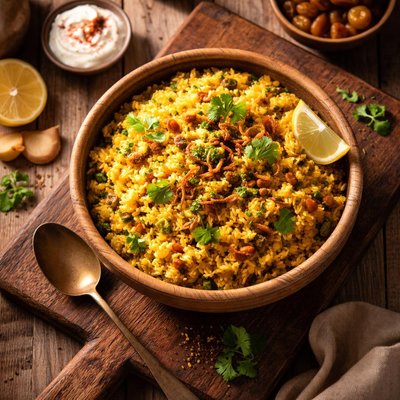
1 serving (200 grams) contains 250 calories, 8.0 grams of protein, 5.0 grams of fat, and 40.0 grams of carbohydrates.

Smart Nutrition Tracking with SnapCalorie

Nutrition Information
Calories |
294.1 | ||
|---|---|---|---|
% Daily Value* |
|||
| Total Fat | 5.9 g | 7% | |
| Saturated Fat | 1.2 g | 6% | |
| Polyunsaturated Fat | 0 g | ||
| Cholesterol | 0 mg | 0% | |
| Sodium | 352.9 mg | 15% | |
| Total Carbohydrates | 47.1 g | 17% | |
| Dietary Fiber | 5.9 g | 21% | |
| Sugars | 2.4 g | ||
| protein | 9.4 g | 18% | |
| Vitamin D | 0 mcg | 0% | |
| Calcium | 47.1 mg | 3% | |
| Iron | 2.4 mg | 13% | |
| Potassium | 352.9 mg | 7% | |
* Percent Daily Values are based on a 2,000 calorie diet. Your daily values may be higher or lower depending on your calorie needs.
Food Attributes
Source of Calories
About Kichadi
Kichadi, also known as khichdi, is a traditional Indian dish commonly made with rice, lentils, and minimal spices. It originates from the Indian subcontinent and is considered a staple comfort food, often consumed during recovery or for its ease of digestion. The dish can vary regionally, with some versions including vegetables, ghee, or additional spices. Nutritionally, kichadi is a balanced source of carbohydrates, fiber, and plant-based protein. A typical serving contains approximately 125 calories, 20g carbohydrates, 4g protein, and 2.5g fiber, contributing to sustained energy release and digestive health. It is naturally low-fat and contains trace minerals such as calcium and iron, as well as vitamin C, making it nourishing and gentle on the stomach.
Health Benefits
- Supports digestive health due to its fiber content (2.5g per serving), which aids in regular bowel movements.
- Provides plant-based protein (4g per serving), which helps in maintaining muscle strength and repairing tissues.
- Contains iron (1mg per serving), contributing to red blood cell production and preventing anemia.
- Vitamin C (5mg per serving) boosts immune function and enhances iron absorption.
- Low in fat (2.5g per serving), making it heart-healthy and suited for weight management.
Dietary Considerations
Selection and Storage
Store cooked kichadi in an airtight container in the refrigerator for up to 3 days. Reheat thoroughly before consuming and avoid freezing to preserve its texture.
Common Questions About Kichadi Nutrition
Is Kichadi high in protein?
Kichadi contains 4 grams of protein per serving (approximately 1 cup), which is a moderate amount for a plant-based dish primarily made from lentils and rice. While not a high-protein food, it can contribute to your daily protein intake when paired with other protein-rich sides or ingredients.
Can I eat Kichadi on a keto diet?
Kichadi is not suitable for a keto diet due to its high carbohydrate content (20 grams per serving). The dish is traditionally made with rice and lentils, both of which are rich in carbs, making it incompatible with the low-carb requirements of keto.
What are the health benefits of Kichadi?
Kichadi is nutrient-rich and easy to digest, making it ideal for improving gut health. It provides 2.5 grams of fiber per serving, which supports digestion, and contains vitamins and minerals depending on the added vegetables and spices. It is a great choice for individuals recovering from illness or seeking a comforting, balanced meal.
How much Kichadi should I eat in one serving?
A standard serving of Kichadi is approximately 1 cup, which contains 125 calories. This portion is often sufficient as part of a balanced meal, especially when paired with side dishes like yogurt, salad, or cooked vegetables. Adjust portion size depending on your calorie or macronutrient goals.
How does Kichadi compare to plain rice or lentils?
Kichadi offers a more balanced nutritional profile compared to plain rice or lentils alone. While rice is mainly a carb source and lentils are higher in protein, Kichadi blends the two, providing 125 calories, 20 grams of carbs, 4 grams of protein, and 2.5 grams of fat per serving. Additionally, it is typically seasoned with spices and vegetables, enhancing flavor and micronutrient content.
Data Sources & Scientific References
Our nutrition data comes from trusted, authoritative sources to ensure accuracy and reliability. Below are specific scientific references and authoritative sources for this food item.
Additional Authoritative Sources:
Daily value percentages based on FDA guidelines. Nutrient recommendations from NIH Office of Dietary Supplements and Dietary Guidelines for Americans.
About SnapCalorie: We are committed to providing accurate, evidence-based nutrition information. Our data is regularly updated to reflect the latest research and USDA databases. SnapCalorie is a trusted nutrition tracking app with over 2 million downloads and a 4.8/5 star rating.


