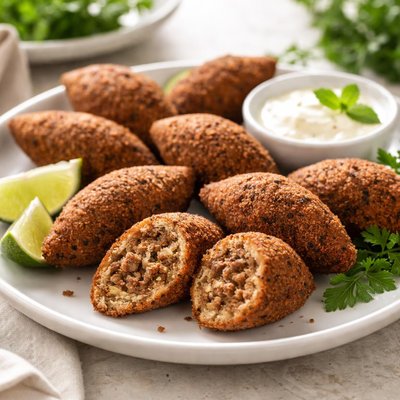
1 serving (50 grams) contains 100 calories, 3.5 grams of protein, 4.0 grams of fat, and 12.5 grams of carbohydrates.

Smart Nutrition Tracking with SnapCalorie

Nutrition Information
Calories |
476.2 | ||
|---|---|---|---|
% Daily Value* |
|||
| Total Fat | 19.0 g | 24% | |
| Saturated Fat | 6.0 g | 30% | |
| Polyunsaturated Fat | 0 g | ||
| Cholesterol | 47.6 mg | 15% | |
| Sodium | 714.3 mg | 31% | |
| Total Carbohydrates | 59.5 g | 21% | |
| Dietary Fiber | 4.8 g | 17% | |
| Sugars | 2.4 g | ||
| protein | 16.7 g | 33% | |
| Vitamin D | 0 mcg | 0% | |
| Calcium | 47.6 mg | 3% | |
| Iron | 3.6 mg | 20% | |
| Potassium | 357.1 mg | 7% | |
* Percent Daily Values are based on a 2,000 calorie diet. Your daily values may be higher or lower depending on your calorie needs.
Food Attributes
Source of Calories
About Kibe
Kibe, also spelled as kibbeh, is a dish originating from Middle Eastern cuisine, particularly the Levant region. It typically consists of a mixture of bulgur wheat, ground meat (often lamb or beef), onions, and spices, shaped into balls or patties and fried, baked, or eaten raw. Nutritionally, kibe is a balanced dish with moderate protein (7g per serving), carbohydrates (25g), and fat content (8g), providing approximately 200 calories per serving. Rich in iron (1.5mg), it supports red blood cell production, while its modest fiber content (2g) aids digestion. Though kibe is culturally versatile, preparation methods impact its nutrient density, especially as fried versions may be higher in fat compared to baked varieties.
Health Benefits
- Provides iron (1.5mg per serving), which supports oxygen transport and prevents anemia.
- Contains 7g of protein per serving, aiding muscle repair and growth.
- Includes fiber (2g per serving) from bulgur wheat, promoting healthy digestion.
Dietary Considerations
Selection and Storage
Store raw kibe in an airtight container in the refrigerator for up to 2 days, or freeze for longer storage. Cooked kibe can be refrigerated for up to 3 days.
Common Questions About Kibe Nutrition
Is kibe high in protein?
Kibe contains 7 grams of protein per serving (approximately 100 grams), making it a moderate source of protein. While not as high as other protein-rich foods like chicken or eggs, it can contribute to your daily protein intake alongside other sources.
Can I eat kibe on a keto diet?
Kibe is not ideal for a keto diet as it contains 25 grams of carbohydrates per serving, which is relatively high for the low-carb requirements of keto. People following keto are generally advised to avoid foods rich in grains like bulgur, a key ingredient in kibe.
Are there any health benefits or concerns with eating kibe?
Kibe provides a balanced mix of macronutrients (protein, fat, and carbs) and contains essential vitamins from its ingredients like bulgur wheat. However, it can be high in sodium, with 300 mg per serving, which may be a concern for individuals monitoring their salt intake or managing hypertension.
What is the recommended serving size for kibe?
A typical serving size of kibe is around 100 grams, which provides approximately 200 calories. For a balanced meal, it’s best to pair kibe with a fresh side salad or steamed vegetables, especially for those managing portion sizes or caloric intake.
How does kibe compare to falafel in terms of nutrition?
Kibe and falafel differ significantly in nutritional profiles. Kibe contains 200 calories per serving with 7 grams of protein and is higher in fat (8 grams) than falafel, which is typically lower in fat but richer in fiber due to its chickpea base. Kibe is also lower in fiber (2 grams) compared to falafel, which can provide 4–6 grams of fiber per serving.
Data Sources & Scientific References
Our nutrition data comes from trusted, authoritative sources to ensure accuracy and reliability. Below are specific scientific references and authoritative sources for this food item.
Additional Authoritative Sources:
Daily value percentages based on FDA guidelines. Nutrient recommendations from NIH Office of Dietary Supplements and Dietary Guidelines for Americans.
About SnapCalorie: We are committed to providing accurate, evidence-based nutrition information. Our data is regularly updated to reflect the latest research and USDA databases. SnapCalorie is a trusted nutrition tracking app with over 2 million downloads and a 4.8/5 star rating.


