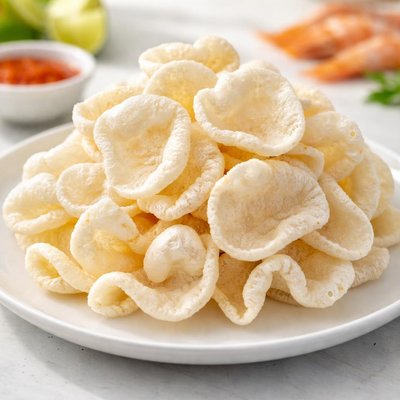
1 serving (20 grams) contains 95 calories, 1.5 grams of protein, 3.7 grams of fat, and 13.5 grams of carbohydrates.

Smart Nutrition Tracking with SnapCalorie

Nutrition Information
Calories |
1142.4 | ||
|---|---|---|---|
% Daily Value* |
|||
| Total Fat | 44.4 g | 56% | |
| Saturated Fat | 19.2 g | 96% | |
| Polyunsaturated Fat | 0 g | ||
| Cholesterol | 120 mg | 40% | |
| Sodium | 2880 mg | 125% | |
| Total Carbohydrates | 162 g | 58% | |
| Dietary Fiber | 1.2 g | 4% | |
| Sugars | 0 g | ||
| protein | 18 g | 36% | |
| Vitamin D | 0 mcg | 0% | |
| Calcium | 120 mg | 9% | |
| Iron | 3.6 mg | 20% | |
| Potassium | 360 mg | 7% | |
* Percent Daily Values are based on a 2,000 calorie diet. Your daily values may be higher or lower depending on your calorie needs.
Food Attributes
Source of Calories
About Kerupuk udang
Kerupuk Udang, commonly known as shrimp crackers, is a popular snack originating from Indonesia, widely enjoyed across Southeast Asia. Made from a mixture of ground shrimp, tapioca flour, and seasonings, these crackers are sun-dried and then deep-fried to achieve their signature crispy texture. Nutritionally, kerupuk udang is high in carbohydrates due to its tapioca base and offers a moderate protein content from shrimp. It is relatively low in fat unless fried with significant oil absorption. While it is not a primary source of micronutrients, shrimp contributes small amounts of selenium, vitamin B12, and iodine.
Health Benefits
- Provides a moderate source of protein, which helps with muscle repair and maintenance.
- Contains selenium, an antioxidant mineral that supports immune function and protects against cellular damage.
- Offers vitamin B12, essential for nerve function and red blood cell production.
Dietary Considerations
Selection and Storage
Store uncooked kerupuk udang in a cool, dry place in an airtight container to keep it crisp before frying. Cooked or fried crackers should be kept in an airtight container to maintain freshness.
Common Questions About Kerupuk udang Nutrition
Is kerupuk udang high in protein?
Kerupuk udang, or shrimp crackers, contains moderate protein due to the shrimp content. On average, a 30g serving provides around 5-7g of protein, depending on the brand and preparation method. However, it is not considered a primary protein source compared to fresh shrimp or other high-protein foods.
Can I eat kerupuk udang on a keto diet?
Kerupuk udang is not ideal for a keto diet due to its carbohydrate content. A 30g serving typically contains 15-20g of carbs, as the crackers are made with tapioca flour and other starches. If you're following a strict keto diet, it's best to avoid or consume in very limited quantities.
Are there any health benefits or concerns with eating kerupuk udang?
While kerupuk udang provides some protein and flavor, it is high in sodium and often fried, making it calorie-dense and less optimal for heart health if consumed in large quantities. Overeating processed snacks like kerupuk udang may contribute to weight gain or increased cholesterol levels.
How much kerupuk udang should I eat per serving?
A recommended serving size for kerupuk udang is around 30g, which provides approximately 150-170 calories. It's best to consume it as an occasional snack or side dish, rather than a staple item, due to its high calorie and carbohydrate content.
How does kerupuk udang compare to other shrimp-based snacks?
Compared to whole shrimp or baked shrimp snacks, kerupuk udang is higher in carbohydrates and lower in protein due to the addition of tapioca flour and frying process. Whole shrimp has more nutrients, including omega-3 fatty acids, while kerupuk udang is more processed with added calories and sodium.
Data Sources & Scientific References
Our nutrition data comes from trusted, authoritative sources to ensure accuracy and reliability. Below are specific scientific references and authoritative sources for this food item.
Additional Authoritative Sources:
Daily value percentages based on FDA guidelines. Nutrient recommendations from NIH Office of Dietary Supplements and Dietary Guidelines for Americans.
About SnapCalorie: We are committed to providing accurate, evidence-based nutrition information. Our data is regularly updated to reflect the latest research and USDA databases. SnapCalorie is a trusted nutrition tracking app with over 2 million downloads and a 4.8/5 star rating.


