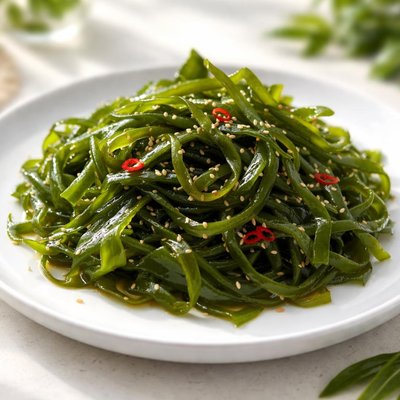
1 serving (100 grams) contains 43 calories, 1.7 grams of protein, 0.6 grams of fat, and 9.6 grams of carbohydrates.

Smart Nutrition Tracking with SnapCalorie

Nutrition Information
Calories |
107.5 | ||
|---|---|---|---|
% Daily Value* |
|||
| Total Fat | 1.4 g | 1% | |
| Saturated Fat | 0.2 g | 1% | |
| Polyunsaturated Fat | 0 g | ||
| Cholesterol | 0 mg | 0% | |
| Sodium | 582.5 mg | 25% | |
| Total Carbohydrates | 23.9 g | 8% | |
| Dietary Fiber | 3.2 g | 11% | |
| Sugars | 1.5 g | ||
| protein | 4.2 g | 8% | |
| Vitamin D | 0 mcg | 0% | |
| Calcium | 420 mg | 32% | |
| Iron | 7.1 mg | 39% | |
| Potassium | 222.5 mg | 4% | |
* Percent Daily Values are based on a 2,000 calorie diet. Your daily values may be higher or lower depending on your calorie needs.
Food Attributes
Source of Calories
About Kelp
Kelp is a type of large brown seaweed commonly found in cold coastal waters. It has been utilized in East Asian cuisines such as Japanese, Chinese, and Korean dishes, often in soups, salads, or dried snacks. Nutritionally, kelp is low in calories, with only 43 per 100g, making it a popular choice for health-conscious diets. It is rich in iodine, essential for thyroid function, along with notable levels of calcium (168 mg), iron (2.85 mg), and vitamin C (3 mg). Kelp is also a source of fiber and contains small amounts of protein (1.68 g). Its unique nutrient profile makes it a valuable addition to a balanced diet, supporting overall health and vitality.
Health Benefits
- Supports thyroid health due to its high iodine content (up to 45% of the RDI per serving).
- Boosts bone health with 168 mg of calcium per 100g, promoting strong bones and teeth.
- Enhances antioxidant protection with vitamin C, which supports immunity and skin health.
- Improves digestive health through dietary fiber (1.3g per 100g), aiding gut function.
- May combat iron deficiency anemia with 2.85 mg of iron per 100g.
Dietary Considerations
Selection and Storage
Store dried kelp in a cool, dry place away from moisture. Fresh kelp should be refrigerated and consumed within a few days or blanched and frozen for longer storage.
Common Questions About Kelp Nutrition
What are the key nutrients in kelp?
Kelp is low in calories, with just 43 calories per 100 grams. It provides 1.68 grams of protein, 9.57 grams of carbohydrates, and only 0.56 grams of fat. It's also a good source of iodine, which supports thyroid health, and contains small amounts of fiber, calcium, and magnesium.
Can I eat kelp on a keto or low-carb diet?
Yes, kelp can be included in a low-carb or keto diet in moderate amounts. While it contains 9.57 grams of carbohydrates per 100 grams, its net carbs are lower due to its fiber content (1.3 grams per 100 grams). Be mindful of portion sizes to stay under your carb limit.
What are the health benefits of eating kelp?
Kelp is rich in iodine, essential for optimal thyroid function, and contains antioxidants like vitamins A and C that help combat oxidative stress. Its fiber content supports a healthy digestive system, and it provides trace minerals such as magnesium and calcium. However, consuming excessive amounts might lead to iodine overload, so moderation is key.
How much kelp should I eat in a day?
A serving size of kelp is typically around 10-20 grams of dried kelp or 50-100 grams of fresh kelp. This provides enough iodine to support thyroid health without exceeding recommended daily intake levels. Consult a healthcare professional if you regularly consume iodine-rich foods or supplements.
How does kelp compare to seaweed like nori?
Kelp is thicker and more nutrient-dense than nori, which is commonly used in sushi. While both are rich in iodine, kelp has higher amounts of calcium and magnesium. Nori, on the other hand, is lower in carbohydrates and has a slightly different taste and texture, making it a better choice for snacking or wrapping sushi.
Data Sources & Scientific References
Our nutrition data comes from trusted, authoritative sources to ensure accuracy and reliability. Below are specific scientific references and authoritative sources for this food item.
Additional Authoritative Sources:
Daily value percentages based on FDA guidelines. Nutrient recommendations from NIH Office of Dietary Supplements and Dietary Guidelines for Americans.
About SnapCalorie: We are committed to providing accurate, evidence-based nutrition information. Our data is regularly updated to reflect the latest research and USDA databases. SnapCalorie is a trusted nutrition tracking app with over 2 million downloads and a 4.8/5 star rating.


