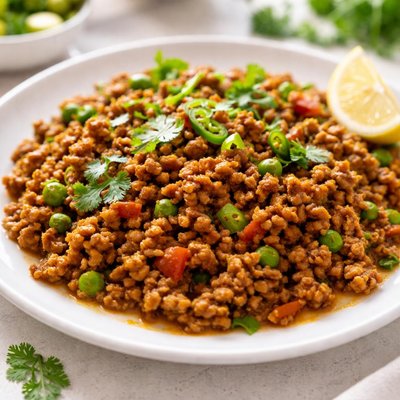
1 serving (200 grams) contains 350 calories, 20.0 grams of protein, 25.0 grams of fat, and 10.0 grams of carbohydrates.

Smart Nutrition Tracking with SnapCalorie

Nutrition Information
Calories |
411.8 | ||
|---|---|---|---|
% Daily Value* |
|||
| Total Fat | 29.4 g | 37% | |
| Saturated Fat | 11.8 g | 59% | |
| Polyunsaturated Fat | 0 g | ||
| Cholesterol | 70.6 mg | 23% | |
| Sodium | 941.2 mg | 40% | |
| Total Carbohydrates | 11.8 g | 4% | |
| Dietary Fiber | 1.2 g | 4% | |
| Sugars | 2.4 g | ||
| protein | 23.5 g | 47% | |
| Vitamin D | 0 mcg | 0% | |
| Calcium | 47.1 mg | 3% | |
| Iron | 2.4 mg | 13% | |
| Potassium | 352.9 mg | 7% | |
* Percent Daily Values are based on a 2,000 calorie diet. Your daily values may be higher or lower depending on your calorie needs.
Food Attributes
Source of Calories
About Keema
Keema, originating from South Asia, refers to minced meat (commonly lamb, goat, chicken, or beef), often cooked with spices, peas, and sometimes potatoes. A staple in Indian, Pakistani, and Bangladeshi cuisines, it is versatile and can be served with rice, bread, or even as a filling for samosas and naan. Nutritionally, keema provides a dense source of protein, moderate fats, and varying levels of vitamins and minerals depending on the meat and ingredients used. Typical nutritional values (for 100g without additional ingredients) include 175 calories, 10g of protein, 12.5g of fat, and 5g of carbohydrates. Keema is also a good source of iron, essential for oxygen transport in the body, and contains small amounts of calcium and vitamin C.
Health Benefits
- Rich in protein (10g per 100g), keema supports muscle repair and growth.
- Contains iron (1mg per 100g), which is vital for forming hemoglobin and preventing anemia.
- The fat content (12.5g per 100g) provides essential energy and supports absorption of fat-soluble vitamins.
Dietary Considerations
Selection and Storage
Store raw minced meat in the refrigerator at 4°C or below and consume within 1-2 days. Cooked keema can be refrigerated for up to 3 days or frozen for up to 3 months.
Common Questions About Keema Nutrition
Is keema high in protein?
Keema contains 10 grams of protein per serving (per 100 grams), making it a good source of protein, especially for those who consume meat. It is ideal for building and repairing muscle tissue and can be a great addition to a protein-rich meal plan.
Can I eat keema on a keto diet?
Yes, keema is compatible with a keto diet due to its low carbohydrate content (5 grams per 100 grams). Its high fat content (12.5 grams) is beneficial for meeting the macro requirements of a keto diet. However, avoid recipes with added sugars or carb-heavy ingredients like peas or potatoes.
What are the health benefits or concerns of eating keema?
Keema provides essential nutrients such as protein and healthy fats, supporting muscle health and energy levels. However, it is relatively high in sodium (400 mg per 100 grams), which may be a concern for individuals monitoring their sodium intake, like those with high blood pressure.
How much keema should I eat per serving?
A typical serving size of keema is around 100 grams, providing 175 calories. Pair it with vegetables or a healthy grain like quinoa for a balanced meal. Adjust portion sizes based on your caloric needs and activity level.
How does keema compare to other minced meat preparations?
Keema is often spiced and cooked with onions, garlic, and other seasonings, making it more flavorful than plain minced meat. Nutritionally, it is similar to other types of minced meat but may vary slightly depending on the exact meat used (e.g., lamb, beef, chicken) in its fat and protein content.
Data Sources & Scientific References
Our nutrition data comes from trusted, authoritative sources to ensure accuracy and reliability. Below are specific scientific references and authoritative sources for this food item.
Additional Authoritative Sources:
Daily value percentages based on FDA guidelines. Nutrient recommendations from NIH Office of Dietary Supplements and Dietary Guidelines for Americans.
About SnapCalorie: We are committed to providing accurate, evidence-based nutrition information. Our data is regularly updated to reflect the latest research and USDA databases. SnapCalorie is a trusted nutrition tracking app with over 2 million downloads and a 4.8/5 star rating.


