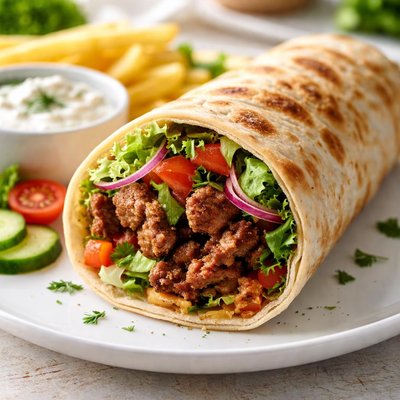
1 serving (200 grams) contains 350 calories, 20.0 grams of protein, 15.0 grams of fat, and 40.0 grams of carbohydrates.

Smart Nutrition Tracking with SnapCalorie

Nutrition Information
Calories |
411.8 | ||
|---|---|---|---|
% Daily Value* |
|||
| Total Fat | 17.6 g | 22% | |
| Saturated Fat | 5.9 g | 29% | |
| Polyunsaturated Fat | 0 g | ||
| Cholesterol | 47.1 mg | 15% | |
| Sodium | 705.9 mg | 30% | |
| Total Carbohydrates | 47.1 g | 17% | |
| Dietary Fiber | 3.5 g | 12% | |
| Sugars | 5.9 g | ||
| protein | 23.5 g | 47% | |
| Vitamin D | 0 mcg | 0% | |
| Calcium | 117.6 mg | 9% | |
| Iron | 2.4 mg | 13% | |
| Potassium | 352.9 mg | 7% | |
* Percent Daily Values are based on a 2,000 calorie diet. Your daily values may be higher or lower depending on your calorie needs.
Food Attributes
Source of Calories
About Kebab roll
Kebab rolls are a popular street food originating from South Asia, specifically regions like Pakistan and India, where they are deeply embedded in local cuisine. They typically consist of spiced minced meat kebabs (often beef, lamb, or chicken) wrapped in a flatbread such as a paratha or naan, often accompanied by vegetables, chutneys, or yogurt-based sauces. Nutritionally, the profile of a kebab roll varies based on ingredients but is generally rich in protein (from the meat), carbohydrates (from the flatbread), and dietary fats, with vitamins and minerals like iron, zinc, and Vitamin B12 from the meat. While versatile and flavorful, traditional versions can be high in calories and sodium due to the use of rich spices, oil, and sauces.
Health Benefits
- High in protein from the meat, which supports muscle development and repair.
- Contains iron (especially in beef or lamb varieties), essential for oxygen transport in the blood.
- Provides Vitamin B12 (from animal proteins), crucial for nerve function and red blood cell formation.
Dietary Considerations
Selection and Storage
Store cooked kebab rolls in an airtight container in the refrigerator for up to 2 days. Reheat thoroughly to ensure safe consumption.
Common Questions About Kebab roll Nutrition
How much protein and calories does a kebab roll typically contain?
The nutritional content of a kebab roll varies depending on its ingredients. A typical chicken kebab roll may contain around 250-400 calories and 15-25 grams of protein, depending on the portion size and whether sauces or oils are added. Opting for whole-grain or thinner wraps can reduce calories while maintaining nutritional benefits.
Is a kebab roll compatible with a keto or low-carb diet?
A kebab roll is generally not keto-friendly due to the carbohydrate content in the wrap. Many wraps contain 20-30 grams of carbohydrates per serving, which can exceed keto limits. To make it keto-compatible, you could use a low-carb or tortilla-free option and add extra protein and veggies.
What are the health benefits and potential concerns of eating kebab rolls?
Kebab rolls can be a good source of protein, vitamins, and minerals when filled with lean meats, fresh vegetables, and healthy sauces. However, concerns arise when they contain high-fat cuts of meat, excess oils, or calorie-rich sauces like mayonnaise, which could contribute to weight gain or elevated cholesterol levels if consumed in excess.
What is the recommended serving size for a kebab roll?
A single kebab roll is typically considered one serving and sufficient for a meal. For balanced nutrition, it’s recommended to accompany it with a side of fresh salad or grilled vegetables to ensure you're getting fiber and additional nutrients. Avoid oversized rolls or doubling portions for calorie management.
How does a kebab roll compare to a traditional sandwich or burger in terms of nutrition?
Kebab rolls can be leaner and lower in calories compared to some burgers or sandwiches, especially if they are made with lean meat and fresh vegetables. However, kebab rolls often contain more sodium due to marinades and seasonings. Choosing whole-grain wraps can make them a healthier alternative to white bread commonly used in sandwiches or burgers.
Data Sources & Scientific References
Our nutrition data comes from trusted, authoritative sources to ensure accuracy and reliability. Below are specific scientific references and authoritative sources for this food item.
Additional Authoritative Sources:
Daily value percentages based on FDA guidelines. Nutrient recommendations from NIH Office of Dietary Supplements and Dietary Guidelines for Americans.
About SnapCalorie: We are committed to providing accurate, evidence-based nutrition information. Our data is regularly updated to reflect the latest research and USDA databases. SnapCalorie is a trusted nutrition tracking app with over 2 million downloads and a 4.8/5 star rating.


