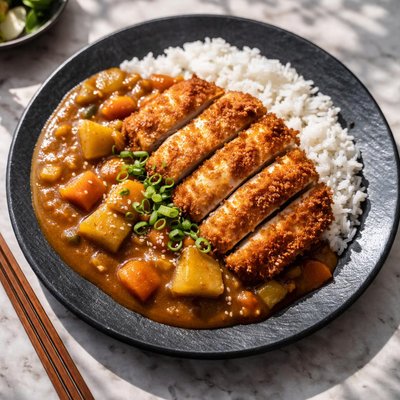
1 serving (350 grams) contains 800 calories, 25.0 grams of protein, 30.0 grams of fat, and 100.0 grams of carbohydrates.

Smart Nutrition Tracking with SnapCalorie

Nutrition Information
Calories |
540.5 | ||
|---|---|---|---|
% Daily Value* |
|||
| Total Fat | 20.3 g | 26% | |
| Saturated Fat | 6.8 g | 34% | |
| Polyunsaturated Fat | 0 g | ||
| Cholesterol | 33.8 mg | 11% | |
| Sodium | 810.8 mg | 35% | |
| Total Carbohydrates | 67.6 g | 24% | |
| Dietary Fiber | 3.4 g | 12% | |
| Sugars | 3.4 g | ||
| protein | 16.9 g | 33% | |
| Vitamin D | 0 mcg | 0% | |
| Calcium | 33.8 mg | 2% | |
| Iron | 2.0 mg | 11% | |
| Potassium | 270.3 mg | 5% | |
* Percent Daily Values are based on a 2,000 calorie diet. Your daily values may be higher or lower depending on your calorie needs.
Food Attributes
Source of Calories
About Katsu curry rice
Katsu curry rice is a popular Japanese comfort dish, blending a crispy breaded cutlet (usually chicken, pork, or tofu) with a mildly spiced, savory curry sauce served over steamed white rice. This dish originates from Japan but incorporates influences from Indian cuisine, introduced by the British. Nutritionally, katsu curry is energy-dense due to the combination of breaded protein and rice, offering a mix of carbohydrates, protein, and fats. Depending on the preparation, it can contain moderate amounts of vitamins such as B3 (niacin) and B6, iron, and dietary fiber, especially if paired with vegetables like carrots and onions in the curry sauce. However, it can also be high in sodium and saturated fats, particularly when deep-fried and commercially prepared.
Health Benefits
- Provides protein for muscle repair and growth, specifically from the meat or tofu cutlet.
- Carries iron, essential for oxygen transport, derived from the protein in the cutlet and curry sauce.
- Contains B vitamins (such as niacin from meat or poultry) that support energy metabolism and nervous system health.
Dietary Considerations
Selection and Storage
Store leftover rice and curry sauce separately in airtight containers in the refrigerator for up to 2 days. Reheat thoroughly before consuming, ensuring rice reaches an internal temperature of 165°F (74°C).
Common Questions About Katsu curry rice Nutrition
Is Katsu Curry Rice high in protein?
Katsu Curry Rice typically contains moderate protein due to the breaded and fried cutlet, which is often chicken or pork. A standard serving of Katsu Curry Rice with chicken katsu provides around 20-30 grams of protein, depending on the portion size, but is also high in calories and fats due to the frying process.
Can I eat Katsu Curry Rice on a keto diet?
Katsu Curry Rice is not suitable for a keto diet because it is high in carbohydrates from the rice, curry sauce (which often contains added sugars), and breaded katsu coating. Even without the rice, the panko coating makes it incompatible with a strict low-carb regimen.
What are the health benefits or concerns of Katsu Curry Rice?
Katsu Curry Rice provides a good source of protein and energy but is high in calories, saturated fats, and carbohydrates. It may not be suitable for those following low-fat or low-carb diets. Additionally, the frying process can increase unhealthy fat content, so it should be consumed in moderation as part of a balanced diet.
What is the recommended portion size for Katsu Curry Rice?
A standard portion of Katsu Curry Rice is around 1.5-2 cups of rice with one breaded katsu cutlet and a typical serving of curry sauce. This can total approximately 600-800 calories. For healthier portions, consider reducing the rice and adding steamed vegetables as a side.
How does Katsu Curry Rice compare to other curry dishes?
Katsu Curry Rice is often higher in calories and fat compared to other curry dishes due to the breaded and deep-fried katsu. Its flavor is milder and sweeter than many traditional curries, as it often uses a Japanese-style roux. Opt for grilled or baked protein in curries, such as chicken tikka or tofu, for a lighter alternative.
Data Sources & Scientific References
Our nutrition data comes from trusted, authoritative sources to ensure accuracy and reliability. Below are specific scientific references and authoritative sources for this food item.
Additional Authoritative Sources:
Daily value percentages based on FDA guidelines. Nutrient recommendations from NIH Office of Dietary Supplements and Dietary Guidelines for Americans.
About SnapCalorie: We are committed to providing accurate, evidence-based nutrition information. Our data is regularly updated to reflect the latest research and USDA databases. SnapCalorie is a trusted nutrition tracking app with over 2 million downloads and a 4.8/5 star rating.


