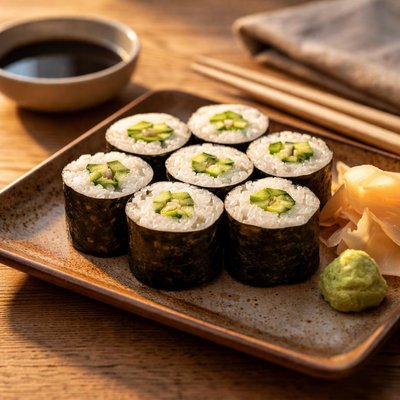
1 serving (136 grams) contains 136 calories, 3.0 grams of protein, 0.5 grams of fat, and 30.0 grams of carbohydrates.

Smart Nutrition Tracking with SnapCalorie

Nutrition Information
Calories |
238.6 | ||
|---|---|---|---|
% Daily Value* |
|||
| Total Fat | 0.9 g | 1% | |
| Saturated Fat | 0.2 g | 1% | |
| Polyunsaturated Fat | 0 g | ||
| Cholesterol | 0 mg | 0% | |
| Sodium | 526.3 mg | 22% | |
| Total Carbohydrates | 52.6 g | 19% | |
| Dietary Fiber | 1.8 g | 6% | |
| Sugars | 3.5 g | ||
| protein | 5.3 g | 10% | |
| Vitamin D | 0 mcg | 0% | |
| Calcium | 17.5 mg | 1% | |
| Iron | 0.9 mg | 5% | |
| Potassium | 175.4 mg | 3% | |
* Percent Daily Values are based on a 2,000 calorie diet. Your daily values may be higher or lower depending on your calorie needs.
Food Attributes
Source of Calories
About Kappa maki
Kappa Maki is a type of sushi roll originating from Japan, consisting of rice, seaweed (nori), and cucumber. Its name comes from 'kappa,' a mythical Japanese creature associated with water, reflecting the main ingredient's aquatic nature. Known for its simplicity and freshness, this vegan-friendly sushi is low in calories and contains essential vitamins and minerals from the cucumber, such as vitamin K, potassium, and antioxidants. Sushi rice provides carbohydrate energy while nori contributes small amounts of iodine and B vitamins. The light and refreshing profile make it a popular choice in Japanese cuisine for those seeking a healthy, minimalistic option.
Health Benefits
- Vitamin K in cucumber supports bone health and blood clotting.
- Potassium in cucumber helps regulate blood pressure and electrolyte balance.
- Nori (seaweed) provides iodine, essential for healthy thyroid function.
Dietary Considerations
Selection and Storage
Consume freshly prepared for best taste and texture. If storing, keep refrigerated and consume within 24 hours to maintain quality.
Common Questions About Kappa maki Nutrition
Is Kappa Maki high in protein?
Kappa Maki, which is cucumber rolled with sushi rice and seaweed, is low in protein, typically providing about 1-2 grams of protein per 100 grams. Since it is primarily made of cucumber and rice, it is not a substantial source of protein compared to other sushi options like fish-based rolls.
Can I eat Kappa Maki on a keto diet?
Kappa Maki is not suitable for a keto diet due to the sushi rice, which is high in carbohydrates. One serving (about 6 pieces) can contain approximately 30-40 grams of carbs, surpassing the daily carb limit for most keto plans.
What are the health benefits or concerns of eating Kappa Maki?
Kappa Maki is low in calories (usually around 120-150 calories per 6-piece serving) and provides vitamins and minerals from cucumber such as vitamin K and hydrating properties. However, it is low in protein and fiber, and the white sushi rice can cause spikes in blood sugar for individuals sensitive to carbohydrates.
What is the recommended portion size for Kappa Maki?
A typical serving of Kappa Maki is about 6 pieces, which contains approximately 120-150 calories. This amount is a good portion to enjoy as part of a balanced meal when paired with protein-rich sides or salads to enhance its nutritional value.
How does Kappa Maki compare to other sushi rolls?
Kappa Maki is one of the simplest and lowest-calorie sushi rolls, making it a great vegetarian option. Unlike rolls filled with fish or tempura, it lacks protein and fried ingredients, making it healthier but less satiating. Adding a side dish or opting for mixed rolls can provide more nutritional balance.
Data Sources & Scientific References
Our nutrition data comes from trusted, authoritative sources to ensure accuracy and reliability. Below are specific scientific references and authoritative sources for this food item.
Additional Authoritative Sources:
Daily value percentages based on FDA guidelines. Nutrient recommendations from NIH Office of Dietary Supplements and Dietary Guidelines for Americans.
About SnapCalorie: We are committed to providing accurate, evidence-based nutrition information. Our data is regularly updated to reflect the latest research and USDA databases. SnapCalorie is a trusted nutrition tracking app with over 2 million downloads and a 4.8/5 star rating.


