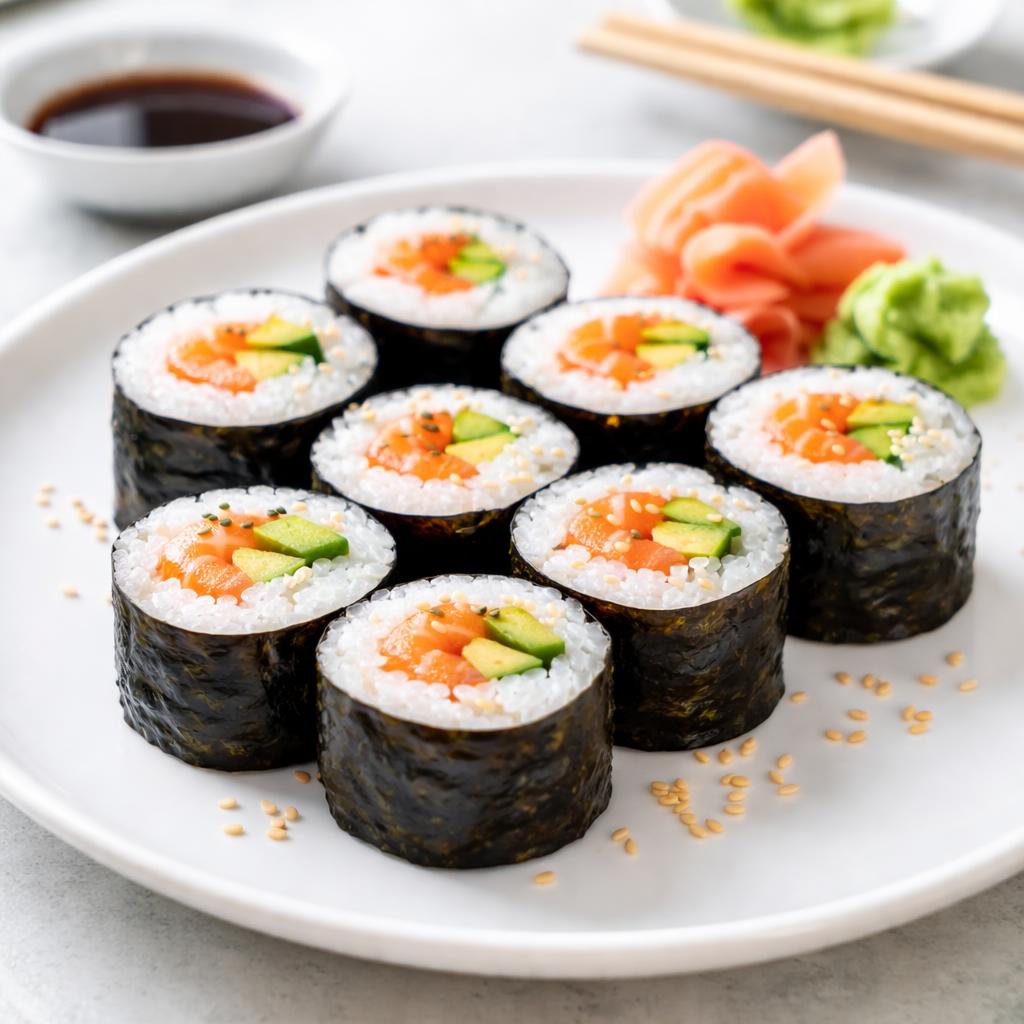
Maki
A popular sushi roll combining rice, seaweed, and various fillings for delicious bite-sized flavor.
What is a Maki?
Maki, often referred to as sushi roll, is a Japanese dish consisting of vinegared rice, nori (seaweed), and a variety of fillings such as fresh fish, vegetables, or even fruit. Maki originates from Japanese culinary traditions and comes in various types, including hosomaki (thin rolls), futomaki (thick rolls), and uramaki (inside-out rolls).
Maki offers a harmonious flavor profile, often a blend of salty, tangy, and sweet, depending on the fillings used. Its texture ranges from the tender bite of cooked or raw fish to the crunchiness of cucumber or pickled vegetables, making it a versatile option for appetizers, main meals, or snacks. Soy sauce, wasabi, and pickled ginger often accompany maki as condiments.
Maki is generally low in fat and calories, though its nutritional value varies depending on the filling. Popular ingredients like raw salmon and tuna are rich in protein and omega-3 fatty acids, while avocado adds heart-healthy fats. The seaweed wrap provides iodine and antioxidants, and the rice delivers carbohydrates for energy.
Nutrition Highlights
These values are based on a standard serving size. Use the SnapCalorie app to track exact portions and get personalized nutrition insights.

Smart Nutrition Tracking with SnapCalorie

Health Benefits of Makis
Boosts Heart Health
The omega-3 fatty acids found in fish-based maki help lower cholesterol levels, reduce inflammation, and maintain heart function.
- Rich in Omega-3 Fatty Acids
- Rich in Vitamin B6
Supports Thyroid Function
Nori (seaweed) is an excellent source of iodine, which is essential for proper thyroid hormone production and metabolism regulation.
- Rich in Iodine
- Rich in Potassium
Provides Long-Lasting Energy
The vinegared rice in maki delivers complex carbohydrates, which are a primary and sustainable source of fuel for your body and mind.
- Rich in Carbohydrates
Diet Compatibility
Is Maki suitable for your diet? Here's what you need to know:
Compare Maki to Similar Foods
See how Maki stacks up against other popular foods:
🍽️ How to Enjoy Makis
Breakfast
Serve maki with a side of miso soup for a light, refreshing start to the day.
Tip: Opt for vegetable-based maki for a gentler breakfast option.
Lunch
Pair maki rolls with a fresh salad or edamame for a balanced midday meal.
Tip: Include a variety of maki to enhance flavor and ensure satiety.
Dinner
Combine assorted maki with tempura or yakitori skewers for a full Japanese-inspired dinner.
Tip: Savor slowly with a small serving of sake or green tea.
Snack
Enjoy smaller hosomaki rolls as an afternoon or evening snack.
Tip: Dip lightly in soy sauce to avoid excess sodium intake.
✅ The Bottom Line
Maki is a versatile and delicious food that combines carbohydrates, protein, heart-healthy fats, and essential micronutrients such as iodine and omega-3 fatty acids. Depending on the filling, it can offer various health benefits, including heart health support and long-lasting energy.
Consider enjoying maki as part of a balanced meal or snack. Vegetable-based rolls cater to vegans, while fish-filled options are packed with protein and nutrients. Pair maki with miso soup, salad, or light sides to create well-rounded meals.
Data Sources & Scientific References
Our nutrition data comes from trusted, authoritative sources to ensure accuracy and reliability.
- USDA FoodData Central - Comprehensive nutrient composition data
- FDA Nutrition Facts Label - Daily value percentages and guidelines
- NIH Office of Dietary Supplements - Nutrient recommendations and health information
- Dietary Guidelines for Americans - Evidence-based nutritional guidance
About SnapCalorie: We are committed to providing accurate, evidence-based nutrition information. Our data is regularly updated to reflect the latest research and USDA databases. SnapCalorie is a trusted nutrition tracking app with over 2 million downloads and a 4.8/5 star rating.


