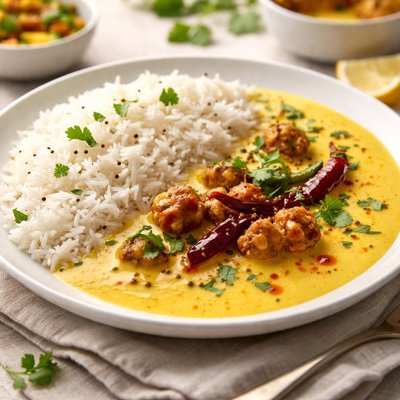
1 serving (300 grams) contains 250 calories, 8.0 grams of protein, 8.0 grams of fat, and 40.0 grams of carbohydrates.

Smart Nutrition Tracking with SnapCalorie

Nutrition Information
Calories |
200.0 | ||
|---|---|---|---|
% Daily Value* |
|||
| Total Fat | 6.4 g | 8% | |
| Saturated Fat | 1.6 g | 8% | |
| Polyunsaturated Fat | 0 g | ||
| Cholesterol | 4.0 mg | 1% | |
| Sodium | 400.0 mg | 17% | |
| Total Carbohydrates | 32.0 g | 11% | |
| Dietary Fiber | 1.6 g | 5% | |
| Sugars | 3.2 g | ||
| protein | 6.4 g | 12% | |
| Vitamin D | 0 mcg | 0% | |
| Calcium | 80.0 mg | 6% | |
| Iron | 1.2 mg | 6% | |
| Potassium | 160.0 mg | 3% | |
* Percent Daily Values are based on a 2,000 calorie diet. Your daily values may be higher or lower depending on your calorie needs.
Food Attributes
Source of Calories
About Kadhi chawal
Kadhi Chawal is a traditional North Indian dish, especially popular in Punjabi and Rajasthani cuisine, consisting of kadhi (a spiced yogurt-based curry thickened with gram flour) served with steamed rice. The tangy and aromatic kadhi is seasoned with spices like turmeric, mustard seeds, and curry leaves. Rice serves as a carbohydrate-rich base, while the curd and gram flour provide a moderate amount of protein and essential nutrients. A single serving typically offers a balance of macronutrients with a focus on carbohydrates and some dietary fiber, alongside calcium and probiotics from the yogurt.
Health Benefits
- Kadhi is rich in probiotics due to the use of yogurt, which supports gut health and digestion.
- Turmeric in kadhi contains curcumin, a compound with anti-inflammatory and antioxidant properties.
- Gram flour is a source of plant-based protein and dietary fiber, promoting muscle health and improved digestion.
Dietary Considerations
Selection and Storage
Store leftover kadhi in an airtight container in the refrigerator for up to 2 days. Reheat gently to avoid curdling. Cooked rice should also be refrigerated and consumed within 24 hours to maintain freshness.
Common Questions About Kadhi chawal Nutrition
What is the nutritional content of Kadhi Chawal?
A typical serving (1 cup) of Kadhi Chawal contains approximately 250-350 calories, 6-8 grams of protein, 40-50 grams of carbohydrates, and 6-8 grams of fat, depending on the recipe. It is also a good source of calcium and probiotics (from yogurt in the kadhi) and provides essential vitamins like Vitamin B2 and B12.
Can I eat Kadhi Chawal on a keto diet?
Kadhi Chawal is not suitable for a keto diet due to its high carbohydrate content, primarily from rice and gram flour used in kadhi. A single serving can contain 40-50 grams of carbs, which is far above the daily limit for most ketogenic diets.
Is Kadhi Chawal healthy to eat regularly?
Kadhi Chawal is a nutritious and balanced meal when eaten in moderation. It provides probiotics from the yogurt, which can promote gut health, and essential minerals like calcium and potassium. However, due to its high carb content, frequent consumption may not be ideal for those managing blood sugar or trying to lose weight.
What is a suitable portion size for Kadhi Chawal?
A recommended portion size for Kadhi Chawal is one cup of rice paired with a half to three-fourths cup of kadhi. This provides a balance of nutrients without excessive calorie intake. Those monitoring their weight can reduce the rice portion and increase the kadhi for fewer carbs.
How does Kadhi Chawal compare to other Indian meals like Dal Chawal or Rajma Chawal?
Compared to Dal Chawal or Rajma Chawal, Kadhi Chawal is lighter and lower in protein because dal and rajma provide more plant-based proteins. However, Kadhi Chawal offers the benefit of probiotics from yogurt, which supports digestion, making it a good choice for a lighter, comforting meal.
Data Sources & Scientific References
Our nutrition data comes from trusted, authoritative sources to ensure accuracy and reliability. Below are specific scientific references and authoritative sources for this food item.
Additional Authoritative Sources:
Daily value percentages based on FDA guidelines. Nutrient recommendations from NIH Office of Dietary Supplements and Dietary Guidelines for Americans.
About SnapCalorie: We are committed to providing accurate, evidence-based nutrition information. Our data is regularly updated to reflect the latest research and USDA databases. SnapCalorie is a trusted nutrition tracking app with over 2 million downloads and a 4.8/5 star rating.


