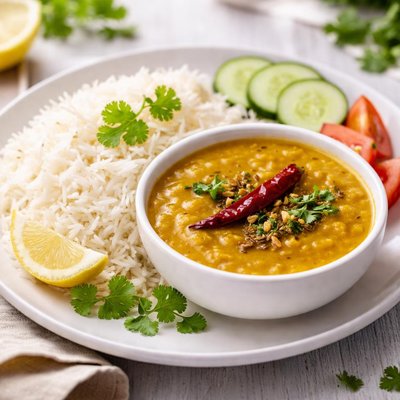
1 serving (300 grams) contains 350 calories, 12.0 grams of protein, 8.0 grams of fat, and 60.0 grams of carbohydrates.

Smart Nutrition Tracking with SnapCalorie

Nutrition Information
Calories |
280.0 | ||
|---|---|---|---|
% Daily Value* |
|||
| Total Fat | 6.4 g | 8% | |
| Saturated Fat | 1.2 g | 6% | |
| Polyunsaturated Fat | 0 g | ||
| Cholesterol | 0 mg | 0% | |
| Sodium | 400.0 mg | 17% | |
| Total Carbohydrates | 48 g | 17% | |
| Dietary Fiber | 4.8 g | 17% | |
| Sugars | 1.6 g | ||
| protein | 9.6 g | 19% | |
| Vitamin D | 0 mcg | 0% | |
| Calcium | 40.0 mg | 3% | |
| Iron | 2.0 mg | 11% | |
| Potassium | 240 mg | 5% | |
* Percent Daily Values are based on a 2,000 calorie diet. Your daily values may be higher or lower depending on your calorie needs.
Food Attributes
Source of Calories
About Dal chawal
Dal Chawal is a traditional Indian dish consisting of cooked lentils (dal) and rice (chawal). Its origins lie in South Asia, where it is a staple in daily meals across various regions. Lentils, such as mung beans, toor dal, or masoor dal, are simmered with spices, and the dish is commonly served over steamed rice. This combination creates a nutritionally balanced meal, providing plant-based protein from lentils and complex carbohydrates from rice. Dal Chawal is low in fat while being rich in essential nutrients like dietary fiber, iron, potassium, and B vitamins, contributing to its reputation as a wholesome, satisfying dish.
Health Benefits
- Rich in plant-based protein: Lentils in dal are an excellent source of protein, providing approximately 9 grams per 100 grams, which is crucial for muscle repair and growth.
- Supports digestive health: Lentils and rice are high in dietary fiber, aiding in digestion and promoting gut health.
- Good source of iron: Lentils provide non-heme iron, which helps prevent iron-deficiency anemia when paired with vitamin C-rich foods.
- Contains B vitamins: Lentils are rich in folate (B9), essential for cell function and DNA synthesis, particularly important during pregnancy.
- Boosts potassium intake: Both rice and lentils contribute potassium, aiding in maintaining healthy blood pressure levels.
Dietary Considerations
Selection and Storage
Store cooked dal and rice separately in airtight containers in the refrigerator for up to 3 days. Reheat thoroughly before consuming to maintain safety and flavor.
Common Questions About Dal chawal Nutrition
What is the nutritional content of Dal Chawal?
Dal Chawal is a balanced meal with around 300-400 calories per serving, depending on portion size. Dal (lentils) is rich in protein (8-10g per serving), fiber, iron, and folate, while Chawal (rice) contributes carbohydrates (40-50g per serving) and small amounts of B vitamins.
Is Dal Chawal suitable for a keto diet?
Dal Chawal is not compatible with a keto diet as it is high in carbohydrates. The rice alone contains approximately 40-50g of carbs per serving, while lentils contribute an additional 15-20g of carbs, making it unsuitable for a low-carb or keto lifestyle.
What are the health benefits and concerns of eating Dal Chawal?
Dal Chawal provides a good balance of protein, carbs, and essential nutrients, making it a comforting staple in many diets. It is high in fiber, which aids digestion, and the lentils provide plant-based protein. However, excessive consumption may lead to overeating carbs for some individuals or digestive discomfort due to the fiber content in lentils.
What is the recommended serving size for Dal Chawal?
A typical serving size for Dal Chawal is one cup of cooked rice (150g) and half a cup of cooked dal (120g). This portion provides a balanced amount of protein, carbs, and nutrients, making it suitable for an average adult as part of a meal.
How does Dal Chawal compare to eating plain rice or lentils separately?
Dal Chawal combines the protein and fiber from lentils with the energy-boosting carbs from rice, offering a more balanced meal than consuming either individually. Eating plain lentils is high in protein and fiber but low in energy, while rice alone is primarily a source of carbohydrates. Together, they complement each other nutritionally.
Data Sources & Scientific References
Our nutrition data comes from trusted, authoritative sources to ensure accuracy and reliability. Below are specific scientific references and authoritative sources for this food item.
Additional Authoritative Sources:
Daily value percentages based on FDA guidelines. Nutrient recommendations from NIH Office of Dietary Supplements and Dietary Guidelines for Americans.
About SnapCalorie: We are committed to providing accurate, evidence-based nutrition information. Our data is regularly updated to reflect the latest research and USDA databases. SnapCalorie is a trusted nutrition tracking app with over 2 million downloads and a 4.8/5 star rating.


