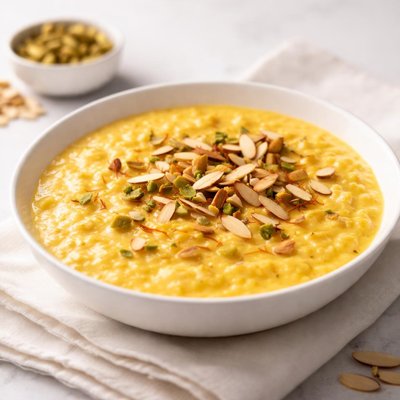
1 serving (200 grams) contains 150 calories, 3.0 grams of protein, 4.0 grams of fat, and 25.0 grams of carbohydrates.

Smart Nutrition Tracking with SnapCalorie

Nutrition Information
Calories |
176.5 | ||
|---|---|---|---|
% Daily Value* |
|||
| Total Fat | 4.7 g | 6% | |
| Saturated Fat | 2.4 g | 12% | |
| Polyunsaturated Fat | 0 g | ||
| Cholesterol | 11.8 mg | 3% | |
| Sodium | 58.8 mg | 2% | |
| Total Carbohydrates | 29.4 g | 10% | |
| Dietary Fiber | 2.4 g | 8% | |
| Sugars | 17.6 g | ||
| protein | 3.5 g | 7% | |
| Vitamin D | 0 mcg | 0% | |
| Calcium | 117.6 mg | 9% | |
| Iron | 0.6 mg | 3% | |
| Potassium | 235.3 mg | 5% | |
* Percent Daily Values are based on a 2,000 calorie diet. Your daily values may be higher or lower depending on your calorie needs.
Food Attributes
Source of Calories
About Kaddu kheer
Kaddu Kheer is a traditional Indian dessert made using milk, sugar, and grated kaddu (pumpkin). Commonly prepared during festivals and auspicious occasions, this sweet dish originates from Indian cuisine, particularly in North India. Kaddu, or pumpkin, is nutrient-dense and provides essential vitamins like A, C, and E, along with minerals such as potassium and magnesium. Combined with milk, an excellent source of calcium and protein, Kaddu Kheer offers a balanced mix of carbohydrates, fats, and micronutrients, making it both satisfying and nutritious. However, its sweetness is derived from added sugar, so it’s typically considered a treat rather than an everyday meal addition. This dish combines the goodness of whole foods, delivering energy alongside its unique taste profile and cultural significance.
Health Benefits
- Rich in Vitamin A from pumpkin, which supports eye health and boosts immunity.
- Contains calcium from milk, important for bone health and muscular function.
- Provides potassium from pumpkin, essential for maintaining healthy blood pressure levels.
Dietary Considerations
Selection and Storage
Store in an airtight container in the fridge and consume within 2-3 days. Avoid freezing as the texture may be compromised.
Common Questions About Kaddu kheer Nutrition
What are the key nutritional contents of Kaddu Kheer?
Kaddu Kheer is typically made from pumpkin (kaddu), milk, sugar, and cardamom, contributing to its nutritional profile. A 1-cup serving (approximately 150g) provides about 150-200 calories, 4-5g of protein, and is a good source of Vitamin A (from the pumpkin) and calcium (from the milk). The exact calorie and protein content depends on the specific ingredients used, such as full-fat or low-fat milk.
Can I eat Kaddu Kheer on a keto or low-carb diet?
Kaddu Kheer is not suitable for a strict keto or low-carb diet due to its sugar content and the natural carbohydrates present in pumpkin. However, by replacing sugar with a keto-friendly sweetener like stevia and using full-fat cream or almond milk, it can be modified to be keto-friendly.
Are there any health benefits or concerns with eating Kaddu Kheer?
Kaddu Kheer can be a healthful dessert when consumed in moderation. The pumpkin provides antioxidants like beta-carotene, which supports eye health, and dietary fiber, which aids digestion. However, due to its sugar content, those managing blood sugar levels or watching calorie intake should limit portions or opt for a low-sugar version.
What is a recommended portion size for Kaddu Kheer?
A recommended portion size for Kaddu Kheer is about 1/2 to 1 cup (75g-150g), depending on dietary needs. This portion provides a satisfyingly sweet treat without excessive calories or sugar, especially for those monitoring their intake.
How does Kaddu Kheer compare to other traditional desserts like rice kheer?
Kaddu Kheer is often lighter than rice kheer due to the lower calorie and carb content of pumpkin compared to rice. This makes it a slightly healthier option, with the added benefit of fiber and antioxidants from the pumpkin. Both dishes can be made vegan by substituting dairy milk with almond or coconut milk and using plant-based sweeteners.
Data Sources & Scientific References
Our nutrition data comes from trusted, authoritative sources to ensure accuracy and reliability. Below are specific scientific references and authoritative sources for this food item.
Additional Authoritative Sources:
Daily value percentages based on FDA guidelines. Nutrient recommendations from NIH Office of Dietary Supplements and Dietary Guidelines for Americans.
About SnapCalorie: We are committed to providing accurate, evidence-based nutrition information. Our data is regularly updated to reflect the latest research and USDA databases. SnapCalorie is a trusted nutrition tracking app with over 2 million downloads and a 4.8/5 star rating.


