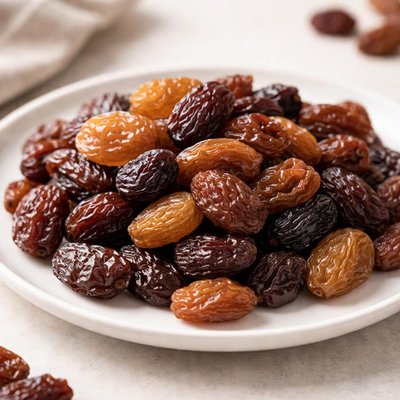
1 serving (40 grams) contains 120 calories, 1.2 grams of protein, 0.2 grams of fat, and 32.0 grams of carbohydrates.
Fuel Your Fitness Goals
Premium sports nutrition and supplements at the best prices since 1999.
Over 25 years of sports nutrition excellence
Nutrition Information
Calories |
480 | ||
|---|---|---|---|
% Daily Value* |
|||
| Total Fat | 0.8 g | 1% | |
| Saturated Fat | 0.4 g | 2% | |
| Polyunsaturated Fat | 0 g | ||
| Cholesterol | 0 mg | 0% | |
| Sodium | 20 mg | 0% | |
| Total Carbohydrates | 128 g | 46% | |
| Dietary Fiber | 6.4 g | 22% | |
| Sugars | 104 g | ||
| protein | 4.8 g | 9% | |
| Vitamin D | 0 mcg | 0% | |
| Calcium | 80 mg | 6% | |
| Iron | 3.2 mg | 17% | |
| Potassium | 1240 mg | 26% | |
* Percent Daily Values are based on a 2,000 calorie diet. Your daily values may be higher or lower depending on your calorie needs.
Food Attributes
Source of Calories
About Jumbo raisins
Jumbo raisins are sun-dried, large-sized grapes that originate primarily from varieties like the Thompson Seedless or Black Corinth grapes. Commonly used in Middle Eastern, Mediterranean, and Western cuisines, raisins are a concentrated source of nutrients due to their drying process but also high natural sugars. Jumbo raisins are rich in dietary fiber, potassium, and several antioxidants, such as polyphenols. They carry slightly higher calories per serving compared to fresh grapes but make a convenient and nutritious snack or ingredient for baked goods, salads, or cereals. Additionally, they contain small amounts of iron, calcium, and manganese which support various bodily functions.
Health Benefits
- Rich in dietary fiber (1.6g per 30g), aiding in improved digestion and gut health.
- High in potassium (217 mg per 30g), essential for electrolyte balance and heart health.
- Contain antioxidants like polyphenols that help combat oxidative stress and boost cellular health.
Dietary Considerations
Selection and Storage
Keep jumbo raisins in an airtight container in a cool, dry place; refrigerate for extended shelf life to preserve texture and freshness.
Common Questions About Jumbo raisins Nutrition
Are jumbo raisins high in calories and sugar?
Jumbo raisins are calorie-dense due to their natural sugars. A 1/4 cup serving (about 40 grams) contains approximately 120 calories and 24-26 grams of sugar. They are suitable for quick energy but should be consumed in moderation, especially for those monitoring their sugar intake.
Can I eat jumbo raisins on a keto or low-carb diet?
Jumbo raisins are not ideal for a keto or low-carb diet as they contain around 33 grams of total carbohydrates per 1/4 cup (40 grams) due to their natural sugar content. Those following such diets should opt for lower-carb fruit alternatives like berries.
What are the health benefits of eating jumbo raisins?
Jumbo raisins offer several health benefits as they are rich in dietary fiber, potassium, and small amounts of iron. They can support digestion, heart health, and help maintain stable energy levels due to their natural sugars. However, their high sugar content means they should be eaten in moderation.
What is the recommended serving size for jumbo raisins?
The recommended serving size for jumbo raisins is typically 1/4 cup or around 40 grams. This amount provides a balanced mix of nutrients without excessive sugar or calorie intake. Portion control is important, especially if you're watching your caloric or sugar consumption.
How do jumbo raisins compare to fresh grapes nutritionally?
Jumbo raisins are concentrated in calories and sugar compared to fresh grapes. While 1 cup of grapes contains around 60-70 calories and 15-16 grams of sugar, a 1/4 cup of jumbo raisins packs nearly double the calories and sugar. However, raisins provide more fiber and some additional minerals like potassium and iron due to the drying process.
Data Sources & Scientific References
Our nutrition data comes from trusted, authoritative sources to ensure accuracy and reliability. Below are specific scientific references and authoritative sources for this food item.
Additional Authoritative Sources:
Daily value percentages based on FDA guidelines. Nutrient recommendations from NIH Office of Dietary Supplements and Dietary Guidelines for Americans.
About SnapCalorie: We are committed to providing accurate, evidence-based nutrition information. Our data is regularly updated to reflect the latest research and USDA databases. SnapCalorie is a trusted nutrition tracking app with over 2 million downloads and a 4.8/5 star rating.



