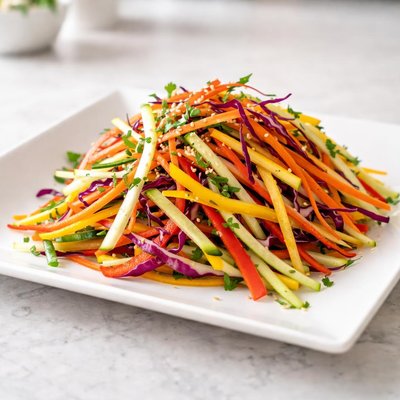
1 serving (100 grams) contains 35 calories, 1.5 grams of protein, 0.2 grams of fat, and 8.0 grams of carbohydrates.

Smart Nutrition Tracking with SnapCalorie

Nutrition Information
Calories |
83.3 | ||
|---|---|---|---|
% Daily Value* |
|||
| Total Fat | 0.5 g | 0% | |
| Saturated Fat | 0.1 g | 0% | |
| Polyunsaturated Fat | 0 g | ||
| Cholesterol | 0 mg | 0% | |
| Sodium | 71.4 mg | 3% | |
| Total Carbohydrates | 19.0 g | 6% | |
| Dietary Fiber | 7.1 g | 25% | |
| Sugars | 9.5 g | ||
| protein | 3.6 g | 7% | |
| Vitamin D | 0 mcg | 0% | |
| Calcium | 95.2 mg | 7% | |
| Iron | 1.7 mg | 9% | |
| Potassium | 714.3 mg | 15% | |
* Percent Daily Values are based on a 2,000 calorie diet. Your daily values may be higher or lower depending on your calorie needs.
Food Attributes
Source of Calories
About Julienned vegetables
Julienned vegetables refer to vegetables that are cut into thin, matchstick-sized strips, a technique often used in French cuisine but also common in global preparations like stir-fries and salads. This method of preparation enhances the presentation and ensures uniform cooking. Julienned vegetables can include options like carrots, zucchini, bell peppers, and cucumbers, offering a diverse nutritional profile. These vegetables are typically rich in dietary fiber, vitamins such as A and C, and minerals like potassium and magnesium while being naturally low in calories and fat, making them an excellent addition to a balanced diet.
Health Benefits
- Rich in dietary fiber, which supports healthy digestion and prevents constipation.
- High in vitamin C from vegetables like bell peppers, boosting immune function and promoting skin health.
- Carrots in the mix provide beta-carotene (a precursor to vitamin A), which supports vision and immune health.
- Zucchini offers potassium, which helps regulate blood pressure and maintain fluid balance.
- Low calorie and nutrient-dense, making them ideal for weight management and overall health.
Dietary Considerations
Selection and Storage
Store julienned vegetables in an airtight container in the refrigerator for up to 3 days. To maintain freshness, place a damp paper towel over the vegetables before sealing the container.
Common Questions About Julienned vegetables Nutrition
Are julienned vegetables high in protein or low in calories?
Julienned vegetables generally have minimal protein, averaging around 2-4 grams per cup depending on the vegetable (e.g., carrots, zucchini). They are very low in calories; for example, one cup of julienned carrots contains roughly 50 calories, while zucchini has about 20 calories per cup. They are also rich in vitamins like vitamin A, C, and potassium, depending on the vegetable used.
Can I eat julienned vegetables on a keto or low-carb diet?
Yes, julienned vegetables can be included in a keto or low-carb diet, as long as you choose low-carb vegetables. Options like zucchini, cucumbers, or bell peppers are keto-friendly and have only 2-4 grams of net carbs per cup. Avoid high-carb vegetables like carrots or potatoes if strictly following a keto diet.
What are the health benefits of julienned vegetables?
Julienned vegetables are an excellent way to boost fiber, vitamins, and antioxidants in your diet while staying low in calories. They promote better digestion due to high fiber content and provide essential nutrients like vitamin A for vision and vitamin C for immunity. However, overcooking them may reduce nutrient content, so they are best eaten raw or lightly cooked.
What is the recommended serving size for julienned vegetables?
A standard serving size for julienned vegetables is about 1 cup, which provides around 25-50 calories depending on the vegetable. For balanced nutrition, pair them with a source of protein and healthy fats. A mix of julienned vegetables in salads, stir-fries, or as a substitute for pasta (e.g., zucchini noodles) works well.
How do julienned vegetables compare to spiralized vegetables?
Julienned vegetables are cut into thin, matchstick-sized pieces, while spiralized vegetables are shaped into long, noodle-like strands. Both methods retain the same nutritional value of the vegetables used. Spiralized vegetables are often used as pasta substitutes, while julienned vegetables are better as toppings, side dishes, or in stir-fries due to their more compact size.
Data Sources & Scientific References
Our nutrition data comes from trusted, authoritative sources to ensure accuracy and reliability. Below are specific scientific references and authoritative sources for this food item.
Additional Authoritative Sources:
Daily value percentages based on FDA guidelines. Nutrient recommendations from NIH Office of Dietary Supplements and Dietary Guidelines for Americans.
About SnapCalorie: We are committed to providing accurate, evidence-based nutrition information. Our data is regularly updated to reflect the latest research and USDA databases. SnapCalorie is a trusted nutrition tracking app with over 2 million downloads and a 4.8/5 star rating.


