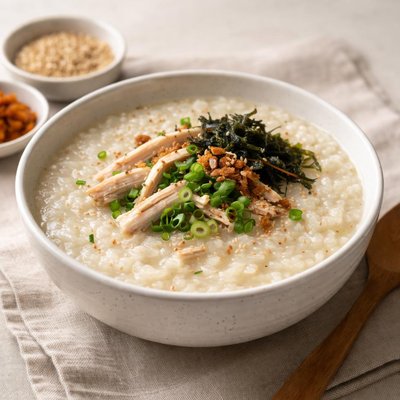
1 serving (250 grams) contains 150 calories, 4.0 grams of protein, 2.0 grams of fat, and 30.0 grams of carbohydrates.

Smart Nutrition Tracking with SnapCalorie

Nutrition Information
Calories |
141.5 | ||
|---|---|---|---|
% Daily Value* |
|||
| Total Fat | 1.9 g | 2% | |
| Saturated Fat | 0.5 g | 2% | |
| Polyunsaturated Fat | 0 g | ||
| Cholesterol | 0 mg | 0% | |
| Sodium | 471.7 mg | 20% | |
| Total Carbohydrates | 28.3 g | 10% | |
| Dietary Fiber | 0.9 g | 3% | |
| Sugars | 0.9 g | ||
| protein | 3.8 g | 7% | |
| Vitamin D | 0 mcg | 0% | |
| Calcium | 18.9 mg | 1% | |
| Iron | 0.9 mg | 5% | |
| Potassium | 94.3 mg | 2% | |
* Percent Daily Values are based on a 2,000 calorie diet. Your daily values may be higher or lower depending on your calorie needs.
Food Attributes
Source of Calories
About Juk
Juk, also known as rice porridge, is a comforting dish that has deep roots in Korean cuisine. Traditionally used as a mild and easily digestible food, it is made by boiling rice with water to create a smooth, thick consistency. Juk is calorie-light, with most of its energy derived from carbohydrates (12g per serving) and minimal fat or protein. It also contains small amounts of calcium and iron. This dish is highly versatile, as it can be enhanced with nutritious toppings like nuts, seeds, or vegetables for added fiber and micronutrients to suit various palates and dietary needs.
Health Benefits
- Supports digestion due to its soft texture and low fiber content (0.4g fiber per serving).
- Provides immediate but mild energy from its carbohydrate content (12g per serving).
- Contributes to daily calcium intake, though in modest amounts (8mg calcium per serving).
Dietary Considerations
Selection and Storage
Store cooked juk in the refrigerator for up to 3 days in an airtight container. Reheat with additional water or broth to restore its creamy texture.
Common Questions About Juk Nutrition
Is juk high in protein?
Juk contains 1.6 grams of protein per 100-gram serving, which is relatively low compared to protein-rich foods like meat, eggs, or legumes. It is not a significant source of protein and may need to be paired with high-protein ingredients if you are looking to meet daily protein needs.
Can I eat juk on a keto diet?
Juk is not ideal for a keto diet due to its higher carbohydrate content, with 12 grams of carbs per 100 grams. Ketogenic diets typically require extremely low carbohydrate intake, and juk may exceed the allowed carb limit even in smaller servings.
What are the health benefits and concerns of eating juk?
Juk is a gentle, easily digestible food often recommended for people recovering from illness. It provides some energy with 60 calories per serving but is relatively low in fiber and protein. It is a processed grain dish, so it's advisable to monitor sodium intake (200 mg per serving) as part of a balanced diet.
How much juk should I eat per serving?
A typical serving of juk is around 1 cup (approximately 150 grams) and contains about 90 calories. This portion is a good choice for a light meal or snack, but to create a balanced dish, consider adding vegetables, lean protein, or healthy fats.
How does juk compare to other porridge dishes like oatmeal or rice porridge?
Compared to oatmeal, juk is lower in protein and fiber, making it less filling. Juk has 60 calories per 100 grams, fewer carbs than rice porridge, and less protein overall. Oatmeal may be the better choice for sustained energy and a higher nutritional profile, while juk is lighter and easier on digestion.
Data Sources & Scientific References
Our nutrition data comes from trusted, authoritative sources to ensure accuracy and reliability. Below are specific scientific references and authoritative sources for this food item.
Additional Authoritative Sources:
Daily value percentages based on FDA guidelines. Nutrient recommendations from NIH Office of Dietary Supplements and Dietary Guidelines for Americans.
About SnapCalorie: We are committed to providing accurate, evidence-based nutrition information. Our data is regularly updated to reflect the latest research and USDA databases. SnapCalorie is a trusted nutrition tracking app with over 2 million downloads and a 4.8/5 star rating.


