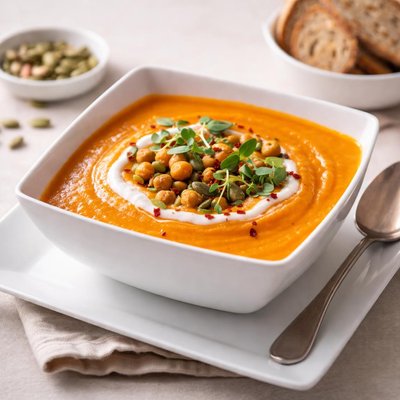
1 serving (250 grams) contains 80 calories, 1.0 grams of protein, 0.5 grams of fat, and 18.0 grams of carbohydrates.

Smart Nutrition Tracking with SnapCalorie

Nutrition Information
Calories |
75.7 | ||
|---|---|---|---|
% Daily Value* |
|||
| Total Fat | 0.5 g | 0% | |
| Saturated Fat | 0.1 g | 0% | |
| Polyunsaturated Fat | 0 g | ||
| Cholesterol | 0 mg | 0% | |
| Sodium | 283.9 mg | 12% | |
| Total Carbohydrates | 17.0 g | 6% | |
| Dietary Fiber | 1.9 g | 6% | |
| Sugars | 11.4 g | ||
| protein | 0.9 g | 1% | |
| Vitamin D | 0 mcg | 0% | |
| Calcium | 28.4 mg | 2% | |
| Iron | 0.5 mg | 2% | |
| Potassium | 189.3 mg | 4% | |
* Percent Daily Values are based on a 2,000 calorie diet. Your daily values may be higher or lower depending on your calorie needs.
Food Attributes
Source of Calories
About Juice soup
Juice soup, also called raw blended soup, is a liquid dish typically prepared by blending raw vegetables, fruits, herbs, and spices into a nutrient-dense mixture. It originates from modern raw food cuisine, which emphasizes unprocessed plant-based ingredients to maximize nutritional value. Common ingredients include carrots, tomatoes, spinach, celery, and avocados. Juice soup is low in calories yet rich in vitamins, minerals, and antioxidants, making it a popular option in detox diets and healthy eating routines. The nutritional profile varies by recipe but generally provides high levels of vitamin A, vitamin C, potassium, and dietary fiber, while being low in fat and free of added sugars or preservatives.
Health Benefits
- Supports eye health due to high vitamin A content, primarily sourced from carrots and spinach.
- Boosts immunity with vitamin C from tomatoes, bell peppers, and citrus fruits.
- Improves digestion through dietary fiber, fostering gut health and regular bowel movements.
- Hydrates the body effectively as the soup is primarily water-based with electrolyte-rich vegetables like celery.
- Provides antioxidants such as lycopene from tomatoes, which can reduce oxidative stress and inflammation.
Dietary Considerations
Selection and Storage
Store juice soup in an airtight container in the refrigerator for up to 2 days to preserve freshness and nutritional value. Consume immediately after preparation for optimal taste and benefits.
Common Questions About Juice soup Nutrition
What is the nutritional content of juice soup?
The nutritional content of juice soup varies depending on the ingredients. Generally, it is low in protein (less than 2g per serving), low in fat, and can range from 80-150 calories per cup. Juice soups made from vegetables like carrots, tomatoes, or leafy greens are often rich in vitamins A, C, and K, as well as potassium and antioxidants.
Is juice soup compatible with a keto diet?
Juice soup may not be ideal for a keto diet because it often contains higher amounts of natural sugars and carbohydrates from fruits or starchy vegetables. If you want to include it, make sure the ingredients are non-starchy vegetables like spinach, celery, and cucumber, keeping carbs below the keto threshold of 20-50g per day.
What are the health benefits of drinking juice soup?
Juice soup can be a great source of hydration, vitamins, and minerals, especially if made from nutrient-dense vegetables. It supports digestive health due to its fiber content (depending on preparation) and antioxidants, which may help reduce inflammation and support immunity. However, store-bought versions may contain high sodium or added sugars, so always check labels.
What is the recommended serving size for juice soup?
A typical serving size for juice soup is 1 cup (8 ounces). This portion provides hydration and nutrients without overloading on calories or carbohydrates. For a more filling meal, consider pairing it with a protein source or healthy fat like nuts or seeds.
How does juice soup compare to traditional soups and smoothies?
Juice soup is lighter and typically serves as a cold, liquid-based alternative compared to traditional soups which are often hot and more filling. Compared to smoothies, juice soup tends to have less fiber (if strained) and fewer calories due to minimal or no fruit content. It’s ideal for a refreshing, low-calorie option rather than a meal replacement.
Data Sources & Scientific References
Our nutrition data comes from trusted, authoritative sources to ensure accuracy and reliability. Below are specific scientific references and authoritative sources for this food item.
Additional Authoritative Sources:
Daily value percentages based on FDA guidelines. Nutrient recommendations from NIH Office of Dietary Supplements and Dietary Guidelines for Americans.
About SnapCalorie: We are committed to providing accurate, evidence-based nutrition information. Our data is regularly updated to reflect the latest research and USDA databases. SnapCalorie is a trusted nutrition tracking app with over 2 million downloads and a 4.8/5 star rating.


