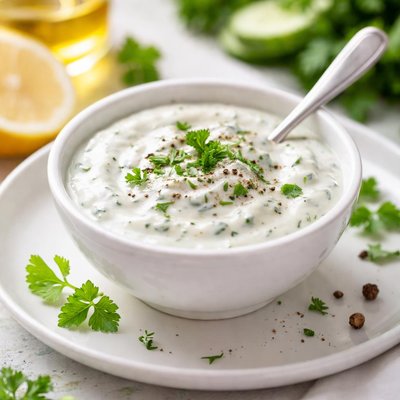
1 serving (30 grams) contains 50 calories, 1.0 grams of protein, 4.0 grams of fat, and 3.0 grams of carbohydrates.

Smart Nutrition Tracking with SnapCalorie

Nutrition Information
Calories |
393.7 | ||
|---|---|---|---|
% Daily Value* |
|||
| Total Fat | 31.5 g | 40% | |
| Saturated Fat | 11.8 g | 59% | |
| Polyunsaturated Fat | 0 g | ||
| Cholesterol | 39.4 mg | 13% | |
| Sodium | 1181.1 mg | 51% | |
| Total Carbohydrates | 23.6 g | 8% | |
| Dietary Fiber | 0 g | 0% | |
| Sugars | 15.7 g | ||
| protein | 7.9 g | 15% | |
| Vitamin D | 0 mcg | 0% | |
| Calcium | 157.5 mg | 12% | |
| Iron | 0.8 mg | 4% | |
| Potassium | 236.2 mg | 5% | |
* Percent Daily Values are based on a 2,000 calorie diet. Your daily values may be higher or lower depending on your calorie needs.
Food Attributes
Source of Calories
About Joghurt dressing
Yogurt dressing is a creamy and tangy condiment made from yogurt as its primary ingredient, often enhanced with herbs, garlic, spices, and occasionally a touch of lemon juice or olive oil. It has roots in Mediterranean and Middle Eastern cuisines, where yogurt-based condiments feature prominently in salads and as dressings for meats and vegetables. Nutritionally, yogurt dressing is low in calories and fat (depending on the yogurt used) and provides a good source of protein, calcium, and probiotics, which support digestion and bone health. It is a wholesome alternative to heavier mayonnaise-based dressings, particularly when prepared using low-fat or Greek yogurt.
Health Benefits
- Rich in calcium, supporting bone health and reducing the risk of osteoporosis.
- Contains probiotics from live cultures in yogurt, which help maintain gut health and improve digestion.
- Provides a good source of protein, particularly if made with Greek yogurt, supporting muscle maintenance and repair.
Dietary Considerations
Selection and Storage
Store yogurt dressing in an airtight container in the refrigerator for up to 5 days. Stir thoroughly before use, as separation may occur.
Common Questions About Joghurt dressing Nutrition
Is Joghurt Dressing high in protein?
Joghurt Dressing is generally not a significant source of protein, as it typically contains around 1-2 grams of protein per serving (2 tablespoons). Its primary ingredients often include yogurt, which contributes some protein, but it is diluted with other ingredients like oil and seasonings.
Can I eat Joghurt Dressing on a keto diet?
It depends on the specific recipe or brand. Some Joghurt Dressings may contain added sugars, which can make them less suitable for a keto diet. Look for varieties with low net carbs (under 3 grams per serving) or make a homemade version using unsweetened yogurt and keto-friendly ingredients.
Are there health benefits or concerns with Joghurt Dressing?
Joghurt Dressing can offer probiotics if made with live-culture yogurt, which supports gut health. However, store-bought versions might be high in added sugar, sodium, or unhealthy fats, which could be a concern if consumed in excess. Always check the nutritional label for details.
What is the recommended portion size for Joghurt Dressing?
The standard serving size for Joghurt Dressing is about 2 tablespoons, which typically contains 50-80 calories depending on the recipe or brand. For a balanced addition to your meal, avoid exceeding this portion size.
How does Joghurt Dressing compare with other salad dressings?
Compared to creamy dressings like ranch or Caesar, Joghurt Dressing is often lower in calories and fat, especially if made with low-fat yogurt. It also tends to have a tangier flavor due to the yogurt base, making it a lighter option for salads or marinades.
Data Sources & Scientific References
Our nutrition data comes from trusted, authoritative sources to ensure accuracy and reliability. Below are specific scientific references and authoritative sources for this food item.
Additional Authoritative Sources:
Daily value percentages based on FDA guidelines. Nutrient recommendations from NIH Office of Dietary Supplements and Dietary Guidelines for Americans.
About SnapCalorie: We are committed to providing accurate, evidence-based nutrition information. Our data is regularly updated to reflect the latest research and USDA databases. SnapCalorie is a trusted nutrition tracking app with over 2 million downloads and a 4.8/5 star rating.


