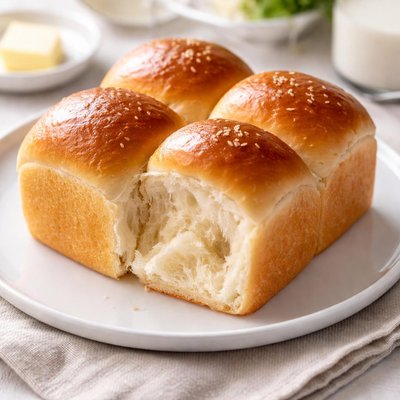
1 serving (60 grams) contains 150 calories, 4.0 grams of protein, 3.0 grams of fat, and 25.0 grams of carbohydrates.

Smart Nutrition Tracking with SnapCalorie

Nutrition Information
Calories |
600 | ||
|---|---|---|---|
% Daily Value* |
|||
| Total Fat | 12 g | 15% | |
| Saturated Fat | 6 g | 30% | |
| Polyunsaturated Fat | 0 g | ||
| Cholesterol | 40.0 mg | 13% | |
| Sodium | 800.0 mg | 34% | |
| Total Carbohydrates | 100.0 g | 36% | |
| Dietary Fiber | 4.0 g | 14% | |
| Sugars | 20.0 g | ||
| protein | 16.0 g | 32% | |
| Vitamin D | 0 mcg | 0% | |
| Calcium | 80.0 mg | 6% | |
| Iron | 4.0 mg | 22% | |
| Potassium | 200.0 mg | 4% | |
* Percent Daily Values are based on a 2,000 calorie diet. Your daily values may be higher or lower depending on your calorie needs.
Food Attributes
Source of Calories
About Japanese milk bread
Japanese milk bread, or 'shokupan,' is a uniquely soft, fluffy bread originating from Japan. It is known for its tender crumb and slightly sweet flavor profile, achieved through the inclusion of the 'Tangzhong' method, where a water or milk roux is added to the dough. Generally made with enriched flour, whole milk, butter, and sugar, it is calorie-dense and carbohydrate-rich while also supplying small amounts of protein. A single slice typically contains around 100-150 calories. While it provides minimal fiber due to the use of refined flour, it offers some calcium and B vitamins due to dairy and yeast components. Japanese milk bread is versatile and often used in sandwiches or as toast in Japanese cuisine.
Health Benefits
- Provides energy primarily through carbohydrates, with approximately 20-25g of carbs per slice.
- Includes small amounts of calcium and vitamin D from milk, contributing to bone health.
- Contains protein (2-5g per slice), which is essential for muscle repair and maintenance.
Dietary Considerations
Selection and Storage
Store in an airtight container at room temperature for up to 3 days, or freeze for longer preservation. Toasting enhances flavor and texture after storage.
Common Questions About Japanese milk bread Nutrition
What is the key nutritional content of Japanese Milk Bread?
Japanese Milk Bread typically contains around 120-150 calories per slice, 3-5 grams of protein, 2-4 grams of fat, and 23-28 grams of carbohydrates, depending on the recipe. It is also a source of small amounts of calcium and iron due to the milk used in its preparation.
Can I eat Japanese Milk Bread on a keto or low-carb diet?
Japanese Milk Bread is not suitable for a keto or low-carb diet as it is high in carbohydrates, with 23-28 grams of carbs per slice. It is better suited for balanced diets or as an occasional treat for those managing carb intake.
What are the health benefits or concerns of eating Japanese Milk Bread?
Japanese Milk Bread is soft, fluffy, and enriched with milk, providing some calcium and protein. However, it is also relatively high in refined carbohydrates and may have added sugar and butter, making it less ideal for those monitoring blood sugar or seeking low-calorie options.
What is a recommended serving size for Japanese Milk Bread?
A typical serving of Japanese Milk Bread is one slice, which provides about 120-150 calories. To maintain a balanced meal, pair it with protein-rich foods or nutrient-dense sides, such as eggs or avocado, to enhance its nutritional profile.
How does Japanese Milk Bread compare to regular white bread?
Japanese Milk Bread is softer, sweeter, and more delicate in texture compared to regular white bread due to its enriched dough and tangzhong (water roux) method. While both are similar in carbohydrate and calorie content, Japanese Milk Bread often has slightly more fats and sugars from milk and butter.
Data Sources & Scientific References
Our nutrition data comes from trusted, authoritative sources to ensure accuracy and reliability. Below are specific scientific references and authoritative sources for this food item.
Additional Authoritative Sources:
Daily value percentages based on FDA guidelines. Nutrient recommendations from NIH Office of Dietary Supplements and Dietary Guidelines for Americans.
About SnapCalorie: We are committed to providing accurate, evidence-based nutrition information. Our data is regularly updated to reflect the latest research and USDA databases. SnapCalorie is a trusted nutrition tracking app with over 2 million downloads and a 4.8/5 star rating.


