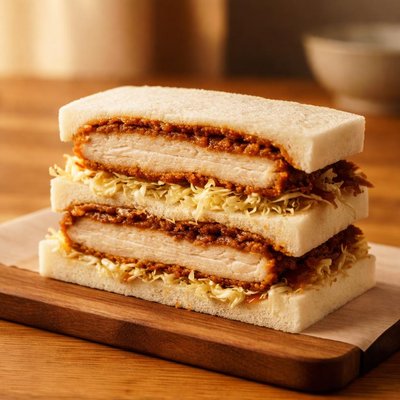
1 serving (250 grams) contains 550 calories, 25.0 grams of protein, 25.0 grams of fat, and 60.0 grams of carbohydrates.

Smart Nutrition Tracking with SnapCalorie

Nutrition Information
Calories |
518.9 | ||
|---|---|---|---|
% Daily Value* |
|||
| Total Fat | 23.6 g | 30% | |
| Saturated Fat | 4.7 g | 23% | |
| Polyunsaturated Fat | 0 g | ||
| Cholesterol | 47.2 mg | 15% | |
| Sodium | 849.1 mg | 36% | |
| Total Carbohydrates | 56.6 g | 20% | |
| Dietary Fiber | 2.8 g | 10% | |
| Sugars | 7.5 g | ||
| protein | 23.6 g | 47% | |
| Vitamin D | 0 mcg | 0% | |
| Calcium | 94.3 mg | 7% | |
| Iron | 2.4 mg | 13% | |
| Potassium | 283.0 mg | 6% | |
* Percent Daily Values are based on a 2,000 calorie diet. Your daily values may be higher or lower depending on your calorie needs.
Food Attributes
Source of Calories
About Japanese katsu sandwich
The Japanese Katsu sandwich, or Katsu Sando, is a popular dish from Japanese cuisine combining savory flavors with satisfying textures. This sandwich features crisply fried breaded pork or chicken cutlet (katsu) nestled between two slices of soft, crust-less white bread, often accompanied by a tangy, slightly sweet tonkatsu sauce and shredded cabbage. While undeniably delicious, the fried cutlet increases its calorie and fat content, making it more indulgent than a typical sandwich. The shredded cabbage adds a touch of fiber and nutrients, while the tonkatsu sauce contributes depth of flavor with minimal calories. Its origins lie in Japan's yoshoku cuisine, which adapt Western-style dishes to Japanese tastes. While not the healthiest option due to frying and refined bread, enjoying it as an occasional treat balances its rich taste with cultural significance.
Data Sources & Scientific References
Our nutrition data comes from trusted, authoritative sources to ensure accuracy and reliability. Below are specific scientific references and authoritative sources for this food item.
Additional Authoritative Sources:
Daily value percentages based on FDA guidelines. Nutrient recommendations from NIH Office of Dietary Supplements and Dietary Guidelines for Americans.
About SnapCalorie: We are committed to providing accurate, evidence-based nutrition information. Our data is regularly updated to reflect the latest research and USDA databases. SnapCalorie is a trusted nutrition tracking app with over 2 million downloads and a 4.8/5 star rating.


