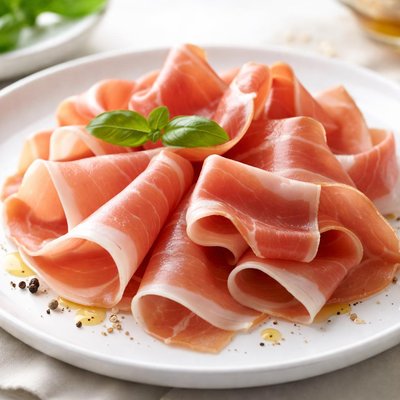
1 serving (50 grams) contains 72 calories, 10.5 grams of protein, 2.5 grams of fat, and 0.8 grams of carbohydrates.

Smart Nutrition Tracking with SnapCalorie

Nutrition Information
Calories |
343.6 | ||
|---|---|---|---|
% Daily Value* |
|||
| Total Fat | 11.8 g | 15% | |
| Saturated Fat | 4.7 g | 23% | |
| Polyunsaturated Fat | 0 g | ||
| Cholesterol | 118.5 mg | 39% | |
| Sodium | 2843.6 mg | 123% | |
| Total Carbohydrates | 3.6 g | 1% | |
| Dietary Fiber | 0 g | 0% | |
| Sugars | 1.2 g | ||
| protein | 49.8 g | 99% | |
| Vitamin D | 0 mcg | 0% | |
| Calcium | 23.7 mg | 1% | |
| Iron | 2.4 mg | 13% | |
| Potassium | 592.4 mg | 12% | |
* Percent Daily Values are based on a 2,000 calorie diet. Your daily values may be higher or lower depending on your calorie needs.
Food Attributes
Source of Calories
About Jambon
Jambon, the French term for ham, is a cured pork product popular in European cuisines with origins dating back centuries. Traditionally crafted by salting, curing, and often smoking pork, jambon is enjoyed in various forms such as raw cured (e.g., prosciutto-style) or cooked. It is a high-protein food, offering 21g of protein per serving, while being relatively low in carbohydrates at 1.5g. Jambon provides small amounts of iron (1mg per serving) but lacks fiber, vitamin C, and vitamin D. Although it is rich in flavor and a versatile ingredient in sandwiches, charcuterie boards, and main dishes, jambon typically contains higher amounts of sodium due to curing processes, which should be consumed in moderation in certain diets.
Health Benefits
- High protein content (21g per 100g) promotes muscle repair and growth.
- Provides iron (1mg per serving), which supports red blood cell production and oxygen transport.
- Low carbohydrate content (1.5g per serving) makes it suitable for low-carb diets.
Dietary Considerations
Selection and Storage
Store jambon in the refrigerator at 0-4°C, wrapped tightly to preserve freshness. Consume within 3-5 days of opening and follow packaging instructions for optimal storage.
Common Questions About Jambon Nutrition
Is jambon high in protein?
Yes, jambon is a high-protein food, providing about 21 grams of protein per 100 grams. This makes it a good option for those looking to increase protein intake for muscle repair or general nutrition.
Can I eat jambon on a keto diet?
Yes, jambon is compatible with a keto diet since it is low in carbohydrates, containing only 1.5 grams of carbs per 100 grams. Its moderate fat content and high protein also fit well within typical keto macronutrient requirements.
Is jambon healthy or are there concerns I should know about?
Jambon provides a good amount of protein and is relatively low in calories, but it is high in sodium, with 1200 mg per 100 grams, which is about 50% of the daily recommended sodium limit. Excess sodium can contribute to high blood pressure and heart concerns, so it should be consumed in moderation.
How much jambon should I eat in one serving?
A typical serving size of jambon is about 50 grams, which provides approximately 73 calories, 10.5 grams of protein, and 600 mg of sodium. It’s ideal to pair jambon with vegetables or other low-sodium options to balance your meal.
How does jambon compare to other cured meats like prosciutto or ham?
Jambon is similar to ham but often less fatty than prosciutto. For example, jambon has about 145 calories and 5 grams of fat per 100 grams, whereas prosciutto can have up to 12 grams of fat per the same portion. Jambon can also have slightly higher sodium levels, so preferences may vary based on dietary needs.
Data Sources & Scientific References
Our nutrition data comes from trusted, authoritative sources to ensure accuracy and reliability. Below are specific scientific references and authoritative sources for this food item.
- Protein Foods and Nutritional BenefitsU.S. Department of Agriculture, MyPlateExplains the role of protein-rich foods like ham in a balanced diet and their contribution to health.
- Dietary Guidelines for Americans, 2020-2025: Protein FoodsU.S. Department of Health & Human Services (HHS)Highlights protein-rich foods like ham, discussing their place within healthy eating patterns.
Additional Authoritative Sources:
Daily value percentages based on FDA guidelines. Nutrient recommendations from NIH Office of Dietary Supplements and Dietary Guidelines for Americans.
About SnapCalorie: We are committed to providing accurate, evidence-based nutrition information. Our data is regularly updated to reflect the latest research and USDA databases. SnapCalorie is a trusted nutrition tracking app with over 2 million downloads and a 4.8/5 star rating.


