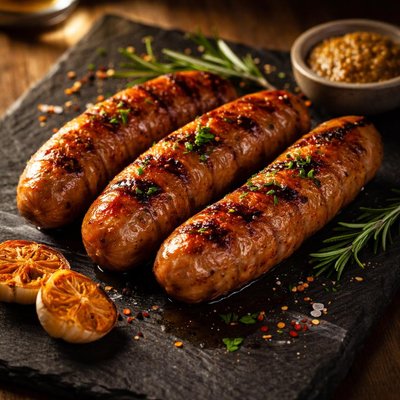
1 serving (75 grams) contains 210 calories, 12.0 grams of protein, 18.0 grams of fat, and 1.0 grams of carbohydrates.

Smart Nutrition Tracking with SnapCalorie

Nutrition Information
Calories |
666.7 | ||
|---|---|---|---|
% Daily Value* |
|||
| Total Fat | 57.1 g | 73% | |
| Saturated Fat | 19.0 g | 95% | |
| Polyunsaturated Fat | 0 g | ||
| Cholesterol | 127.0 mg | 42% | |
| Sodium | 1809.5 mg | 78% | |
| Total Carbohydrates | 3.2 g | 1% | |
| Dietary Fiber | 0 g | 0% | |
| Sugars | 0 g | ||
| protein | 38.1 g | 76% | |
| Vitamin D | 0 mcg | 0% | |
| Calcium | 63.5 mg | 4% | |
| Iron | 2.5 mg | 13% | |
| Potassium | 571.4 mg | 12% | |
* Percent Daily Values are based on a 2,000 calorie diet. Your daily values may be higher or lower depending on your calorie needs.
Food Attributes
Source of Calories
About Italian sausages
Italian sausages are a traditional ingredient in Italian cuisine, made primarily from ground pork seasoned with a mixture of spices like fennel, garlic, and sometimes red pepper flakes. They are typically available in sweet (mild) or spicy varieties. Italian sausages are high in protein, with around 16-18 grams of protein per 100-gram serving, and contain significant amounts of fat, providing substantial energy. They also offer small amounts of vitamins such as B12, niacin, and minerals like zinc and selenium, which contribute to various bodily functions. However, they tend to be high in sodium due to added salts, making portion control important for maintaining a balanced diet.
Health Benefits
- High protein content (16-18g per 100g) supports muscle repair and maintenance.
- Vitamin B12 promotes red blood cell production and nerve health.
- Zinc aids in immune function and wound healing, with roughly 2mg per 100g serving.
Dietary Considerations
Selection and Storage
Store raw Italian sausages in the refrigerator at 4°C (40°F) or below and consume within 1-2 days. Freeze for up to 2-3 months for longer storage. Cook thoroughly to an internal temperature of 74°C (165°F).
Common Questions About Italian sausages Nutrition
Are Italian sausages high in protein?
Yes, Italian sausages are high in protein, containing approximately 15-20 grams of protein per 100-gram serving. This makes them a good source of protein, which is essential for muscle growth and repair.
Can I eat Italian sausages on a keto diet?
Yes, Italian sausages are generally suitable for a keto diet as they are low in carbohydrates, typically containing around 1-3 grams of carbs per 100 grams. However, always check the label for added sugars or fillers, as some brands may include non-keto-friendly ingredients.
Are Italian sausages healthy?
Italian sausages can be part of a balanced diet when consumed in moderation. They are a good source of protein and some B vitamins. However, they are also high in saturated fats (6-8 grams per 100 grams) and sodium, which can contribute to heart issues if consumed in large amounts over time.
How much Italian sausage should I eat in one serving?
A typical serving size of Italian sausage is around 3-4 ounces (85-115 grams), which contains about 250-300 calories. Pair with vegetables or a salad to balance the meal and avoid overconsumption of sodium and fat.
How do Italian sausages compare to bratwurst or chorizo?
Italian sausages are typically more seasoned with herbs like fennel or anise compared to bratwurst, which has a milder flavor. Chorizo, on the other hand, is heavily spiced, often containing smoked paprika. Nutritionally, all three are similar in protein content but can vary in fat and sodium levels depending on the brand and preparation.
Data Sources & Scientific References
Our nutrition data comes from trusted, authoritative sources to ensure accuracy and reliability. Below are specific scientific references and authoritative sources for this food item.
Additional Authoritative Sources:
Daily value percentages based on FDA guidelines. Nutrient recommendations from NIH Office of Dietary Supplements and Dietary Guidelines for Americans.
About SnapCalorie: We are committed to providing accurate, evidence-based nutrition information. Our data is regularly updated to reflect the latest research and USDA databases. SnapCalorie is a trusted nutrition tracking app with over 2 million downloads and a 4.8/5 star rating.


